

PARIS (AP) - The Musée Rodin transformed into a vibrant setting for the Dior haute couture show, characterized by an atmosphere of anticipation as a host of celebrities gathered, waiting for pop star Rihanna's arrival. Among the high-profile attendees were French first lady Brigitte Macron, Lauren Sánchez Bezos, and actress Parker Posey, all adding glamour to the event, which was described as a celebrity waiting room before the show commenced.
The moment Rihanna took her seat, the atmosphere shifted dramatically. The lights dimmed, revealing a stunning suspended ceiling adorned with a garden of flowers, creating a breathtaking backdrop for Jonathan Anderson's debut couture presentation for Dior. The imagery of a blossoming flower gently falling to the floor underscored the show's theme: the juxtaposition of beauty and pressure.
Jonathan Anderson, a Northern Irish designer renowned for revitalizing Loewe with his innovative craftsmanship, was given a significant task by Dior. For the first time in the modern era, he was entrusted with overseeing menswear, womenswear, and couture all at once. This challenge highlights the importance of couture in the luxury conglomerate LVMH's portfolio, serving as a testament to the house's stature in the fashion world.
The collection was aptly themed "nature in motion," reflecting a philosophy wherein technique is perceived as a living knowledge rather than a static display. Anderson skillfully reinterpreted historical elements to create something fresh and relevant. The initial color palette was notably restrained, with blacks, whites, and ecru dominating, punctuated by vibrant pops of color and texture. The silhouettes were sharply defined, with draping that softened before snapping back into structured forms, characteristic of classic couture.
At its pinnacle, Anderson's couture work exhibited the same crispness he had previously demonstrated in menswear and his Loewe collections. One striking piece was a sleek Asian-style coat, meticulously designed with strict lines and adorned with black lapels that fused traditional and contemporary aesthetics.
Intriguingly, the show featured pannier gowns that humorously reimagined 18th-century volumes into a modern fanny pack shape. This design epitomized Anderson's signature approach: taking something valuable, twisting its essence slightly, and producing a result that feels both clever and precise. The designs reflected a transformation from micro to macro, seen in light silks, intricate embroidery, and layers of chiffon and organza that resembled feathers.
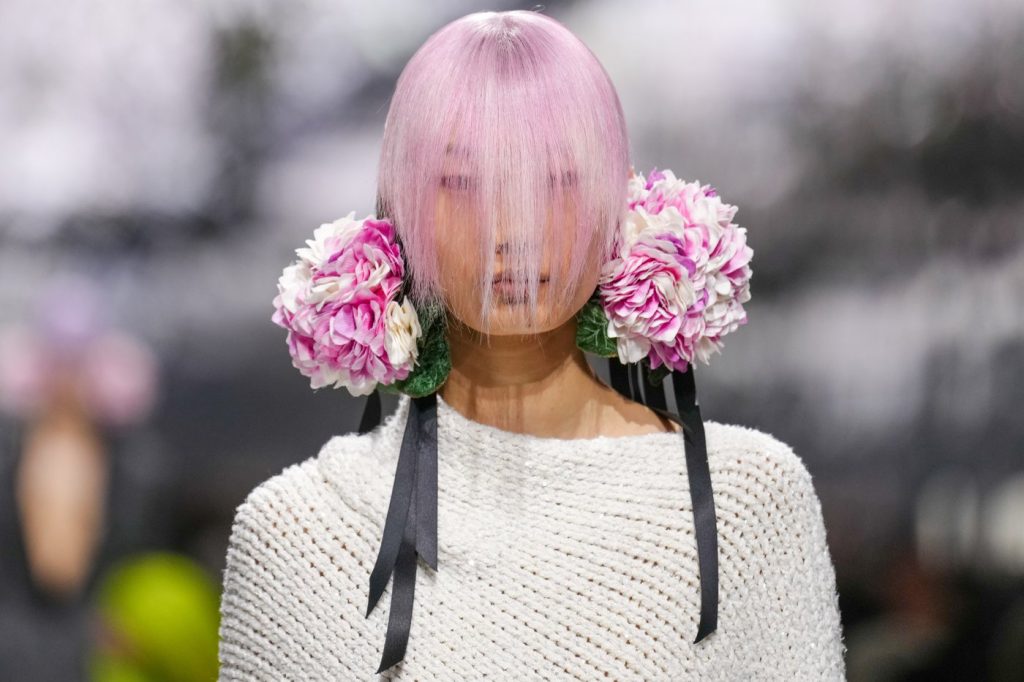
Anderson's homage to Dior's legacy was evident but did not rely on nostalgia. He cited floral arrangements given to him by John Galliano, Dior's former creative director, as inspiration. The collection included oversized, hydrangea-like blooms fashioned into statement earrings, providing a decorative flourish that adhered to Dior's aesthetic while allowing for personal expression.
Despite the ambitious scope of the show, it occasionally felt like a collection of impressive pieces that hadn't fully formed a cohesive narrative. In the world of couture, the stakes are considerably higher; success is not merely measured by spectacle but by the ability to convince and inspire through design. While Anderson's debut succeeded in both offering impressive moments and evoking admiration, it did not always deliver a wholly unified statement.
The ceiling garden initially promised a complete world of creativity. Yet, at times, the clothing seemed to depict a designer still exploring the boundaries of that envisioned garden, striving to determine where it begins and ends, and what it symbolizes for the future of Dior. Anderson's work possesses great potential, encapsulating both innovation and reverence for the house's esteemed history.








