

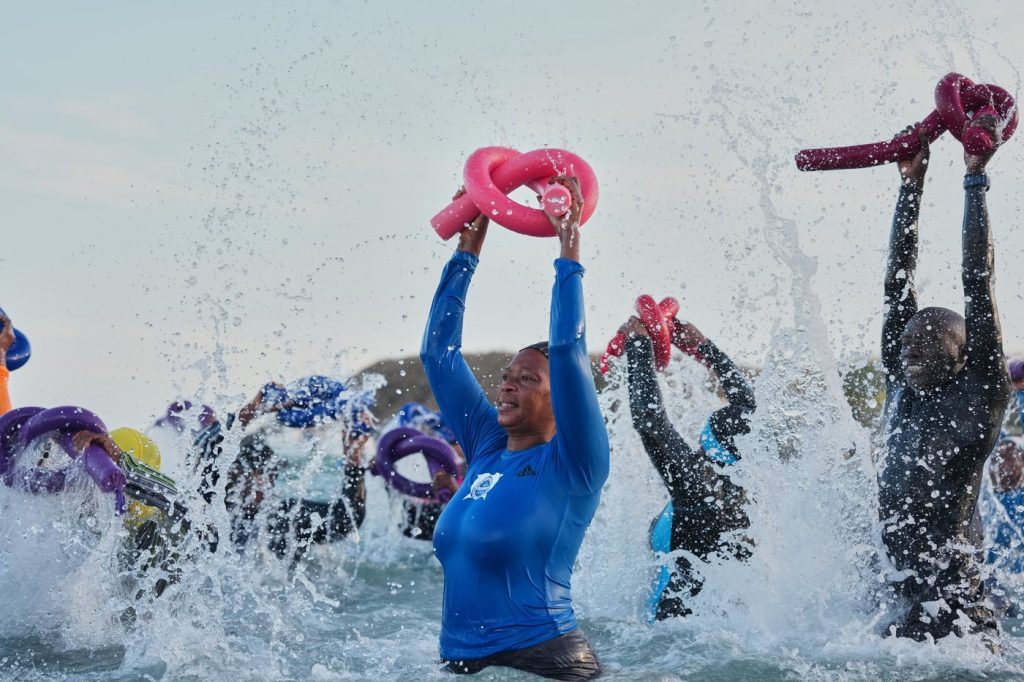
Participants of all ages gather on a beach in Dakar, Senegal for low-impact aquagym sessions in the Atlantic Ocean. These sessions serve as a therapeutic activity aimed at easing pain and improving mobility for individuals dealing with chronic health conditions. The program has gained popularity due to its affordability and accessibility, making it a vital resource for the community.
The early-morning gatherings are characterized by participants engaging in warm-up exercises and aquatic activities while enjoying the soothing environment of the ocean. Participants often leave the water feeling rejuvenated, having completed a series of tailored exercises designed to relieve discomfort and enhance overall physical well-being. The sessions illustrate the supportive atmosphere created by the community, where people come together for their health and rehabilitation.
Notably, the program includes a diverse group of participants, ranging from the elderly to younger individuals. This inclusivity highlights the importance of communal support in managing health challenges. Aquatic therapy offers a unique experience, allowing individuals with mobility limitations to move freely in the water, which is often less painful than exercising on land. Instructors play a crucial role by providing assistance to participants, especially those who need additional help entering or exiting the ocean.
Images from the sessions depict various moments, such as instructors guiding participants through exercises as they work to improve their mobility. Scenes captured include group aquatic therapy sessions, instructors aiding individuals with limited mobility, and the camaraderie shared among the participants. These visuals serve not only to document the physical activity but also to reflect the emotional support and sense of community fostered during these gatherings.
On several occasions, participants have been photographed leaving the ocean, often with smiles on their faces, reflecting a sense of accomplishment. The alleviation of pain and the joy of movement are evident as people exit the therapy sessions, many walking with relatives who provide additional support. Some participants utilize wheelchairs, demonstrating the program's commitment to inclusivity, ensuring that everyone, regardless of their physical limitations, has access to this beneficial experience.
Overall, the aquatic therapy sessions in Dakar represent more than just physical exercise; they embody a holistic approach to health and wellness. By offering a supportive environment, these classes not only focus on physical rehabilitation but also promote social interaction and emotional well-being among participants. This comprehensive approach highlights the program’s significance in the lives of those living with chronic conditions in Senegal.








