

GOMA, Congo (AP) – One year after the M23 militant group seized control of Goma, a city in eastern Congo, the rebels continue to cement their authority in the region. The violence that erupted between the Congolese army and M23 in January 2025 has left lasting scars, but life has gradually adjusted to this new reality. Markets have resumed operations, yet a genuine economic recovery is conspicuously absent. Bank closures and the shutdown of the international airport have devastated economic activities, leading to widespread poverty affecting thousands of families.
The M23 group, reportedly backed by Rwanda, stands out as the most formidable among the over 100 armed factions contending for dominance in mineral-rich eastern Congo, particularly along the border with Rwanda. This conflict has spiraled into one of the most severe humanitarian crises globally, with more than 7 million people displaced, according to the U.N. refugee agency.
The conflict escalated sharply last year, culminating in M23's takeover of Goma, which remains under their control today. In downtown Goma, the banking district serves as a poignant reminder of the city’s plight, where once-vibrant structures are now closed and the absence of functioning ATMs and bank signage highlights the financial desolation.
As a result of this financial void, residents have become almost wholly reliant on mobile phone money transfer services to manage transactions—a costly survival tactic. grâce Omari, a resident of the Chaumage neighborhood, explained, “Today, we pay up to 3.5% for each withdrawal. These are significant sums for families who have almost no income left.”
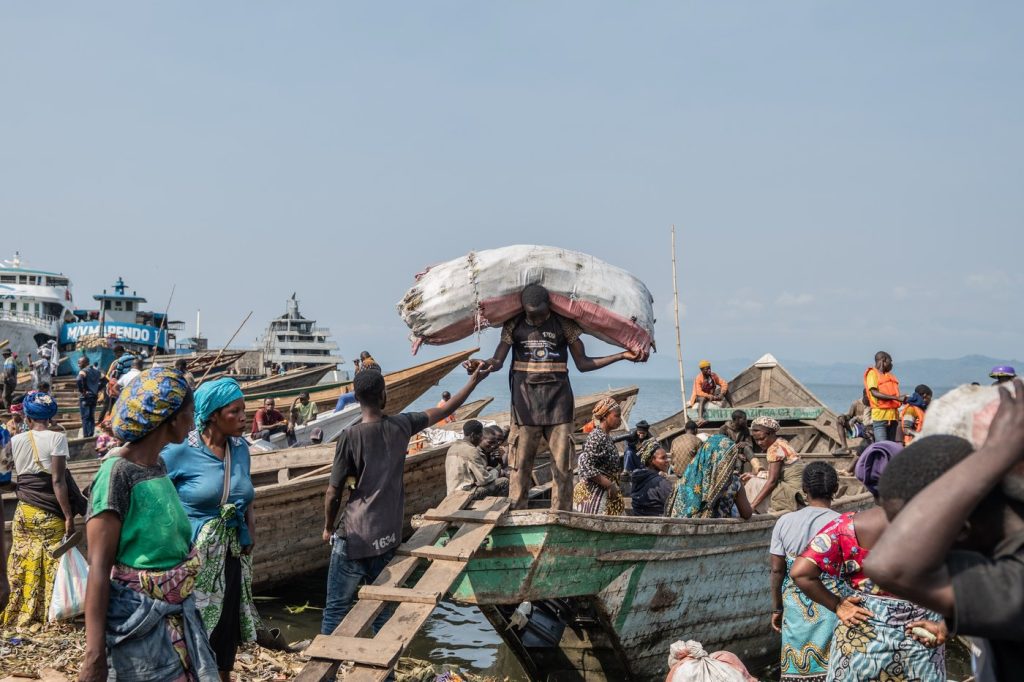
On the other hand, Kituku Market, the city’s primary trading hub, still attracts crowds every Monday, the traditional market day. Local boats arrive at the pier, bringing food products from neighboring rural areas. Stalls showcase vegetables, flour, secondhand clothing, and essential goods. However, vendors appear weary, their movements lacking energy despite the ongoing activity that has lost its vitality and significance.
Espérance Mushashire, a 44-year-old mother of 12, reminisced about better times when she earned a living with dignity. Currently, many of her customers only come to inquire about prices before leaving without purchasing anything. “We buy at high prices, but we hardly sell anything. Customers have no money left. Our children don’t even go to school anymore,” she lamented.
In the Mugunga neighborhood on Goma's outskirts, daily life continues in a state of quiet resignation. Agathe Hanghi, a local resident, shared her struggles: “Before, I sold things, I earned money, and that allowed me to eat and get medical treatment. But now, there’s no money left. All my savings are gone, and what little was left, (the M23 rebels) came and took from here at home.” For many families like hers, basic necessities have become the only priorities, overriding concerns for education and future prospects.
At a local university, an economics professor, Deo Bengeya, attempts to shed light on the city’s dire economic situation. He emphasizes that the absence of banks has paralyzed recovery efforts, as there are no credit facilities, investments, or protections for savings. Households are left to consume whatever remnants they possess without any positive outlook ahead. “The economy of the city of Goma after its fall is in a very critical state,” Bengeya states, noting falling purchasing power, rising unemployment, and the displacement of residents.
A year after Goma fell to the rebels, its citizens are moving forward cautiously, driven by a collective determination to continue living amid prevailing uncertainties.








