

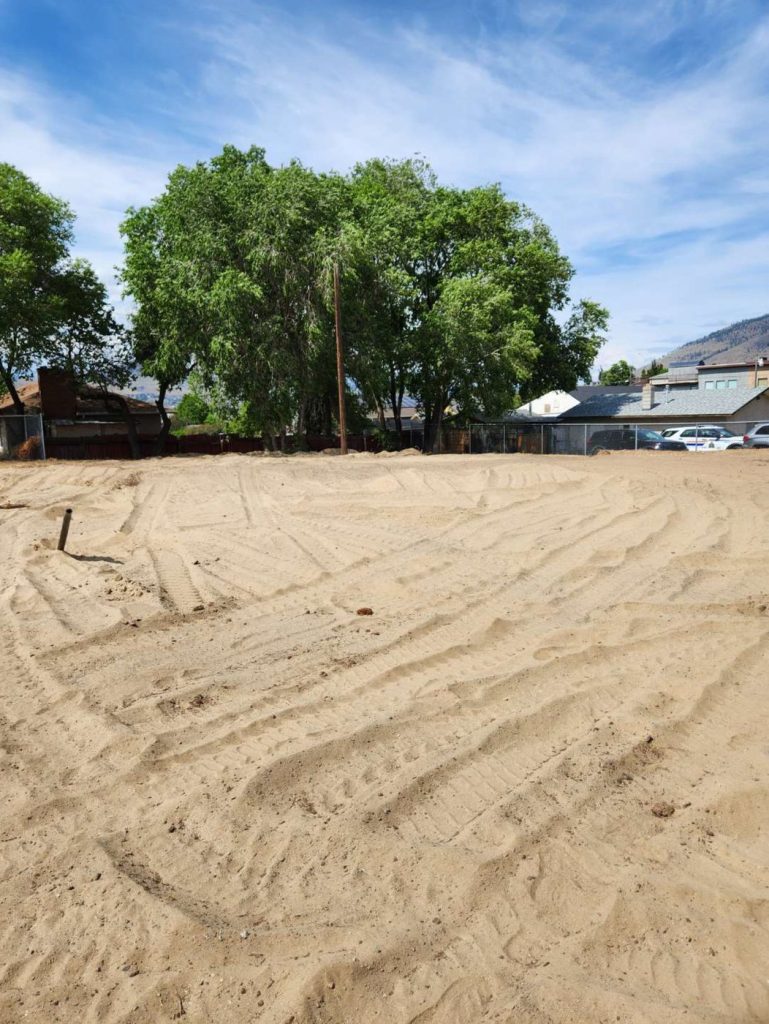
In June, landscapers in Kamloops, British Columbia, made a concerning discovery on a site owned by Park Place Seniors Living, uncovering two human skulls and jawbones. This prompted immediate action from the police and coroner, who classified the remains as ancient. Consequently, the Tk’emlúps te Secwépemc First Nation was engaged, which issued a press release declaring the site a sacred area protected under the United Nations Declaration on the Rights of Indigenous Peoples and the B.C. Heritage Conservation Act. The nation also stated that any alterations to the site would be illegal and established 24-hour security to safeguard the location.
Gordon Mohs, an archaeologist employed by the landowners, later assessed the find and determined that the skulls were situated in landfill material, likely imported from another location. His report noted that while unaltered portions of the property contained dark, humus soils, the area where the remains were found had sandy soils indicative of fill material. Mohs, who serves as the First Nations liaison and archaeological expert for Summit Earthworks in Mission, B.C., cautioned that future discoveries of remains on private land may go unreported due to potential financial burdens on property owners. The landowners recounted being verbally requested for $80,000 by the First Nation related to security, archaeological investigations, and a smudging ceremony.
Chief Rosanne Casimir of the Tk’emlúps te Secwépemc First Nation acknowledged the financial strain on private property owners but emphasized the need for government support to help address costs associated with such discoveries. She expressed concerns that without governmental assistance, private landowners might be discouraged from reporting findings of remains. Christine Elliott, the attorney for the landowner, affirmed that her client had already incurred over $100,000 in legal fees and archaeological costs, which came in addition to the requested $80,000.
While both Mohs and Casimir found mutual agreement on the financial implications of the situation, they held differing opinions on the origins of the remains. Elliott indicated that her client had no intention of fulfilling the $80,000 request, while Casimir continued to assert that the remains were ancestral and should be treated with dignity within their community. The remains were eventually relocated between September 29 and October 10 as part of an ongoing assessment by the nation.
The Heritage Conservation Act, which has not included provisions for compensation related to archaeological finds, has faced calls for reform. Premier David Eby highlighted the inadequacies of the current act, citing that it fails to serve property developers, First Nations, and the natural resources sector effectively. Despite these acknowledgments, it remains unclear when the government would initiate reform efforts, as recent attempts to amend the legislation have been postponed.
Mohs predicted a growing trend of First Nations asserting jurisdiction over private properties based on their heritage policies and UNDRIP principles. Casimir admitted that existing legislative gaps could dissuade property owners from reporting discoveries of remains, emphasizing their responsibility to care for ancestral artifacts. The Tk’emlúps archaeology department reported the recovery of additional remains and cultural materials during their assessment process, underscoring the continuing complexities of heritage conservation in British Columbia.
This development not only raises important questions about the management of archaeological finds in private lands but also about the ongoing dialogue between Indigenous rights and property ownership, highlighting the need for a more equitable framework that addresses the concerns of all stakeholders involved.








