

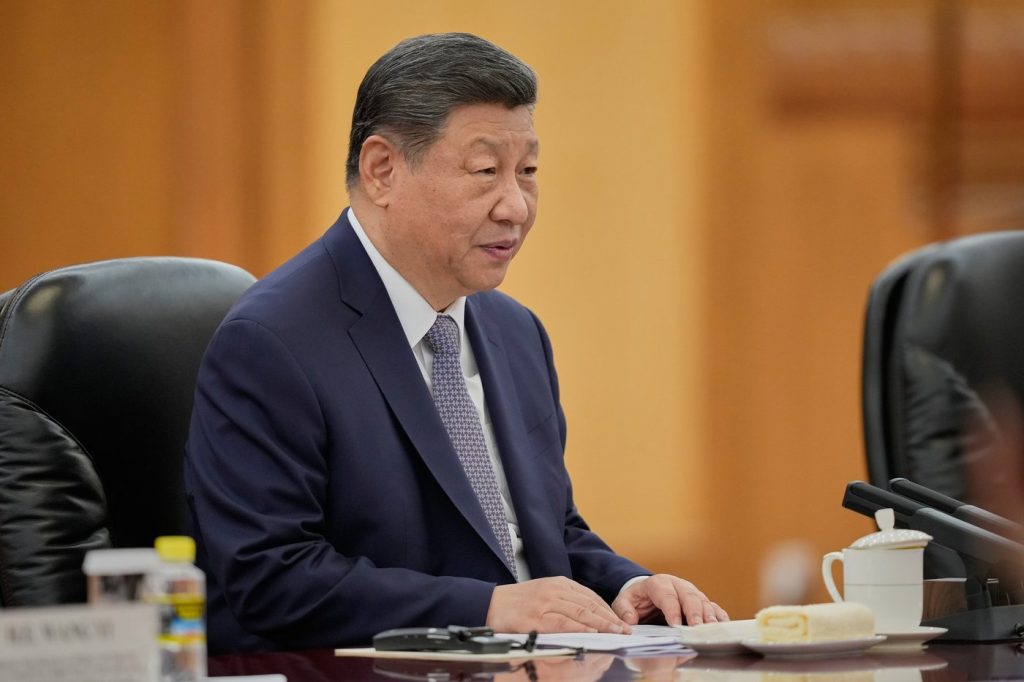
BEIJING (AP) — British Prime Minister Keir Starmer emphasized the need for a stronger relationship with China during his official visit to the country on January 29, 2026. He highlighted that the current global environment presents numerous challenges, necessitating collaboration between the two nations on issues such as global stability and climate change.
During a meeting with China’s leader Xi Jinping at the Great Hall of the People in Beijing, Starmer stated, “I have long been clear that the U.K. and China need a long-term, consistent, and comprehensive strategic partnership.” This marks Starmer as the first British prime minister to visit China in eight years, indicating a potential thaw in the relations that have been strained in recent times.
The past years have seen a decline in U.K.-China relations, primarily due to concerns over issues like Chinese espionage activities within Great Britain, China's support for Russia during the Ukraine war, and the crackdown on freedoms in Hong Kong, a former British colony returned to China in 1997. Starmer's visit occurs in the wake of geopolitical shifts, particularly in the context of trade, where disruptions during U.S. President Donald Trump's administration have made the expansion of trade and investment a priority for many countries.
Starmer's trip is also significant as he seeks to enhance opportunities for British businesses amid a sluggish domestic economy. Accompanying him are more than 50 top business executives and representatives from various cultural organizations, illustrating the multifaceted nature of the visit aimed at fostering economic ties between the U.K. and China.
Additionally, Starmer's engagement with Chinese officials extends beyond Xi Jinping; he previously met with Zhao Leji, the chairman of China’s legislature, the National People's Congress. His visit is part of a broader trend, as Starmer is the fourth leader of a U.S. ally to visit China within a single month, aligning with visits from leaders of South Korea, Canada, and Finland. Notably, the German chancellor is also slated to visit China next month, signifying a renewed interest in diplomatic relations between major world economies.
In conclusion, Starmer's visit to China marks a pivotal moment in U.K.-China relations, addressing both historical points of contention and the need for collaborative solutions to global challenges. As leaders from various countries converge in Beijing, the outcomes of these discussions could shape the landscape of international relations and economic partnerships moving forward.








