

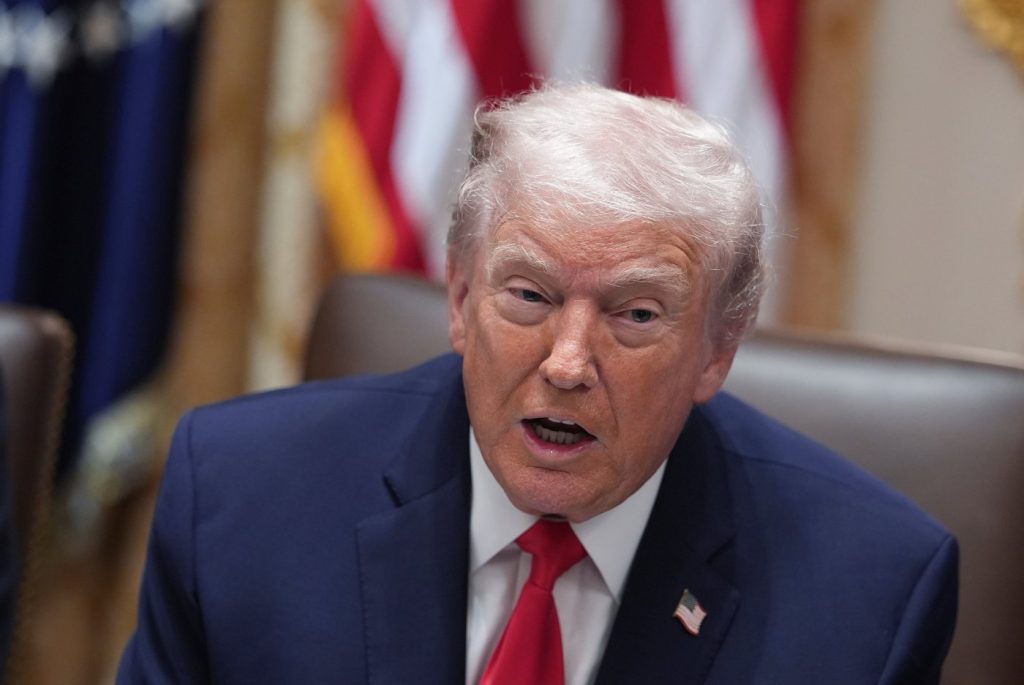
WASHINGTON (AP) - In a surprising announcement, President Donald Trump revealed that he has informed Venezuelan leader Delcy Rodríguez about plans to open up all commercial airspace over Venezuela. This significant decision will enable American citizens to travel to the country, which has been under strict travel restrictions due to political and safety concerns.
During a statement made on Thursday, Trump indicated that he has taken definitive steps to facilitate this change. He disclosed that he instructed U.S. Transportation Secretary Sean Duffy, as well as military leaders, to ensure that the airspace is opened by the end of the day. This swift action is unprecedented given the history of tensions between the United States and Venezuela.
Trump expressed confidence in the safety of American travelers, stating, "American citizens will be very shortly able to go to Venezuela, and they'll be safe there." His remarks suggest a shift in the government’s stance toward Venezuela, which has been marked by significant political upheaval and economic hardship in recent years.
This announcement marks a pivotal moment in U.S.-Venezuela relations, with implications that could alter the travel landscape for Americans interested in visiting the South American nation. As the Venezuelan government continues to grapple with ongoing issues, including a humanitarian crisis and international sanctions, Trump’s directive could open avenues for not only tourism but also potential economic engagements.
In recent years, travel to Venezuela from the United States has been severely limited due to warnings about crime, civil unrest, and the government's treatment of foreigners. The reopening of airspace is likely to raise a range of responses from various stakeholders, including travel agencies, public safety advocates, and political commentators.
As the situation develops, it will be important to monitor how the administration implements this policy and the subsequent response from Venezuelan authorities and the broader international community. Trump's directive may serve as a bridge to improved relations, but it also invites scrutiny regarding the conditions on the ground in Venezuela and the readiness of its infrastructure to welcome American tourists.
This announcement coincides with broader discussions about U.S. foreign policy objectives in Latin America and reflects ongoing debates about engagement versus isolation strategies. The decision could symbolize an attempt to undergo a major policy shift in how the U.S. interacts with nations facing political instability.
As the day progresses, many will be looking for further details on how quickly and effectively the airspace will be opened, as well as the potential for American citizens to travel safely to Venezuela. The implications of these developments may reshape the existing narrative surrounding the U.S.-Venezuela relationship and have long-lasting effects on future interactions.








