

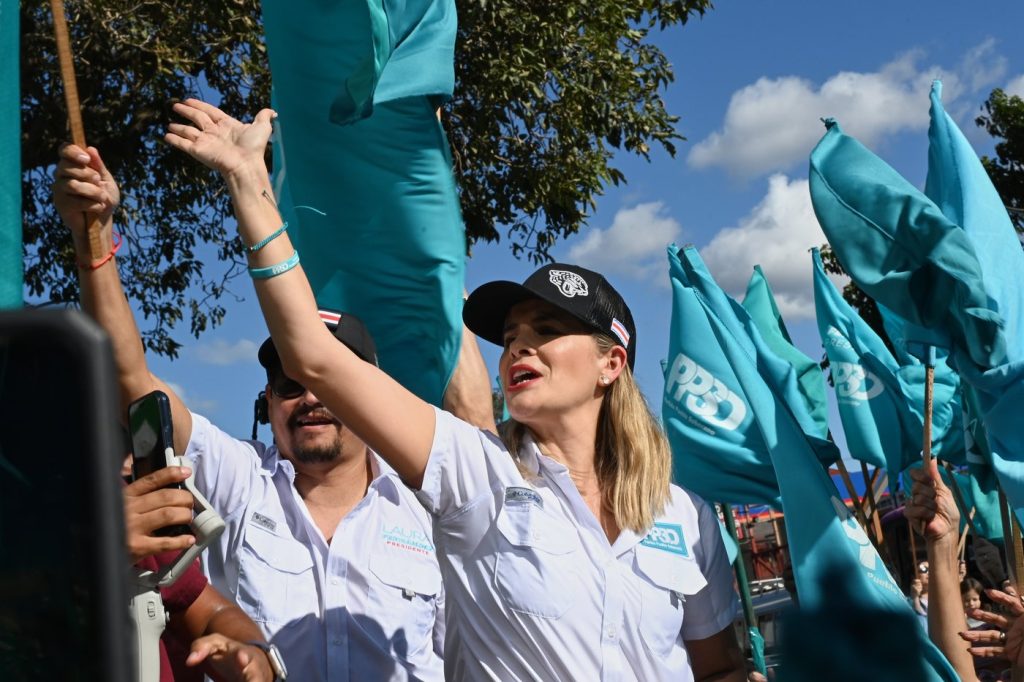
SAN JOSE, Costa Rica (AP) – In the lead-up to Sunday’s presidential election, Costa Rica is witnessing a unique political dynamic as voters seem ready to support Laura Fernández, the chosen successor of the outgoing President Rodrigo Chaves, despite high homicide rates during Chaves’ administration. The nation has grappled with escalating violence, largely attributed to battles among drug traffickers over control of the domestic market and transit routes for cocaine destined for Europe and the United States.
Crime has emerged as a pivotal issue for the electorate, with Chaves attempting to deflect blame for the violence by criticizing a lenient judiciary and the ineffective governance of previous administrations. His tough-on-crime rhetoric has resonated with many voters, enhancing his popularity. Recently, Chaves invited El Salvador's President Nayib Bukele to inaugurate a new prison, drawing inspiration from Bukele’s aggressive crackdown on gangs.
The year 2023 marked a grim milestone for Costa Rica, as it recorded 907 homicides, the highest in its history. Although the numbers decreased slightly to 880 in 2024, the ongoing violence remains a top concern for citizens. Chaves’ confrontational approach toward the press, opposition parties, and judicial institutions has garnered him a dedicated following, partially due to the opposition's struggle with corruption and inability to mount an effective challenge against his administration. Political analyst Fanny Ramírez noted that the opposition has often been unable to justify its inaction against the government’s narrative.
Fernández, who previously served as the Minister of National Planning and Economic Policy and later as Minister of the Presidency, faces significant competition. Álvaro Ramos, the candidate from Costa Rica’s oldest political party, the National Liberation Party, is expected to struggle, with polls suggesting he may garner only around 10% of the vote. Meanwhile, Claudia Dobles, a former first lady and candidate for the Citizen Agenda Coalition, has not managed to distance herself from past criticisms tied to her husband, former President Carlos Alvarado.
Despite the electoral regulations prohibiting Chaves from actively campaigning for Fernández, he has faced no repercussions for his public endorsements. Attempts by electoral authorities to strip him of his immunity to allow for prosecutions were unsuccessful, pointing to ongoing concerns about political accountability in the country.
In addition to selecting a president, voters will also cast ballots for all 57 members of Congress. There is an air of optimism among some voters regarding economic conditions and governance. María Ramírez, a merchant in the capital, expressed her intention to vote for Fernández and the Sovereign People’s Party, emphasizing the need for a solid legislative support system for Fernández to counteract potential opposition. Edwin Alvarado echoed similar sentiments, believing that the country is on a positive trajectory under the current administration.
Recent polls indicate that Fernández may achieve the requisite 40% of the vote needed to win outright in the first round. However, if this does not occur, a run-off between the top two candidates is scheduled for April 5. The electorate remains somewhat undecided, with nearly a third of voters still weighing their options, a dynamic that Ramírez suggests may be aimed at identifying contenders who could realistically challenge Fernández in a potential second round.
Javier Córdoba, The Associated Press








