

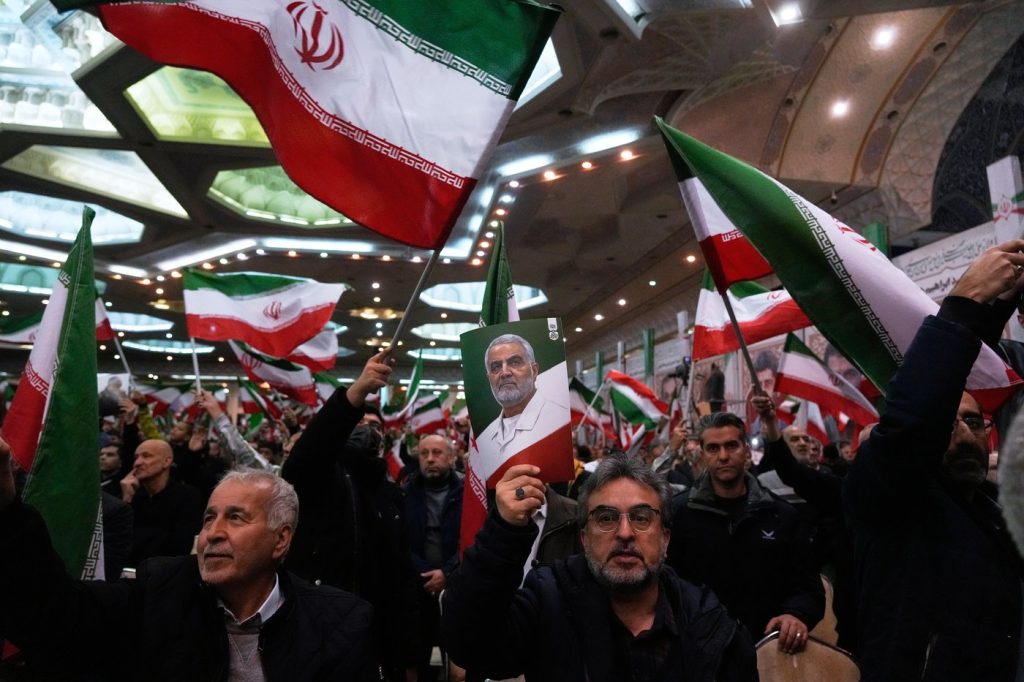
The Revolutionary Guard of Iran has solidified its status as a formidable entity within the nation's theocratic framework. Operating directly under the supreme leader, Ayatollah Ali Khamenei, the Guard supervises a diverse array of military capabilities, including the nation's ballistic missile arsenal, and plays a significant role in overseas operations.
The attention surrounding the Guard intensified recently when the European Union moved to label it a terrorist organization. This designation was largely motivated by the Guard’s involvement in the suppression of nationwide protests within Iran that erupted in early December 2023.
The establishment of the Revolutionary Guard can be traced back to the upheaval during the 1979 Islamic Revolution. It was originally formed to safeguard the clerical government and later was formalized in Iran's constitution. Over the years, especially during the prolonged and devastating war with Iraq in the 1980s, the Guard expanded its influence and authority. Following this period, despite facing potential dissolution, Khamenei empowered the Guard to engage in economic ventures, allowing it to flourish through various enterprises, including the construction firm Khatam al-Anbia.
The Revolutionary Guard has diversified its portfolio, overseeing businesses that range from road construction to telecommunications and medical services, including laser eye surgery. The significance of foreign operations cannot be overstated; the Guard’s elite Quds Force has been crucial in fostering Iran’s so-called “Axis of Resistance,” which defies Western influence in the Middle East. This includes supporting allies such as Syria’s Bashar Assad, Lebanon’s Hezbollah, and Yemen’s Houthi rebels, especially in the wake of the U.S.-led invasion of Iraq in 2003.
U.S. authorities have accused the Guard of providing combat training to Iraqi militants, teaching them to produce and deploy lethal roadside bombs directed at U.S. forces. Additionally, the Quds Force and Iranian intelligence operatives are implicated in orchestrating attacks against dissidents globally. Following the recent escalation in the ongoing Israel-Hamas war, Israel has detained individuals for allegedly receiving instructions from Iran to conduct surveillance and vandalism; Iran has categorically denied such allegations.
In its intelligence operations, the Guard has been linked to numerous arrests of dual nationals and individuals associated with Western nations on espionage charges, often conducted in secretive proceedings. Many Western entities have suggested that Iran exploits these prisoners as leverage in negotiations, particularly concerning its controversial nuclear agenda.
Recent hostilities against Israel have significantly tested the Guard's “Axis of Resistance.” The conflict was reignited following the surprise Hamas attack on Israel on October 7, 2023. As Israel fights against Hamas in Gaza, it has also targeted Iranian-allied factions, severely weakening groups like Hezbollah and continuously striking at Houthi positions in Yemen.
The geopolitical canvas further shifted when Assad’s regime in Syria collapsed in December 2024, severing a critical ally for Tehran and the Guard. Israel's missile exchanges with Iranian forces illustrate the ongoing tension, particularly in light of Israel's extensive airstrikes that began in June, which resulted in the deaths of high-ranking Guard officials and the destruction of military assets.
To maintain order in Iran, particularly amidst protests that have arisen against the regime, the Guard employs its Basij force, a voluntary militia known for its harsh tactics. During the December 2023 protests, videos depicted Basij members using firearms and batons against demonstrators. One notable Basij commander publicly urged parents to prevent their children from taking part in the protests while rallying his forces to quell the unrest.








