

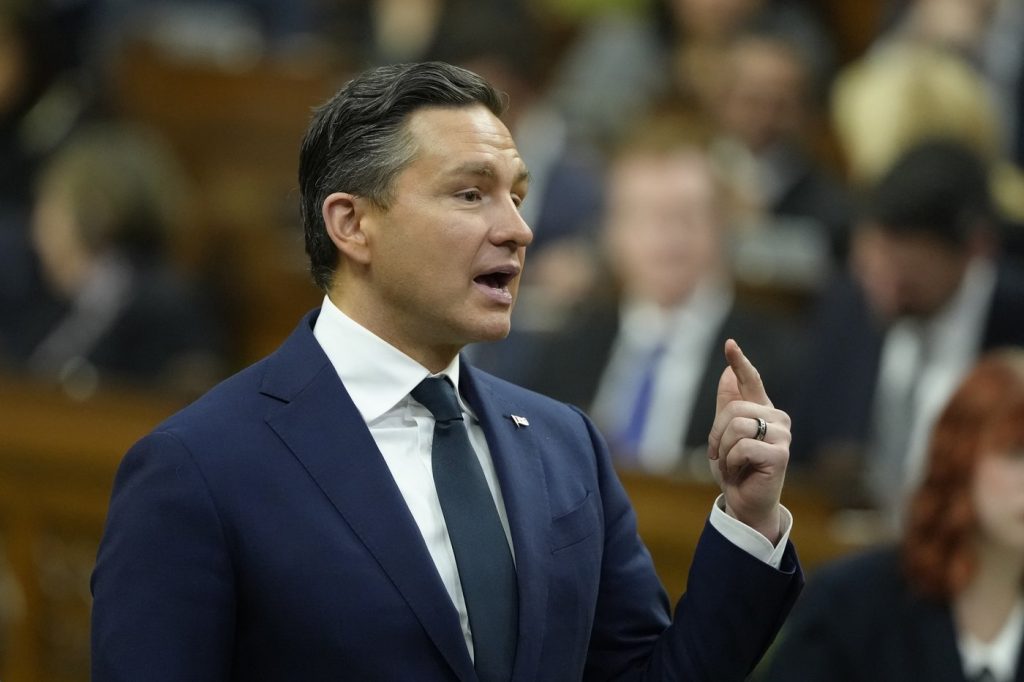
OTTAWA — Pierre Poilievre, the leader of the Conservative Party, faces another critical moment in his political journey as party members prepare to vote on his leadership this Friday. This marks the third significant voter decision related to his leadership in less than a year. Following a surprising defeat in the April election, where Poilievre lost his long-held seat in Carleton, he was re-elected to the House of Commons after winning a byelection in rural Alberta last fall.
At this upcoming convention, Conservative party delegates will determine whether Poilievre remains at the helm. The last mandatory leadership review took place in 2005, when then-leader Stephen Harper garnered 84% support despite his failure to defeat the Liberals in the 2004 election, subsequently leading the country from 2006 to 2015. Experts anticipate that Poilievre will secure a favorable outcome in this review as his team has been actively engaging with delegates to assess and bolster their support.
According to Ontario MP Jamil Jivani, many Conservative members value Poilievre as a representative of a more modern conservatism, appealing to younger voters and those from diverse backgrounds. He noted that there is a strong attachment to Poilievre's vision for the party, underscoring that his leadership resonates with those seeking growth and relevance for the Conservatives.
David Coletto, the founder and CEO of Abacus Data, has conducted polls to understand the sentiments of Conservative voters and the broader Canadian public regarding Poilievre. He questioned how Poilievre could easily win the leadership review while many outside the party struggle to see his appeal. Coletto's findings reveal a division within the Conservative base, where some voters wish for a more conservative platform, while a notable segment of so-called "accessible voters" seeks moderation within the party.
Laura Stephenson, a political science professor at Western University, emphasized the significance of Poilievre's upcoming speech at the convention. She believes it will provide insights into his strategies as an Opposition leader and clarify his vision for the party’s positioning against the governing Liberals. The speech will also be crucial for gauging which voters Poilievre considers most significant moving forward.
Ian Brodie, Stephen Harper's former chief of staff, remarked that Poilievre's coalition of supporters from the recent election appears to remain intact. He stated that gaining additional support could help Poilievre reposition the Conservative Party favorably against opposition leader Mark Carney. The convention serves as a key platform for elevating Poilievre's profile and rekindling the spotlight that has dimmed since his big rallies were put on hold after the election loss.
At the convention, party delegates will also have the opportunity to propose policy changes during breakout sessions. While Poilievre is not obliged to adopt these proposals, he ultimately shapes the party's direction. Critics have indicated that he has not shifted his approach following the election defeat, particularly in how he opposes the more centrist Liberal government. Stephenson argues that a change in tone is necessary for effective leadership, a sentiment echoed by former Conservative MP Jason Kenney, who praised Harper's adaptive strategy after the 2004 election loss.
Kenney pointed out that the current political environment is more intricate, with external factors like Donald Trump complicating the opposition's role. He noted that while the Conservatives have successfully highlighted key issues like housing and affordability, recent political dynamics have intensified the challenges faced by Poilievre as an Opposition leader.
This report underscores the pivotal moment facing Pierre Poilievre and the Conservative Party as they navigate leadership dynamics and voter expectations within an evolving political landscape.








