

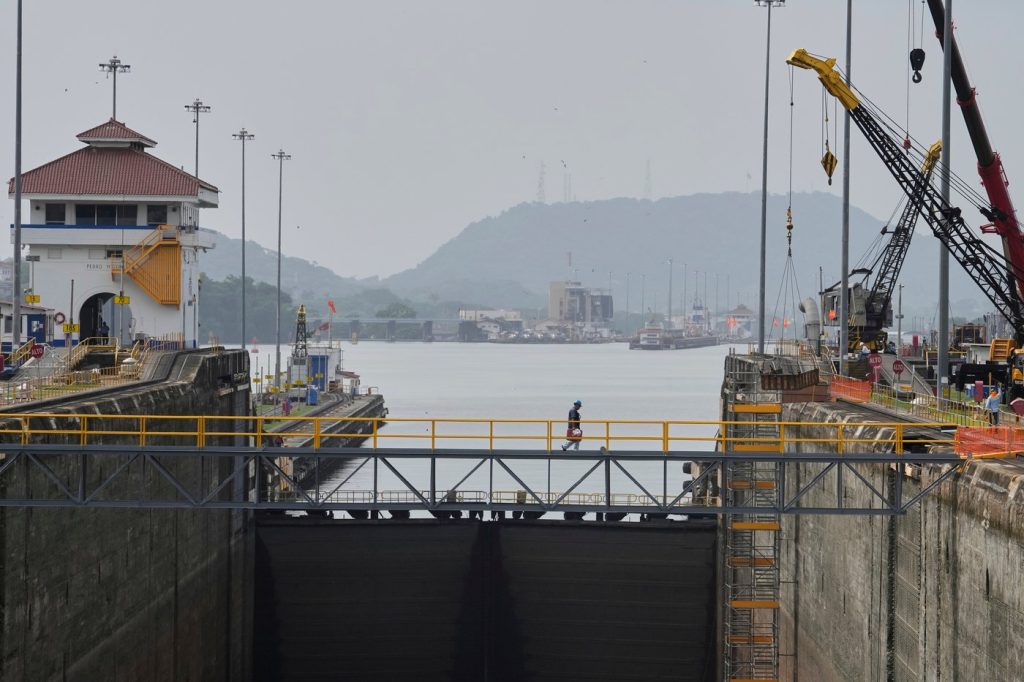
PANAMA CITY (AP) – Panama's Supreme Court issued a landmark ruling stating that the concession held by a subsidiary of Hong Kong’s CK Hutchison Holdings to operate ports at both ends of the Panama Canal is unconstitutional. This decision has significant implications, as it aligns with U.S. strategic interests aimed at countering Chinese influence over this pivotal waterway.
The court's ruling came after an audit conducted by Panama's comptroller, which raised concerns about irregularities associated with the 25-year extension of the concession granted in 2021. This extension had been a point of contention given the involvement of a Chinese company in the operation of key logistics infrastructure surrounding the canal.
The Trump administration had made it a priority to restrict Chinese presence in the hemisphere, viewing control of the Panama Canal as a national security issue. U.S. Secretary of State Marco Rubio made his first foreign visit to Panama, underscoring the importance placed on ensuring that China does not gain influence over this strategic asset. In past statements, President Donald Trump suggested that Panama should consider returning the canal and its operations under U.S. control.
The Supreme Court's statement, while clear in its verdict, did not provide any guidance regarding the future status of the ports. Political analyst Edwin Cabrera indicated that the next procedural step involves notifying the relevant parties about the court's decision. Subsequently, the matter will move to the Panama Maritime Authority, which falls under the executive branch of the government. Cabrera expressed skepticism that the operations of the ports would cease despite the ruling.
CK Hutchison Holdings had previously announced plans to sell its majority stake in the Panamanian ports to an international consortium that includes BlackRock Inc. However, this deal faced delays, largely due to objections from the Chinese government, complicating the transition of control of the ports.
The comptroller’s audit highlighted several irregularities during the extension process of the concession to Panama Ports Company, which has held the operating contract since 1997. The contract was controversially renewed for another 25 years during the prior administration. Comptroller Anel Flores disclosed that the audit uncovered unmade payments and accounting errors, as well as questionable "ghost" concessions that had allegedly been operating within the ports since 2015. Panama Ports Company has denied these allegations in their entirety.
Flores' audit estimated that these irregularities had cost the Panamanian government approximately $300 million since the concession extension and an alarming $1.2 billion throughout the length of the original 25-year contract. The comptroller also noted that the concession extension was carried out without the necessary endorsement from his office, which raises governance and procedural concerns.
On July 30, Flores initiated legal challenges against the Panama Ports Company’s contract before the Supreme Court, leading to the recent ruling. The court's decision represents a pivotal moment in the ongoing interplay of legal, political, and economic factors surrounding one of the world's most vital maritime routes.








