

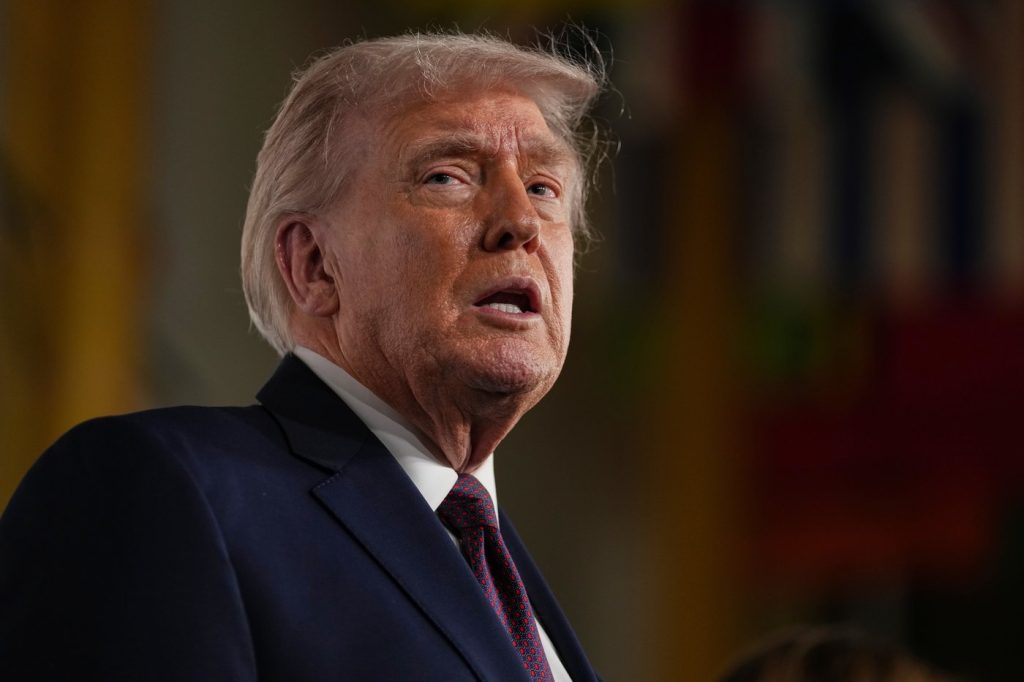
WASHINGTON (AP) — President Donald Trump announced plans to reveal his choice for chairman of the Federal Reserve on Friday morning, a decision that holds significant implications for the independence of the U.S. central bank from the White House and electoral politics.
For the past year, Trump has openly criticized Fed Chair Jerome Powell, whose term as the head of the central bank is set to conclude in May. The president has been vocal in his belief that Powell should implement more aggressive cuts to the Fed’s benchmark interest rates to drive quicker economic growth. In contrast, Powell has adopted a more cautious stance, given the elevated levels of inflation exacerbated by Trump’s trade tariffs.
Trump, speaking to reporters Thursday night before attending a screening for the documentary "Melania," stated, "I’ll be announcing the Fed chair tomorrow morning. It’s going to be somebody that is very respected, somebody that’s known to everybody in the financial world. And I think it’s going to be a very good choice. I hope so."
The selection process for the new Fed chair has been led by Treasury Secretary Scott Bessent, with four known finalists in the running: Kevin Warsh, a former Fed governor; Christopher Waller, a current Fed governor; Rick Rieder, an executive at BlackRock; and Kevin Hassett, the director of the White House National Economic Council. Although Trump had at one point suggested that Hassett was the leading candidate, he later indicated a desire for Hassett to retain his current position.
During his press conference, Trump raised speculation by saying, “a lot of people think that this is somebody that could have been there a few years ago,” which many interpret as a nod toward Warsh, who was previously a contender during the 2017 selection process that led to Powell's appointment as chair.
The relationship between Trump and the central bank has grown increasingly strained, particularly as the president criticized the Fed’s headquarters renovation costs. This criticism culminated in the issuance of subpoenas from the Justice Department earlier this month. In response, Powell issued an uncommon video statement asserting, "The threat of criminal charges is a consequence of the Federal Reserve setting interest rates based on our best assessment of what will serve the public, rather than following the preferences of the president."
For some months, Trump has hinted at his desire for a Fed nominee who would adopt a more hawkish stance on interest rates, which directly impacts the money supply, inflation rates, and job market stability. As Trump prepares to announce his nominee, Powell could exercise his authority to remain on the board in order to uphold the Fed's credibility and prevent political influences from shaping its decisions.
Powell’s term as chair is scheduled to end in approximately three months; however, his tenure on the Federal Reserve’s board of governors extends until 2028. If he chooses to stay, he could potentially hinder Trump’s ability to fill the majority of board seats with his own nominees. Currently, three of the seven Fed governors have been appointed by former President Joe Biden, including Powell, who was re-nominated for a second term.
If Powell decides to remain on the board, he could create procedural challenges for Trump’s nomination efforts. In such a scenario, Trump would either have to promote an existing board member to chair or replace Stephen Miran, who is temporarily serving as a governor while on leave from his role as chair of the White House Council of Economic Advisers. If Trump opts to replace Miran, he might nominate a new candidate for the board.
During a recent news conference, Powell refrained from disclosing whether he intends to leave the board. He offered insights to any potential successor about the importance of maintaining an independent and accountable approach to governance. "Don’t get pulled into elected politics — don’t do it," Powell advised. He emphasized the necessity of proactive engagement with Congress regarding the Fed's operations, noting that such accountability is a fundamental obligation.








