

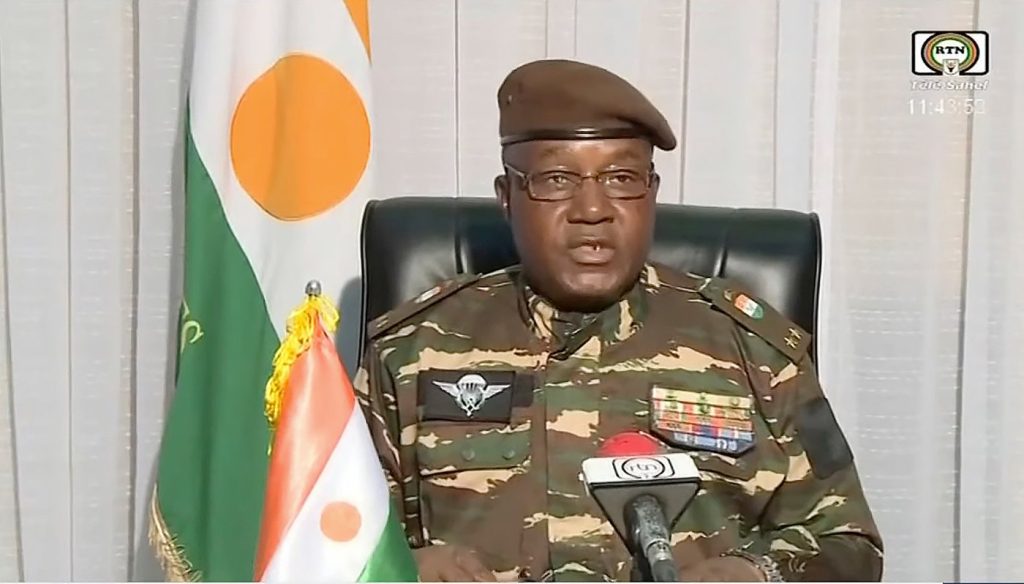
In a recent escalation of accusations, Niger's military leader, General Abdourahamane Tchiani, has alleged that the presidents of France, Benin, and Ivory Coast are backing armed groups that attacked a Nigerien Air Force base in Niamey, the capital, in the early hours of Thursday. The attack, which resulted in injuries to four soldiers and damage to an aircraft, has led to significant tensions between Niger and its former allies.
According to state television, Nigerien forces responded swiftly to the assault, killing 20 attackers and apprehending 11 others. In a defiant broadcast, Tchiani mentioned the leaders of France, Benin, and Ivory Coast by name, claiming they should be prepared to face the consequences of their alleged support for mercenaries involved in the attack. However, Tchiani did not provide any evidence to substantiate these claims.
The armed assault began around midnight and lasted for about two hours, with reports indicating that the area around Diori Hamani International Airport experienced loud explosions. Video footage purportedly from the scene captured the intensity of the attack, showing illuminated skies from explosions. The Niamey airport is strategically significant as it houses military installations and the headquarters of the Niger-Burkina Faso-Mali Joint Force, along with a substantial uranium stockpile involved in disputes with the French nuclear company Orano.
Following the attack, the West African airline Air Côte d'Ivoire reported that one of its aircraft parked at the Niamey airport was struck by gunfire, causing damage to the fuselage and right wing of the plane. Niger state television also claimed that one of the assailants killed was a French national, showcasing several bloodied bodies at the scene. However, evidence to verify these claims has not been disclosed.
As of now, no group has taken responsibility for this brazen attack. Niger, along with its neighbors Burkina Faso and Mali, has been grappling with growing jihadi violence that has destabilized large areas of the Sahel region. The threat from al-Qaida and Islamic State-linked militants has intensified since 2025, putting further pressure on Niger's security, which was previously considered a reliable ally for Western powers in the fight against terrorism.
Following a military coup in 2023, Niger's military rulers severed ties with France and other Western countries, opting to seek military support from Russia instead, a shift that has drawn criticism and concern among Western nations. Under the governance of military juntas, Niger, Mali, and Burkina Faso have seen a rise in militant attacks and have become increasingly vulnerable to armed conflicts, which are further complicated by their leaders' frequent accusations against neighboring countries, especially Benin and Ivory Coast, of acting as proxies for France.
Experts suggest that the persistent volatility in the region has exposed the juntas to greater dangers, emphasizing the precarious nature of the security landscape in the Sahel. The tensions between Niger's military government and its West African neighbors exemplify a complex web of geopolitical strife exacerbated by ongoing violence and shifting alliances.








