

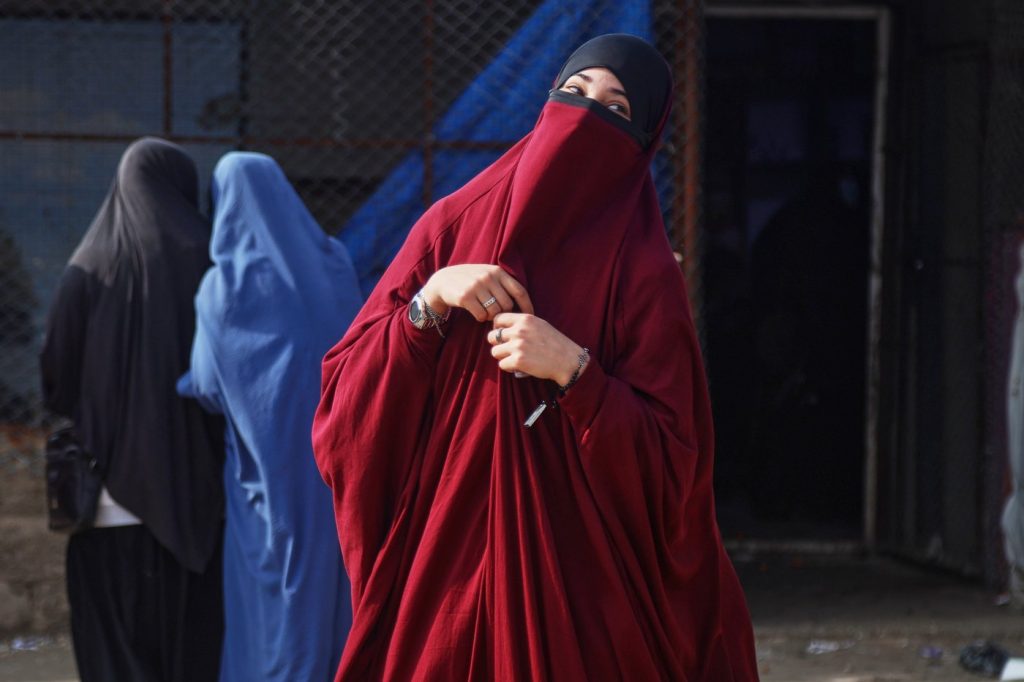
ROJ CAMP, Syria (AP) – Foreign women linked to the Islamic State group, currently residing in Roj camp, a facility accommodating over 2,000 individuals near the Iraq border, are expressing hopes for potential amnesty following a recent offensive that has weakened the Kurdish-led forces guarding their camp. The women shared these sentiments with The Associated Press during interviews on Thursday.
Roj camp is under the administration of the Kurdish-led Syrian Democratic Forces (SDF), which had maintained control over significant portions of northeastern Syria. However, a recent government offensive has successfully taken over most of the territory previously under SDF control, including al-Hol camp that holds nearly 24,000 individuals, predominantly women and children associated with IS.
The majority of women at Roj are either spouses or widows of IS fighters, following the collapse of the terror group's self-declared caliphate in March 2019. Among the notable residents is Shamima Begum, who left London at 15 in 2015 to join IS. Having married a Dutch fighter, she bore three children, all of whom have died. Recently, Begum lost an appeal regarding the revocation of her British citizenship, opting not to engage with reporters at the camp.
Hakmiyeh Ibrahim, the camp director, indicated that the government's military actions have inspired an audacious attitude among the camp residents. Many, including women and children, have begun asserting that they expect to regain their freedom and have even suggested that Kurdish guards might soon find themselves imprisoned in the camp.
“There were changes in the behavior of children and women. They became more hostile,” stated Ibrahim, emphasizing how the situation has fueled a belief that IS might be regaining strength in the region. Following the ousting of former Syrian President Bashar Assad in December 2024, Syria’s new military consists mainly of former insurgent factions, some of which have carried Islamist ideologies.
The newly appointed interim President Ahmad al-Sharaa, previously tied to al-Qaida, opposed IS for years. After assuming the presidency, he has allied himself with the global coalition combating IS. One woman from Tunisia, identified only as Buthaina, noted al-Sharaa's removal from the U.N. and U.S. terrorist lists, calling for equal consideration: “The international community gave al-Golani amnesty. I should be given amnesty too,” she expressed, insisting she had committed no crimes.
The camp currently shelters more than 2,300 people, consisting predominantly of 742 families from approximately 50 different nations, with many originating from post-Soviet states. This contrasts sharply with al-Hol camp, which predominantly houses Syrians and Iraqis who are easier to repatriate. Due to a lack of cooperation from many countries in accepting their nationals back, these foreign detainees remain largely in limbo.
Human rights advocates have repeatedly criticized the poor living conditions and rampant violence in the camps. In a recent development, the U.S. military has started relocating male IS detainees from Syrian prisons to centers in Iraq. However, no defined plan currently exists for the repatriation of women and children from Roj Camp.
Various women interviewed expressed diverging desires about their futures. While some wish to return to their home countries, others prefer to remain in Syria. One German woman, known only as Aysha, indicated she plans to stay, citing Syria's Muslim culture over what she perceives as a nonbelieving society in Germany. In contrast, another woman from Belgium, Cassandra, expressed a desire to leave the camp but remain within the Kurdish-controlled zone in Syria, citing her husband's IS affiliation and the complications it added to her repatriation prospects.
As the Syrian government pushes further into northeastern territory, an unstable situation prevails across numerous detention centers, housing nearly 9,000 IS affiliates. The Syrian government has seized control of facilities like al-Aqtan and Shaddadeh prisons, leading to tumultuous events as over 120 detainees escaped amidst the resultant chaos.
Buthaina conveyed her longing for liberation, highlighting the humanitarian crisis faced over the past nine years. She appealed for resolution regarding individuals accused of crimes to face trial while advocating for freedom for others who have no criminal ties. Emphasizing her status as a non-terrorist, she stated, “We have been punished for nine years that were more like 90 years.”








