

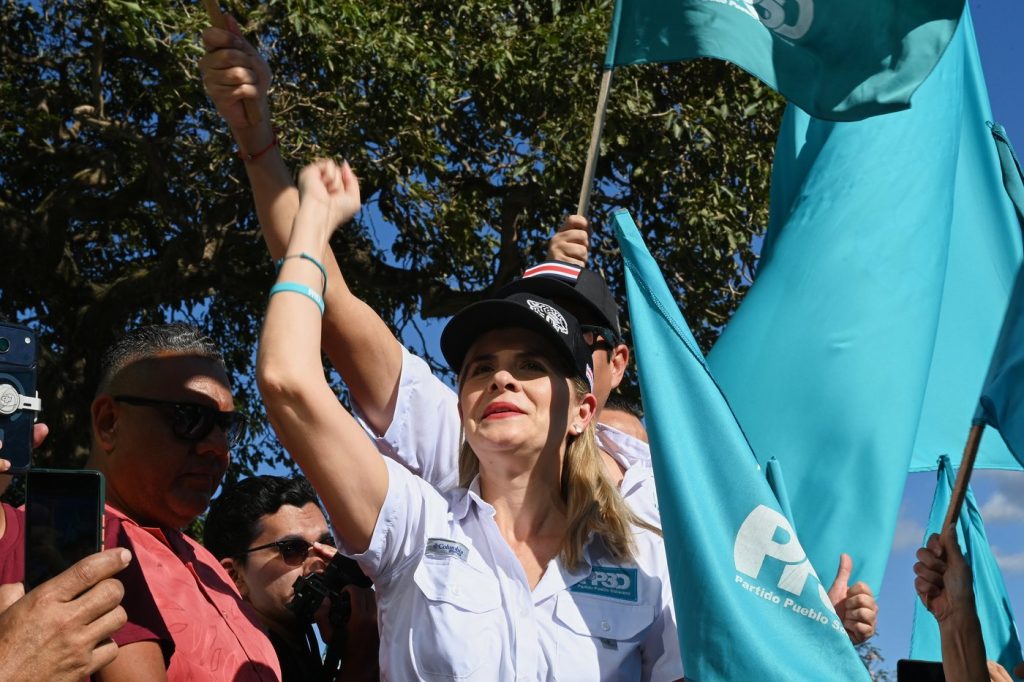
SAN JOSE, Costa Rica (AP) On Sunday, Costa Rican voters face a pivotal decision between continuing the policies of outgoing conservative populist President Rodrigo Chaves or opting for a new direction with candidates on the fringes of the traditional political establishment. This election is significant not only for the presidency but also for the future political landscape of the nation, as voters will also select members of a new 57-seat National Assembly.
The election comes amid rising crime rates in Costa Rica, a factor that could heavily influence voter decisions. Chaves, who has been criticized for not effectively addressing the surge in violence, has maintained that his confrontational approach is necessary to control crime. Many voters are weighing his presidency's effectiveness against rising insecurity in their communities, making public safety a crucial electoral issue.
Laura Fernández, the candidate for the Sovereign People's Party and Chaves' former minister of national planning and economic policy, aims to continue Chaves' political program while promising to provide stability. Polls indicate that Fernández holds a comfortable lead; however, she must secure at least 40% of the vote to win outright on Sunday. If she falls short, a runoff on April 5 would determine the winner.
In addition to the presidency, Costa Ricans are also tasked with electing a new National Assembly. Chaves' party is anticipated to gain seats but may not secure the supermajority needed to influence critical appointments, such as choosing Supreme Court magistrates. The outcome of this election will shape legislative dynamics and could either consolidate or challenge the current government's power.
A total of twenty candidates are vying for the presidency, but Fernández has consistently polled in double digits, positioning her as the frontrunner. Competing candidates include economist Álvaro Ramos from the National Liberation Party and former first lady Claudia Dobles, representing the Citizen Agenda Coalition. Should Fernández not achieve an outright win, these candidates are potential contenders for the second round of voting.
Chaves' rise to power was marked by an outsider campaign that resonated with a populace frustrated with traditional political parties, which he labeled as corrupt and self-serving. This sentiment is rooted in the country’s economic challenges, including high unemployment rates and a significant budget deficit. Political-science professor Constantino Urcuyo noted that the social upheaval in Costa Rica, which facilitated Chaves' rise, reflects a broader global trend where conservative populists have won elections in countries like Argentina, Ecuador, and the United States.
Urcuyo emphasized the importance of this election, stating it represents a choice between those seeking radical systemic change and those advocating for reform within the existing framework. Chaves has been vocal in his criticism of the judiciary and legislature, indicating a willingness to alter the constitutional structure, a move that raises concerns about the potential impact on Costa Rican institutions.
As the elections approach, voters in Costa Rica are faced with critical choices that will influence the nation’s immediate future and its long-term governance. The results will not only determine the presidency but also signal the direction of political reform and institutional integrity in a country long characterized by stability.








