

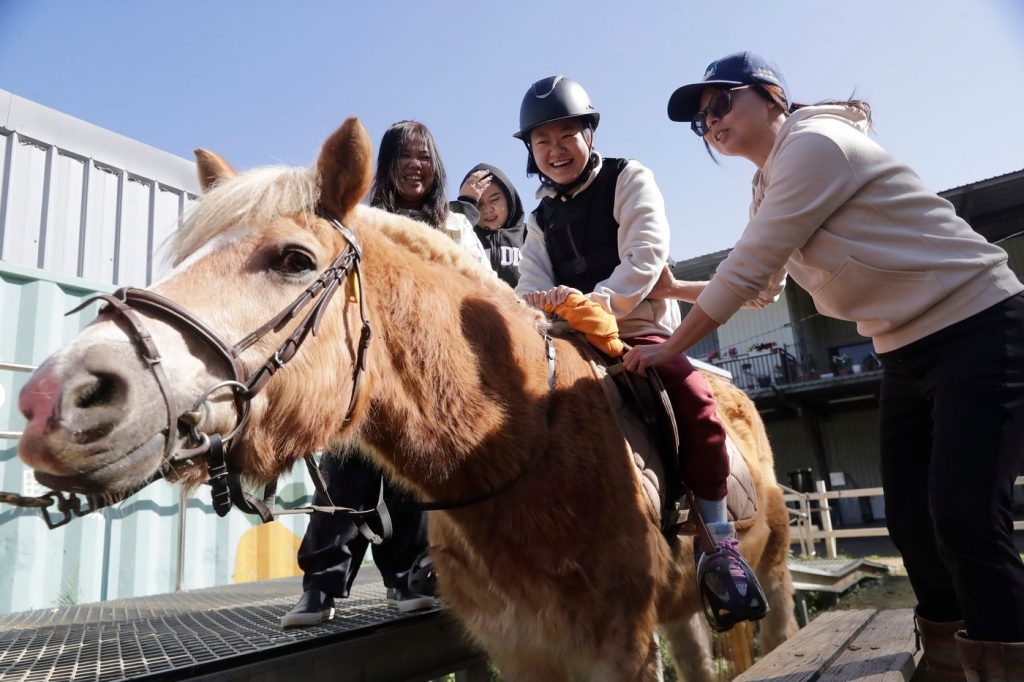
TAOYUAN, Taiwan (AP) In the heart of Taoyuan, Taiwan, a young woman beams with joy as she prepares for her weekly horse riding session. The anticipation is palpable as she laughs and smiles, taking delight in the horse's initial movements. Hector Chen shares the memorable moment with his daughter, Chen You-ching, who has been attending horse therapy since being diagnosed with cerebral palsy over 16 years ago. Now 18, she finds solace and excitement through her weekly interactions with the horses.
Located in northern Taiwan, the Therapeutic Riding Center of Taiwan offers a haven for children with various developmental challenges, including cerebral palsy, autism, and ADHD. Here, they engage in equine therapy, which combines companionship and therapeutic benefits through riding and interacting with horses. This form of animal-assisted therapy is gaining traction globally, as more families recognize its potential to aid children with intellectual disabilities and even veterans coping with trauma.
Abigail Liu, a mother of a 5-year-old daughter named Ayah, shares her family's positive experience at the center. Ayah, who has Angelman Syndrome, a rare genetic disorder that leads to developmental delays, has shown significant improvement since participating in horse therapy. According to Abigail, Ayah has become more adventurous and less fearful of unfamiliar situations since she started riding horses, emphasizing the importance of this therapeutic approach in her daughter's life.
The success of these programs relies heavily on the special training provided to the horses. Chan Shu-ya, a horse therapist, notes that the animals are trained to adapt to the movements of riders and to remain calm amidst bustling surroundings. Some children simply desire to spend time hugging a horse or listening to its heartbeat, activities that the horses readily accommodate by standing still and offering comfort.
Alain Chang, a horse riding coach with the Fang Hsing-Chung Social Welfare Foundation for Horses in Education and Health, highlights the unique bond that develops between the children and the horses. He explains that horses do not express annoyance, making it a serene space for children who may want to talk endlessly or simply be near them. This interaction provides a special experience that fosters emotional and psychological well-being.
Parents and caregivers often note the enthusiasm their children show for these weekly sessions, regardless of the weather. Many of the students eagerly look forward to returning to the center each week, reinforcing the positive impact of equine-assisted therapy on their lives. Through these interactions, the children build confidence, find companionship, and engage in meaningful therapeutic activities that contribute to their overall development.








