

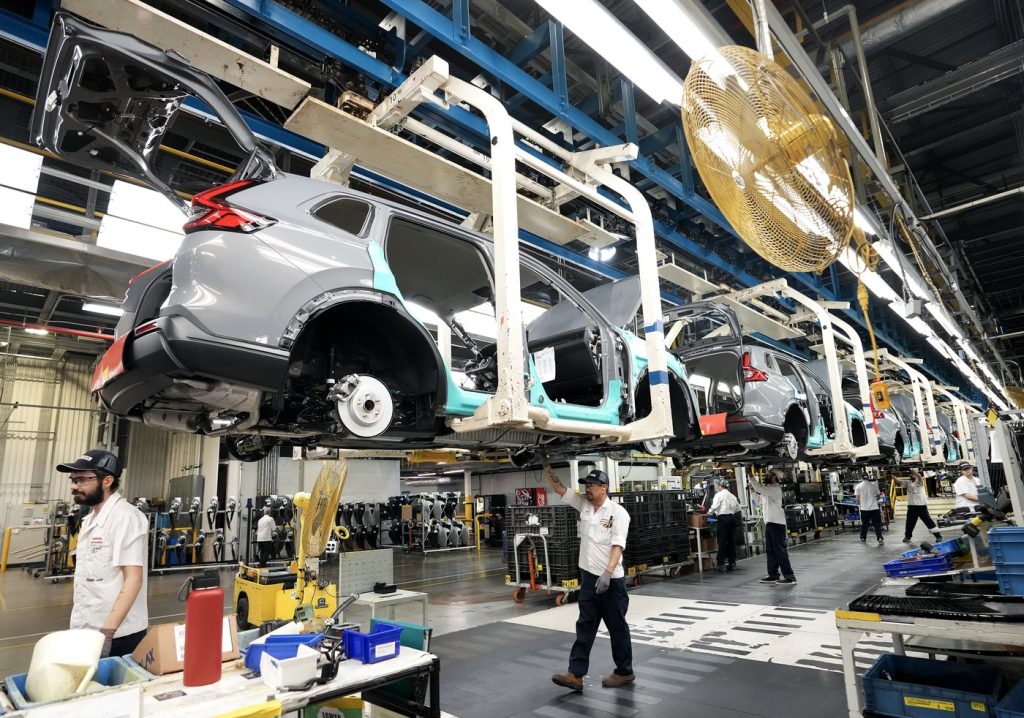
TORONTO – A significant transformation in Canada’s automotive sector has prompted recommendations from the Trillium Network for Advanced Manufacturing, urging the federal government to incentivize automotive companies that remain committed to maintaining and expanding their operations in Canada. The report highlights a concerning trend over the past decade, where U.S. automakers have noticeably reduced their presence in the Canadian market, in stark contrast to Japanese manufacturers who have sustained both production levels and employment rates.
By the close of 2024, Japanese automakers Toyota and Honda have become dominant players in Canada’s automotive workforce, accounting for 62 percent of assembly plant employment, an increase from just 40 percent in 2015. This shift reflects a broader trend, as these two companies produced a remarkable 77 percent of the vehicles assembled in Canada in 2025, significantly up from 44 percent a decade prior to that.
Factors contributing to these changes include Ford's plans to retool its assembly plant in Oakville, Ontario. However, Ford has also delayed its electric vehicle (EV) production originally scheduled for the Oakville facility in 2025 by two years. Following further adjustments, the company is now focusing on launching production of gasoline-powered pickup trucks later this year, indicating a shift away from electric initiatives.
The report from Trillium emphasizes the detrimental effects of fluctuating productivity levels in the automotive sector, particularly highlighting how the frequent idling and underutilization of U.S. plants have resulted in lower overall productivity. In contrast, Japan-based manufacturers such as Toyota and Honda are noted for their superior productivity standards, suggesting that their operational consistency positively impacts their success in Canada.
As the Canadian government gears up to unveil its new automotive strategy this month, the Trillium Network advocates for a system that rewards companies which have consistently invested in and expanded their presence within Canada. The report pushes for policies that not only recognize the commitment of these automakers but also encourage the implementation of Canadian-made production technologies in manufacturing facilities.
The insights presented in this report reflect the shifting dynamics within the Canadian automotive sector, where loyalty to domestic manufacturing and employment stands crucial in shaping future policies. As the automotive landscape continues to evolve, it becomes increasingly important for the Canadian government to support those who demonstrate a long-term commitment to the country’s manufacturing capabilities.








