

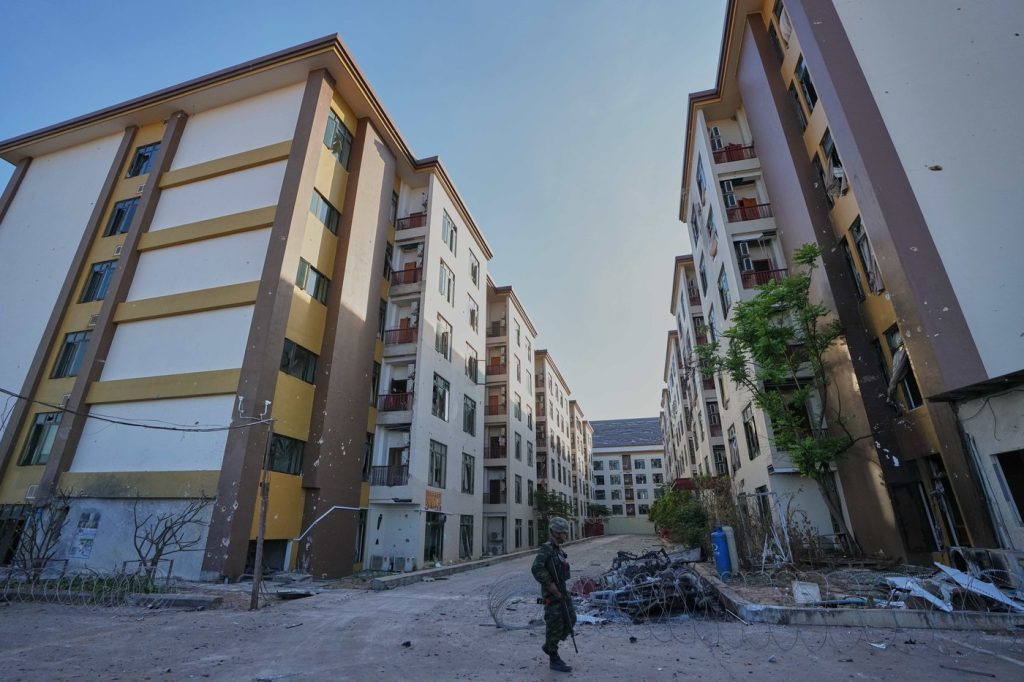
O'Smach, Cambodia (AP) — The abandoned buildings in the town of O'Smach, located along Cambodia's northern border with Thailand, have recently gained attention due to the aftermath of armed clashes in the region. These structures, once a significant part of Cambodia's notorious scam operations, are now under the control of Thai troops, highlighting the ongoing issues surrounding fraud and exploitation in the area.
During a visit organized by the Thai military, journalists and international observers were shown a six-story building littered with documents, equipment, and personal belongings, all abandoned likely in a hurry. Lt. Gen. Teeranan Nandhakwang, director of the Thai army's intelligence unit, described the scam centers as being "well-organized," equipped with good infrastructure and systems. He emphasized the use of various tactics and techniques employed to carry out scams, revealing the complex nature of these operations.
Scam operations in Cambodia, along with similar activities in other countries, have reportedly deceived individuals globally out of billions of dollars. Many victims find themselves forced to work under conditions that can be described as slave-like. The Thai military indicated that this compound was seized during clashes in December, during which it was operated as a military base by Cambodian forces.
A ceasefire reached in December mandated that both conflicting parties would de-escalate tensions and maintain their forces in the positions they held prior to the agreement. This arrangement included the compound now occupied by Thai troops, raising questions about territorial dynamics in this volatile region.
The interiors of the compound feature dozens of rooms outfitted with wooden booths soundproofed with foam, along with multilingual scripts, lists of names and phone numbers, computer monitors, and empty brackets for hard drives. The appearance of mock-up sets resembling police stations and uniforms from at least seven countries—including China, Australia, India, Indonesia, Vietnam, Singapore, and Brazil—suggests a sophisticated approach to the fraudulent practices executed here.
One room even contains a replica of what seems to be a Vietnamese bank branch, complete with service counters, promotional banners, and a waiting area. These setups were instrumental in scams where operators impersonate officials or authority figures. The scripted interactions are designed to invoke threats of arrest or other legal repercussions to manipulate victims into compliance.
The inspections by Thai authorities illustrate the extent of the operations that took place within these walls. Photos from the scene reveal abandoned workstations, mocking the roles of law enforcement, and even fake currency strewn across the floor. This situation sheds light on a considerable criminal network that preyed on unsuspecting individuals, often leading them into dire circumstances.
The Thai military's involvement in securing the site after the December clashes indicates the increasing importance of monitoring such criminal activities, as well as the complexities of the international response to transnational crime. As this issue continues to unfold, the implications extend not only to the countries involved but also to the global community mobilizing against such heinous crimes.








