

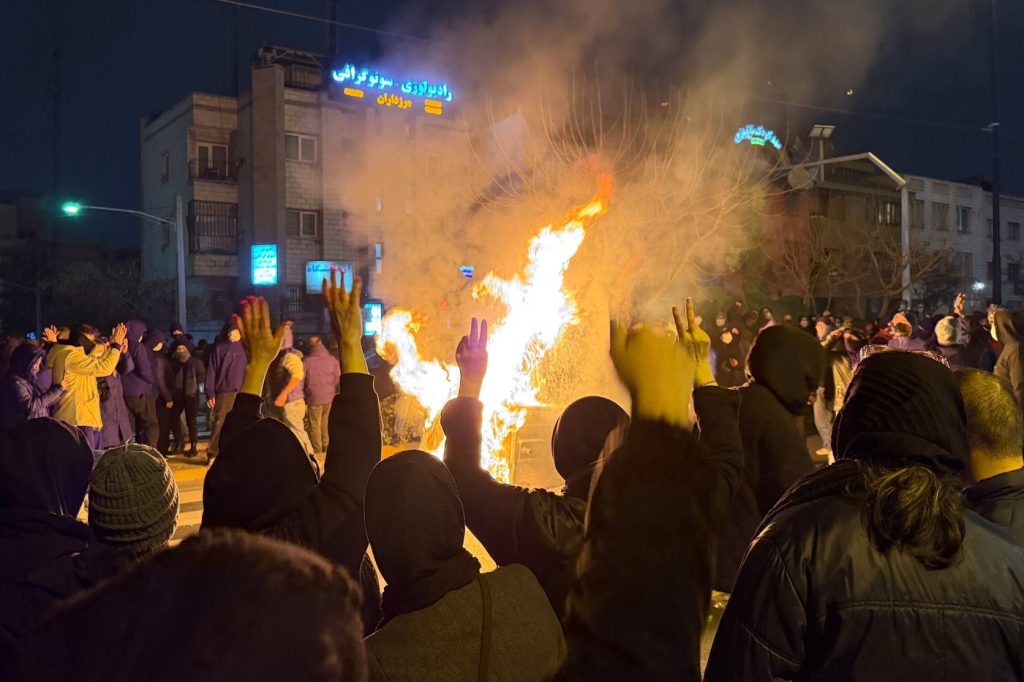
In the city of Karaj, Iran, a beautician captured harrowing moments during the protests on January 8, 2026, as tear gas canisters and gunfire erupted among crowds demanding change from the longstanding cleric-led government. The beautician, alongside her friends, found temporary refuge among trees, illuminated only by streetlights and distant fires. As the chaos unfolded, she recorded her experiences, shouting encouragement to her fellow protesters, prompting them to chant phrases like "Death to the dictator!" displaying a moment of collective courage amidst the turmoil.
The protests on this night attracted what is believed to be hundreds of thousands of Iranians across at least 192 cities, marking one of the most significant anti-government demonstrations since the 1979 Islamic Revolution. The beautician's videos reflected the initial exuberance and hope of the protesters, contrasting sharply with the pervasive atmosphere of fear that has settled over Iran in its aftermath.
Following the violence of that night, which saw an estimated death toll of at least 6,854, the beautician retreated into isolation, moving in with her mother due to an overwhelming sense of terror. She described the general public as "walking corpses," expressing that the collective spirit of hope had been overshadowed by grief and despair. Despite previously participating in protests, including those ignited by the death of Mahsa Amini in 2022, she feels disillusioned and anxious, worrying about her safety and the future of her country.
The impact of the recent protests has been profound, with reports indicating over 50,000 detentions and an unprecedented government crackdown that included a month-long internet blackout to obscure the events occurring across the nation. While she communicated sporadically with relatives abroad, sharing videos and messages, the beautician expressed feelings of abandonment by the international community, fearing her sacrifices and those of others would ultimately be in vain.
Prior to the protests, the beautician struggled with the economic hardships plaguing Iran, exacerbated by corruption and sanctions. Her financial situation deteriorated over time, leading her to join the protests on January 8, driven by the exorbitant cost of living. That night, as the demonstrators filled the streets of Karaj, they bravely called for change, chanting against Supreme Leader Ali Khamenei and expressing solidarity, despite the looming threat of violence.
The beautician recorded scenes of escalating violence, capturing moments where police fired tear gas and live ammunition on protesters. She witnessed numerous injuries and fatalities, including the deaths of acquaintances while attempting to assist injured individuals. After witnessing such trauma, she and others became too frightened to leave their homes, dwelling in fear of further violence and government reprisals.
The aftermath of the protests left many with a profound sense of mourning and helplessness. The beautician reported that her ability to cope has been severely impacted; she struggles to find sleep and relies on tranquilizers due to continuous anxiety. Concerned about security agents targeting her neighborhood, she and her neighbors refuse entry to anyone who rings their doorbell. The fears she shared mirror the collective anxiety of a nation gripped by grief and unrest.
Overall, the beauty therapist's experiences underscore the resilience yet vulnerability of the Iranian populace amid ongoing oppression. Despite their history of resistance, the recent events have instilled a pervasive fear, leaving many feeling powerless and mourning the loss of hope for a brighter future.








