

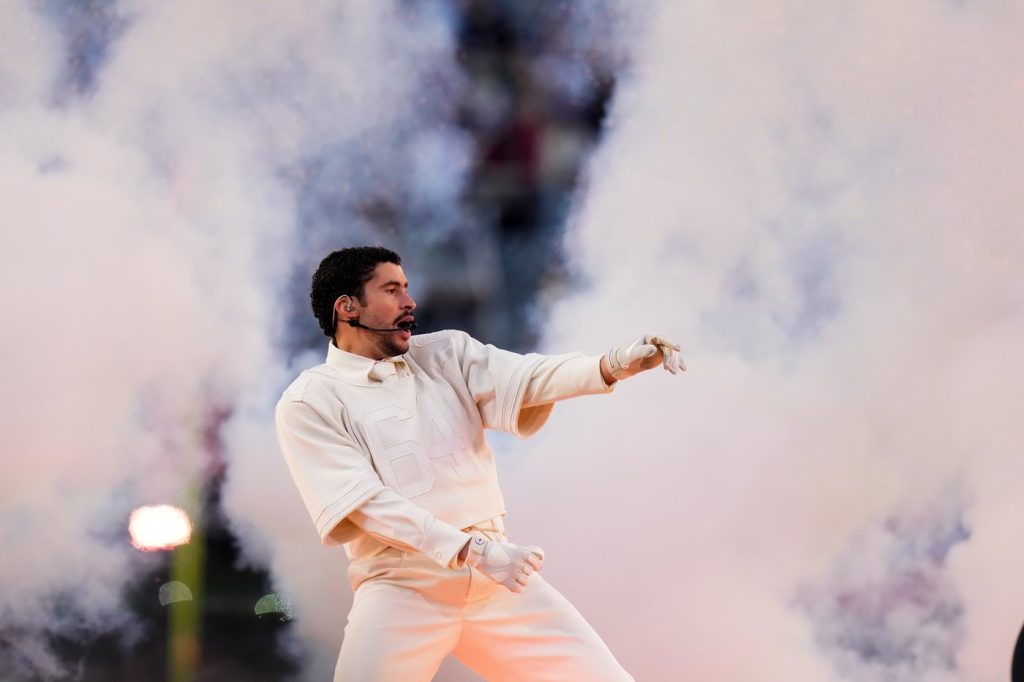
The Super Bowl 60, held on February 8, 2026, in Santa Clara, California, featured an electrifying halftime show that captivated audiences both in the stadium and at home. This event showcased stellar performances from some of the music industry's biggest names, with Latin superstar Bad Bunny taking center stage.
Bad Bunny delivered a series of energetic performances that highlighted his popularity as a leading figure in the music scene. Images from the halftime show depicted him not only as a solo performer but also alongside notable artists such as Lady Gaga and Ricky Martin. The thrilling atmosphere was palpable, with vivid displays that complemented the music and added to the festive environment.
Numerous photographs from the event captured Bad Bunny's performances, showcasing his dynamic stage presence and engaging connection with the audience. The images revealed him in various outfits and energetic poses, emphasizing the vibrancy he brought to the Super Bowl stage. He was prominently featured in stunning visuals, solidifying his role as one of the key entertainers of the night. In particular, his collaborations with Lady Gaga were highlights, creating a unique blend of genres and styles that thrilled fans.
Lady Gaga also had a significant presence during the halftime show, captivating attendees with her powerful vocals and theatrical performance style. Her solo acts and interactions with Bad Bunny illustrated the synergy between the artists, as they combined their talents to create an unforgettable experience. Photographers documented her engaging performances, which were enhanced by elaborate staging and effects that captivated the audience.
Ricky Martin’s participation added yet another layer to the show, showcasing his iconic sound and further diversifying the lineup. His presence paid homage to the rich cultural heritage of Latin music, aligning perfectly with the burgeoning global popularity of the genre. The collaboration of these artists exemplified a significant evolution in Super Bowl halftime performances, reflecting the inclusion of diverse musical styles and cultural representations.
The halftime show was not solely about the musical performances; it also featured a dazzling array of fireworks and visual displays that lit up the sky above the stadium. These stunning pyrotechnics added a magical touch to the performances, offering a feast for the eyes that complemented the auditory pleasures of the show. The integration of fireworks with the vibrant performances emphasized the celebratory nature of the Super Bowl.
Throughout the event, Bad Bunny's performances were consistently highlighted in various photographs, capturing pivotal moments that resonated with fans. His entertaining presence, combined with innovative choreography and audience interaction, led to a memorable show that is likely to be remembered for years to come. Additionally, the visuals shared across media platforms reinforced his status as a modern music icon.
As the excitement of Super Bowl 60 reverberated through Santa Clara, the halftime show positioned itself as a major cultural highlight of the event. It not only served to entertain sports fans but also celebrated the artistry of music and performance. The inclusion of a diverse and dynamic group of performers created a richer experience, showcasing how far halftime shows have evolved to become a critical part of the Super Bowl spectacle.
This year's halftime performance was a testament to the power of collaboration and the arts in bringing people together through shared music experiences, setting the stage for future events to build upon this vibrant legacy. Overall, Super Bowl 60 highlighted the intersection of sports and entertainment, making it a memorable occasion for attendees and viewers alike.








