

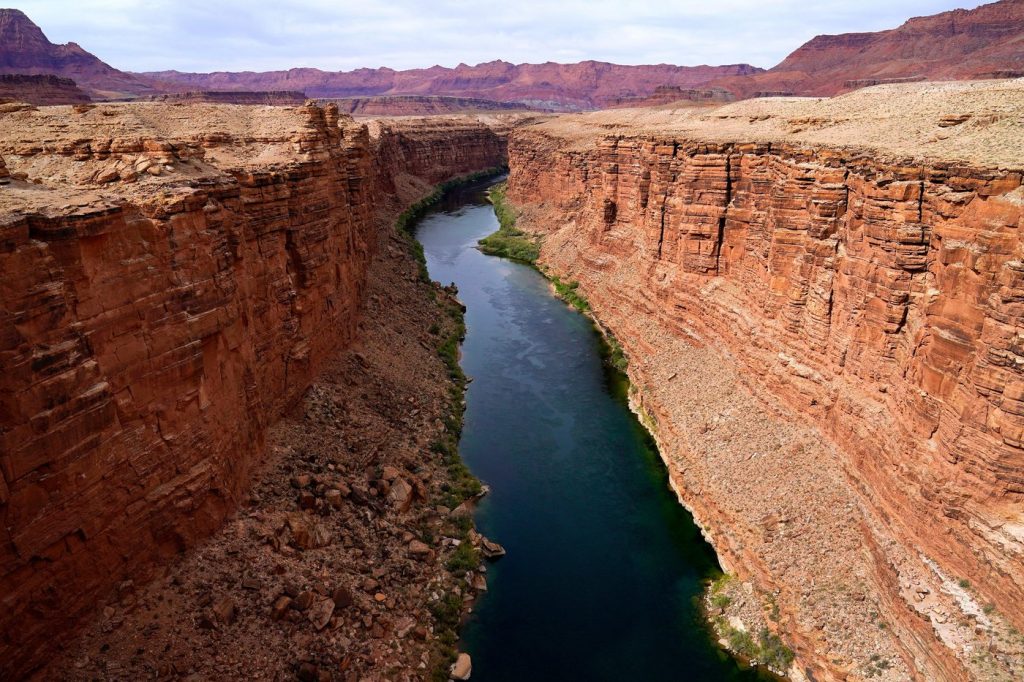
PHOENIX (AP) — The seven Western states that rely on the Colorado River have again failed to reach an agreement regarding a plan to mitigate record drought and ongoing water shortages, missing a critical deadline for the second time on Saturday. The states involved include Arizona, California, Nevada, Colorado, New Mexico, Utah, and Wyoming.
In a joint statement, Arizona Governor Katie Hobbs, California Governor Gavin Newsom, and Nevada Governor Joe Lombardo emphasized the urgency of the situation. They called on the Upper Basin states to contribute more concessions to the ongoing negotiations. The governors reiterated the importance of the Colorado River to their communities and economies, highlighting that their states have taken substantial steps to conserve water in recent years to ensure stability in water supplies moving forward. “Our stance remains firm and fair: all seven basin states must share in the responsibility of conservation,” they stated.
Recent proposals from Arizona, California, and Nevada suggest reductions in their Colorado River water allocations by 27%, 10%, and 17%, respectively. Colorado Senator John Hickenlooper, who previously played a key role in negotiating a river contingency plan in 2019 as governor, described the situation in the Colorado River Basin as “dire,” exacerbated by low snowpack levels this winter.
“If we don’t address this problem together – head-on and fast – our communities, farms, and economies will suffer,” stated Hickenlooper. He emphasized the need for a collective approach and pointed out that litigating the issue would not resolve the long-term challenges posed by aridification.
John Entsminger, general manager of the Southern Nevada Water Authority, also expressed frustration with the lack of progress in negotiations. He remarked that the measures taken over the past two-plus decades focus less on raising Lake Mead’s elevation and more on preparing for potential worsening conditions.
This round of negotiations has already seen the states miss a previous deadline in November set by the U.S. Bureau of Reclamation to devise a strategy for addressing water shortages as the current guidelines are set to expire later this year. Over 40 million people across the Basin states, as well as those in Mexico and Native American tribes, depend on the Colorado River for water access. The river plays a critical role in agriculture and provides necessary water and electricity to millions of households and businesses.
Significant urban centers such as Denver, Salt Lake City, Albuquerque, Las Vegas, Phoenix, and Los Angeles are among the major consumers of water from the Colorado River. Chronic overuse, compounded by drought and rising temperatures attributed to climate change, has led to diminished water flows throughout the region. The allocation and conservation of water, particularly during dry seasons, have been fundamental topics in negotiations amongst the states for decades.
The original 1922 Colorado River Compact was established based on water availability that no longer exists, particularly in light of the ongoing long-term drought conditions in the West. The current series of negotiations among the seven states has been underway for over two years, yet no consensus has been reached. If the states fail to come to an agreement, there is potential for federal intervention to create a plan, which may result in dissatisfaction from various parties and even lead to litigation.
Furthermore, recent scientific findings indicate that snow cover and snow depth in Western regions are at their lowest in decades, with some areas experiencing their warmest winters from December to early February. Typically, snow cover during this time expands to approximately 460,000 square miles, an area roughly equivalent to the combined sizes of California, Utah, Idaho, and Montana. However, this year’s snow coverage has shrunk to a mere 155,000 square miles, reflecting the severity of the ongoing drought crisis.








