

OTTAWA — The revamped federal electric vehicle rebate program officially launched today, but concerns loom over the lingering financial burden felt by some of Canada's auto dealers from the previous program. Dealers report being significantly out of pocket, with one dealership claiming a loss of $20,000 due to unpaid rebates from Transport Canada.
Beginning today, Canadian consumers can obtain up to $5,000 in government rebates for purchasing new electric vehicles (EVs) priced under $50,000. For plug-in hybrids, a subsidy of $2,500 will be available. The return of this popular incentive program is welcomed by many car dealerships; however, there is apprehension regarding the timing of the government's reimbursement portal, which is not set to launch until April.
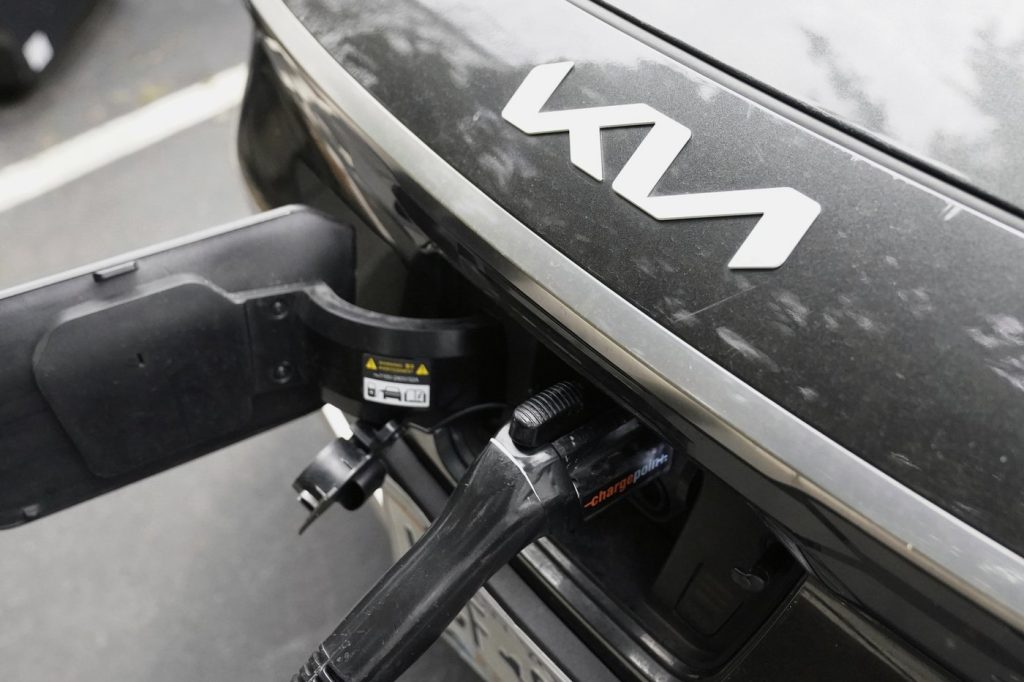
Dean Woods, the sales manager at a Kia dealership in Grimsby, Ontario, expressed his concerns, stating, "It’s a little worrisome. Obviously, my antlers are a little bit more raised with what’s going on, and I’m going to be on top of every claim. Just because I don’t trust the system anymore." Woods noted that his dealership is still awaiting reimbursement from Transport Canada for rebates applied to EVs sold in 2024. The issue arose when his office manager discovered last month that they had not been reimbursed after selling the vehicles.
Despite Woods' attempts to resolve the issue with Transport Canada, his request for reimbursement was denied due to the previous program having ended a year ago. Transport Canada attributed the non-reimbursement to an error in the submission forms, stating, “Therefore, you never received the claim number confirmations for these four submissions, and it was never received by the iZEV Program.” The letter further explained that if the program were still active, resubmission could have taken place, but since it is now closed, reimbursement is not an option.
Under both the previous and current EV incentives programs, dealerships apply the rebate directly at the point of sale and subsequently seek reimbursement from the government. Huw Williams, a spokesperson for the Canadian Automobile Dealers Association, commented on the burden placed on dealerships: “The process amounts to dealerships having to front the money on behalf of the federal government, which has an enormous treasury. Dealers are small, independent businesses.” He also pointed out that Transport Canada has not always shown flexibility in resolving issues related to claims.
Williams could not provide an exact figure on how many dealerships are currently waiting for reimbursements, but indicated that some have approached his association to seek assistance after their claims were rejected. "We have some dealers who have brought us cases to look at and submit to Transport Canada, which we’ve done, and after they’ve been rejected, we’ve then been rejected," he added. This has led to a sense of hopelessness among some dealers, who are uncertain if submitting additional claims would yield any positive outcome.
Given that the government has reestablished the incentive program, which has a budget allocation of $2.3 billion, Williams urged Transport Canada to address the outstanding reimbursement claims. “Let’s start it in good faith. Get people, dealers—who had fronted money to consumers—paid, and let’s charge forward together to get EVs across the country,” he emphasized.
The initial EV rebate program operated between 2019 and 2025, though it was paused in January 2025 due to funding depletion. Transport Canada previously reopened the rebate program temporarily last summer, allowing dealerships to submit claims that had yet to be fulfilled. In a statement, Transport Canada noted that all eligible claims submitted either before the pause or during the temporary window had been paid. However, a follow-up inquiry regarding the status of claims affected by submission errors was met with no immediate response from the department.








