

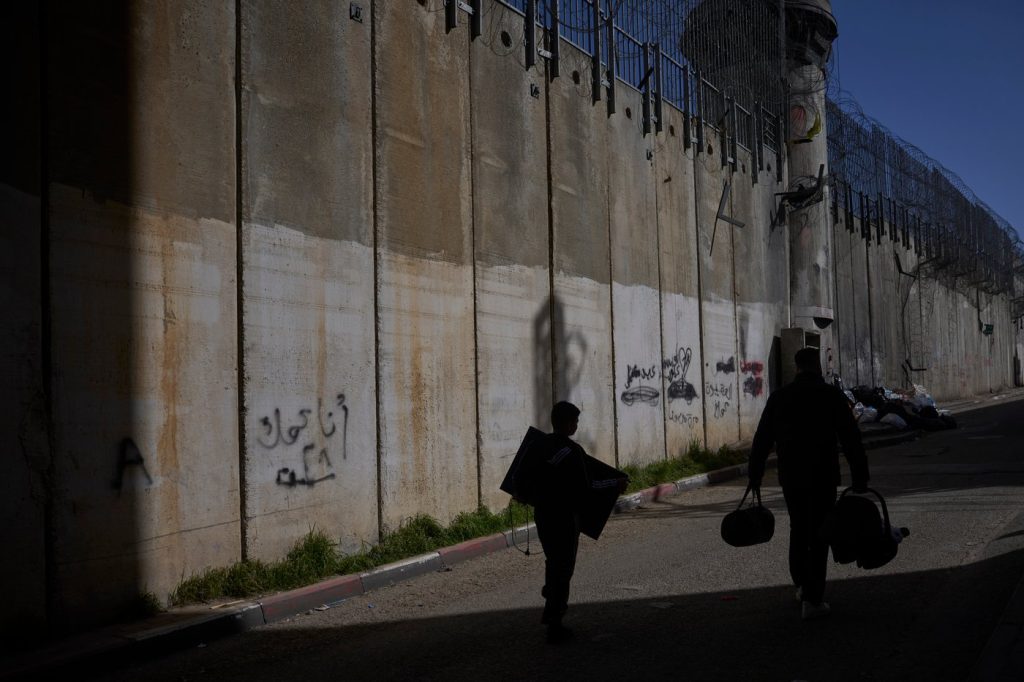
TEL AVIV, Israel (AP) — Israel has announced plans to initiate a controversial land regulation process in a significant portion of the occupied West Bank. This decision, made by the government on Sunday, could lead to Israel asserting control over large areas of the territory for future development. The move allows for the resumption of "settlement of land title" processes, which have been on hold since the 1967 Mideast War. Under this new plan, once land is designated for registration, individuals claiming ownership must provide documentation to support their claims.
The Israeli anti-settlement organization, Peace Now, has labeled the initiative a "mega land grab" from Palestinians. Hagit Ofran, director of Peace Now's Settlement Watch program, stated the decision is "very dramatic" and could enable the state to seize control of nearly all of Area C. This area comprises around 60% of the West Bank and is under full Israeli military control, as outlined in agreements with the Palestinians during the 1990s.
The recent decision is part of a broader trend aimed at solidifying Israeli authority over the West Bank. In recent months, Israel has significantly increased construction within Jewish settlements, legalized unauthorized outposts, and implemented major bureaucratic reforms to reinforce its control while undermining the Palestinian Authority.
The Israeli Foreign Ministry has asserted, without providing evidence, that the Palestinian Authority has been pursuing illegal land registration procedures in Area C. They claim that the land registration initiative was intended to enhance transparency. Initially announced in May, the decision required further development before being approved in the Cabinet meeting on Sunday. Under the plan, Israeli authorities will identify specific areas for registration, compelling anyone with a land claim to demonstrate ownership.
Ofran cautions that the process for establishing ownership can be "draconian" and lacks transparency, suggesting that lands currently held by Palestinians may revert to Israeli state control. She expressed concern that the proceeding might enable Israel to claim up to 83% of Area C, which represents roughly half of the West Bank.
The registration process could commence as early as this year. The proposal has garnered support from far-right members of the ruling coalition, including Justice Minister Yariv Levin, who affirmed the Israeli government's commitment to strengthening its grip on all territory it considers its own, viewing this decision as evidence of that commitment.
The Palestinian Authority, through President Mahmoud Abbas' office, condemned the decision as a "grave escalation" and a blatant violation of international law, characterizing it as a form of "de facto annexation." They have called on the international community, particularly the United Nations Security Council and the United States, to respond swiftly to this development.
Historically, prior U.S. administrations have condemned actions that expand Israeli influence in the West Bank. However, Prime Minister Benjamin Netanyahu enjoys a close relationship with former President Donald Trump. Although Trump has opposed annexation, the dynamics surrounding Israeli settlement activity continue to be contentious.
Currently, Palestinians are legally prohibited from selling land to Israelis, although recent measures aim to change this policy. Settlers can purchase homes on land controlled by the Israeli government, and recently announced decisions intend to broaden Israeli enforcement related to various aspects in the West Bank, including environmental protections and archaeological regulations in Palestinian-administered areas.
Over 700,000 Israelis reside in the occupied West Bank and east Jerusalem, regions captured by Israel in 1967 from Jordan, which Palestinians seek for a future state. The international community widely considers Israeli settlement construction in these areas illegal and a significant barrier to achieving peace.
Jordan's Foreign Ministry has also urged the international community to intervene, emphasizing the need to hold Israel accountable for what it deems a dangerous escalation. It is estimated that over 300,000 Palestinians live in Area C, with many others in neighboring communities reliant on its agricultural and grazing lands, including plots with ownership documentation dating back decades.
___
Melanie Lidman, The Associated Press








