

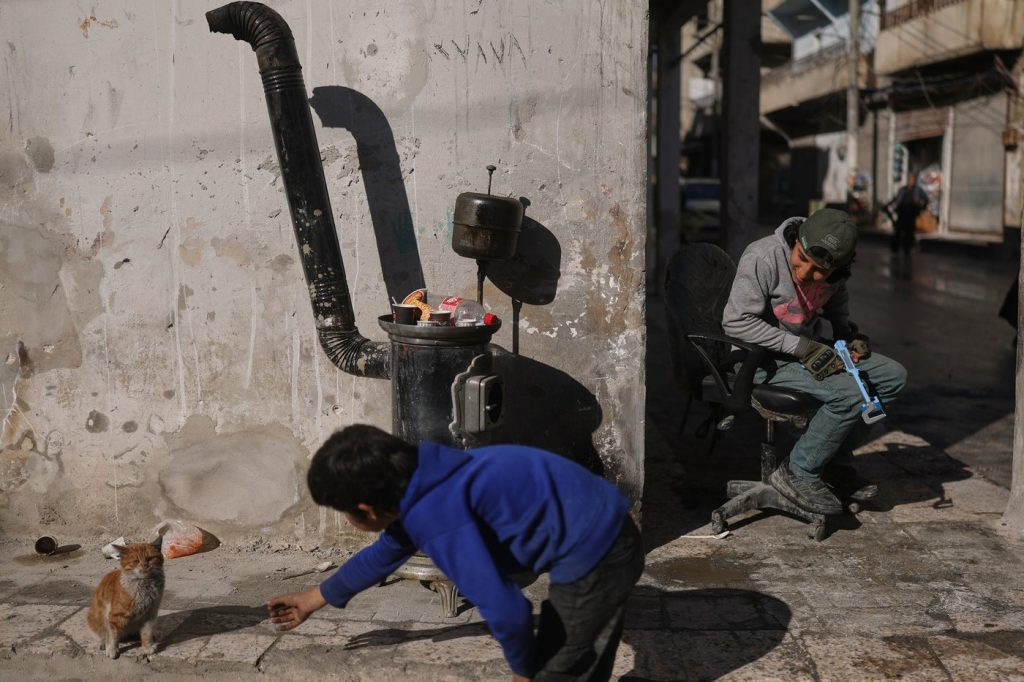
A month after clashes erupted in the Kurdish-majority neighborhoods of Sheikh Maqsoud, Achrafieh, and Bani Zaid in Aleppo, Syria's second-largest city, a significant majority of the displaced residents have returned home. The fighting, which took place starting January 6, was prompted by a stalemate between the Syrian government and the Kurdish-led Syrian Democratic Forces (SDF) regarding the integration of the SDF into the national army. Despite the intense conflict, which resulted in at least 23 casualties and displaced over 140,000 individuals, approximately 90% of the local population has resumed their lives in the area.
Aaliya Jaafar, a resident of Sheikh Maqsoud who operates a hair salon, described the situation as surprisingly quick, stating, "This was maybe the shortest displacement in Syria." Her family, along with many others, briefly evacuated their homes due to a drone strike that targeted a nearby weapons storage area. The Associated Press noted the precarious transition in Aleppo, as the new government seeks to consolidate control and build trust with minority communities wary of their safety.
The recent escalation was marked by an impasse in negotiations between the Syrian government and the SDF. The Syrian army eventually captured the pivotal neighborhoods after several days of fierce combat. In contrast to past conflicts, the government implemented measures to prioritize civilian safety, such as opening humanitarian corridors for those wishing to escape the violence. Ali Sheikh Ahmad, a local shop owner and former SDF-affiliated police member, reflected on the initial fears of possible retribution by governmental forces upon their return, a concern that has ultimately subsided following a successful ceasefire agreement.
Residents have reported that government forces treated them well, and the security situation has remained stable. Shops have reopened, and community life has resumed. However, economic challenges persist, as many individuals who previously depended on the SDF for their livelihoods are now struggling with interrupted services and diminished customer flows. Jaafar highlighted the dire economic conditions, stating, "The economic situation has really deteriorated," as her business was adversely affected after the clashes.
In a move aimed at fostering reconciliation, interim President Ahmad al-Sharaa issued a decree that enhances the rights of Syria's Kurdish population. Among the changes, Kurdish has been recognized as a national language alongside Arabic, and the traditional Nowruz celebration has been designated an official holiday. The decree also restored citizenship to tens of thousands of Kurds in areas such as al-Hasakeh, where their identities had been extinguished during a controversial census in 1962.
Though the economic outlook remains grim, some, like Sheikh Ahmad, hold out hope for improved conditions. He expressed a desire to return to Afrin, a town from which his family was displaced during a Turkish offensive in 2018. The recently restored calmness provides a glimmer of optimism for long-term stability, as the government continues to engage with the SDF and its representatives.
Amid the challenges, these initial steps toward political integration and acknowledgment of minority rights may lay a foundation for genuine coexistence among the diverse communities within Syria. Residents, including Kurds and Arabs, yearn for a future free from the bloodshed that has defined their lives for over a decade. Sheikh Ahmad poignantly noted, "We want something better than that. We want people to love each other. We've had enough of wars after 15 years. It's enough."








