

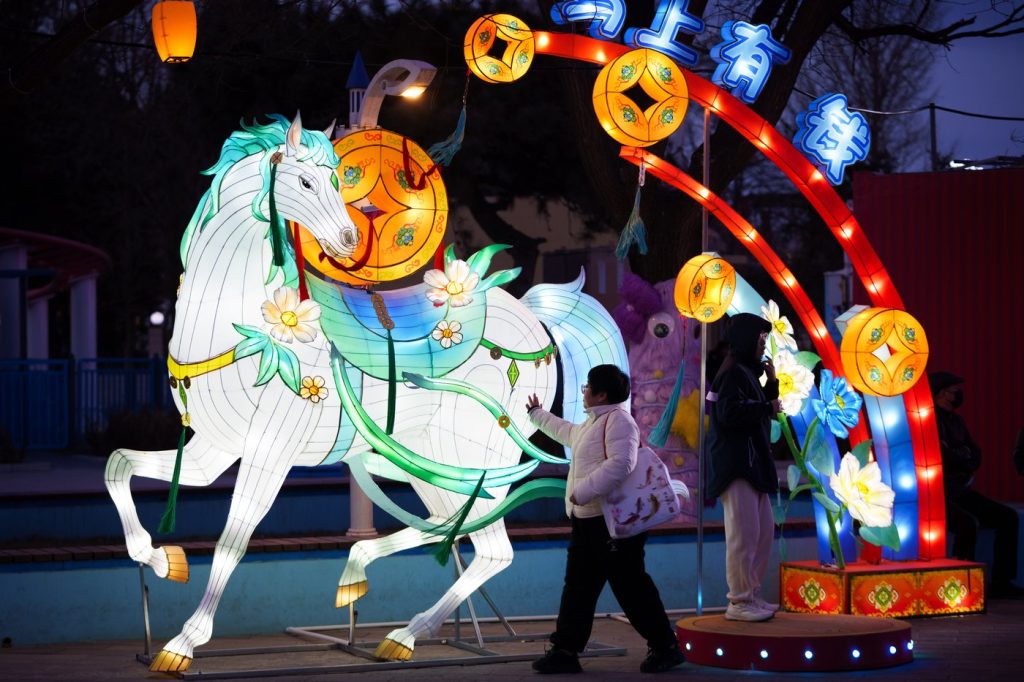
On Tuesday, the festivities for the Lunar New Year commenced, marking the beginning of the Year of the Horse. Celebrations took place across various regions, showcasing a rich tapestry of traditional customs and vibrant cultural expressions. The Lunar New Year, observed by millions, is a time for families to come together and partake in rituals that honor ancestors while welcoming new beginnings.
A photo gallery captures the diverse celebrations, curated by AP photo editors, illustrating the significance of the event. In Beijing, China, visitors reveled in the ambiance created by an impressive illuminated horse lantern display at an amusement park on February 14, 2026. This visual spectacle served as an invitation for people to embrace the joyous holiday. The display reflected the creativity and festive spirit characteristic of Lunar New Year celebrations.
As the Lunar New Year approached, activities in Hong Kong included worshippers donning unique decorations to honor the Year of the Horse. At Wong Tai Sin Temple on February 16, 2026, individuals dressed with horse-themed decorations gathered to partake in rituals meant to invoke blessings for the upcoming year. These practices highlight the deep-rooted traditions tied to the Lunar New Year.
In another significant event, monks in Taipei, Taiwan, performed prayers on the eve of Lunar New Year celebrations, also on February 16, 2026. Their solemn rituals reflected the spiritual aspect of this festive period. Likewise, in Bangkok, Thailand, an ethnic Chinese individual laid down candles after prayer at the Leng Nuei Yee Chinese temple, symbolizing devotion and respect for ancestral traditions as the New Year festivities unfolded on the same day.
The festivities were not limited to ceremonial practices; they also embraced culinary elements. A vendor in Cambodia offered grilled pigs for sale ahead of the Lunar New Year celebrations on February 16, 2026. Such traditions emphasize food's role in bringing families together during special occasions, marking the importance of sharing meals within communities.
The celebration also showcased modern elements, with a humanoid robot adorned in a traditional headdress on display in Beijing on February 13, 2026. This fusion of technology and tradition represents the evolving nature of Lunar New Year celebrations, appealing to younger generations and demonstrating a unique contemporary perspective on customary practices.
In Jakarta, Indonesia, lion dancers animated the market scene on February 12, 2026, performing traditional dances that are believed to bring good fortune. These lively performances added exuberance to the atmosphere and served as a reminder of the cultural heritage embedded within the Lunar New Year celebrations. The presence of local Chinese artists at Thuwunna Stadium on February 14, 2026, further contributed to the festive spirit with their performances, creating an engaging experience for attendees.
The celebrations extended beyond Asia, with events in Moscow, where people gathered at Manezhnaya Square on February 16, 2026, to partake in the Lunar New Year festival. The festive environment drew individuals from diverse backgrounds, showcasing the global embrace of the Lunar New Year tradition.
In Vietnam, the burning of joss paper money was observed as an offering to ancestors ahead of the Lunar New Year of the Horse on February 15, 2026. This act of reverence signifies a deep respect for lineage and the spiritual connection with those who have passed. The celebrations continued to reflect the diversity of practices across different cultures, all rooted in a shared hope for prosperity and good fortune in the year to come.
Lastly, in South Korea, people dressed in traditional "Hanbok" costumes took photographs at Gyeongbok Palace in Seoul on February 16, 2026. This sight further illustrates the importance of traditional attire in celebrating cultural heritage during the Lunar New Year, reinforcing national identity while partaking in age-old customs.
Overall, the Lunar New Year of the Horse brought communities together, fostering an atmosphere of joy, reflection, and cultural pride across various regions. The rich array of celebrations highlighted the enduring significance of familial bonds, tradition, and the collective hope for abundance in the coming year.








