

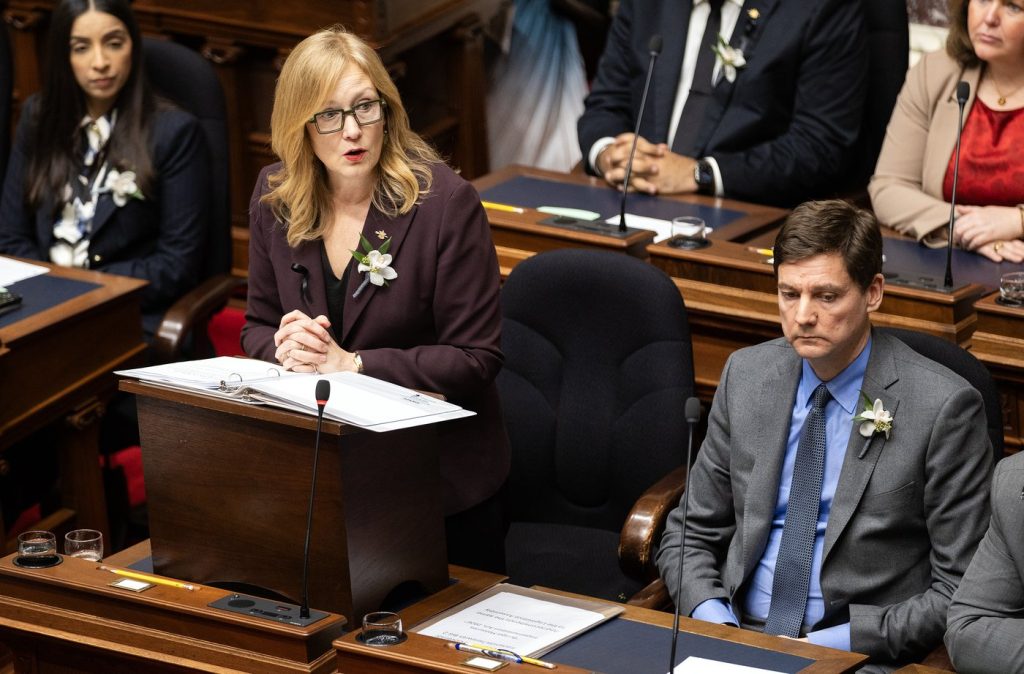
British Columbia's finance minister, Brenda Bailey, has begun promoting a budget that has faced criticism from various factions due to its significant debt and deficit figures. The budget, which is marked by cuts to public sector jobs and delays in critical construction projects such as care homes, student housing, and a cancer center, is being described by Bailey as "serious work for serious times."
One of the most notable aspects of the budget is the increase in the base income tax rate, which will rise by 0.54 percent. This marks the first tax increase in 26 years for the province. Additionally, the forecasted deficit for the upcoming fiscal year is projected to reach a staggering $13.3 billion, raising concerns about the financial health of the province.
As part of the budget measures, the government plans to eliminate approximately 15,000 full-time positions in the public sector over the next three years. This decision has sparked significant backlash from various labor organizations and public sector representatives.
Hermender Singh Kailley, the secretary-treasurer of the BC Federation of Labour, is among those advocating for transparency regarding the impending job cuts. Kailley is particularly concerned about ensuring that these cuts will not compromise the delivery of essential front-line services to the public.
BC General Employees’ Union president Paul Finch has also voiced strong criticism of the budget. He argues that the government has failed to deliver on promises of "strategic investment" aimed at supporting services that would ultimately reduce costs. Instead, he points to an increase in layoffs within the public workforce, jeopardizing the province's ability to build a robust economy.
Finch added that the government has reneged on its commitment to adjust the ratio of management to front-line service workers to optimize resource allocation. He warns that establishing a strong economic foundation will be increasingly difficult if the public sector continues to be weakened.
This latest budget proposal reflects intensified financial pressures and political challenges facing the British Columbia government as it navigates the complexities of fiscal responsibility while attempting to meet the needs of its citizens. The combination of tax increases, job cuts, and the projected record deficit is set to ignite further debates surrounding the province's fiscal policies and priorities.
As the discussions surrounding the budget unfold, stakeholders from various sectors will be watching closely to see how these proposed measures will impact both public services and the broader economy of British Columbia.








