

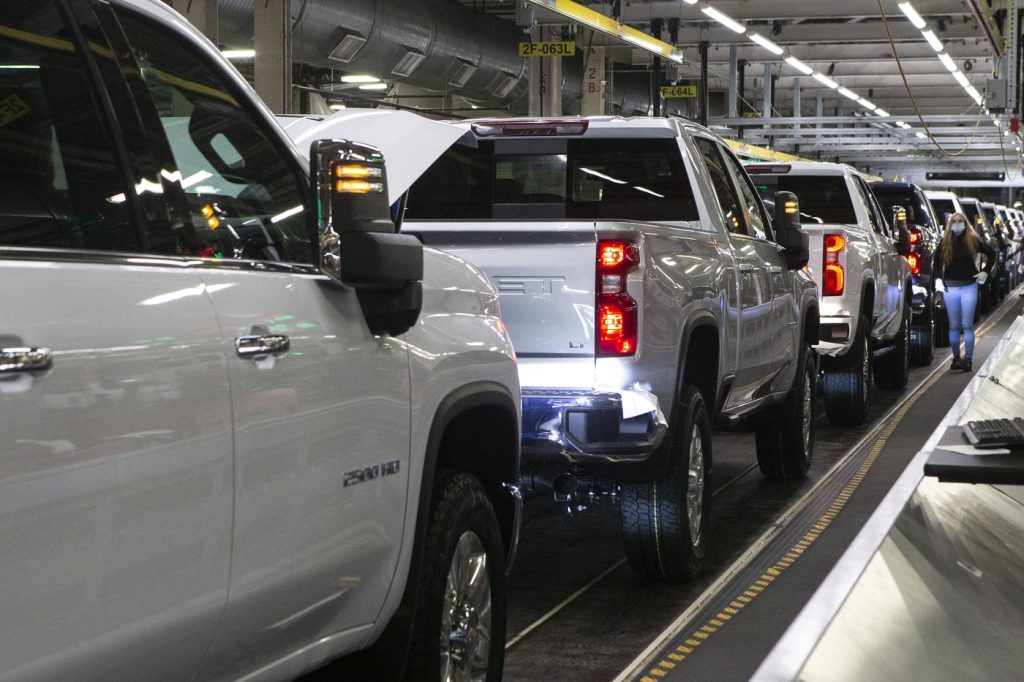
General Motors (GM) has announced a significant investment of $63 million aimed at upgrading its stamping operations at the assembly plant located in Oshawa, Ontario. This financial commitment highlights the company’s ongoing support for the Oshawa facility, which plays a crucial role in the production of the next generation of gas-powered full-sized pickups.
The announcement comes on the heels of the company’s decision to eliminate the third shift at the Oshawa plant, a move that took effect at the end of January. This change resulted in approximately 500 direct layoffs from GM, which subsequently led to the loss of hundreds more positions at supplier companies that relied on the now-discontinued shift. The impact of these layoffs signifies a challenging period not only for the workers directly employed by GM but also for the broader ecosystem of suppliers and support services tied to the plant’s operations.
Since 2020, GM has dedicated a total of $1.5 billion towards enhancing the Oshawa plant, reinforcing its commitment to the location despite the recent workforce reductions. The Oshawa facility stands as GM's sole active vehicle assembly plant in Canada after the company ceased production of its electric delivery van at the Ingersoll plant in Ontario the previous year. Additionally, GM maintains its presence in Canada through engine production at its St. Catharines, Ontario facility.
The backdrop of these developments includes a broader context of GM's adjustments to its production strategies in Canada. The company has been responding to shifts in government policies, particularly under former U.S. President Donald Trump, who had diminished support for electric vehicles and enacted tariffs that incentivized greater vehicle assembly within the United States. This political climate has significantly influenced GM's operational decisions and its overall approach to Canadian production.
Overall, GM's ongoing investment in the Oshawa facility reflects both a commitment to maintaining a vital part of its assembly operations in Canada and an adaptation to ongoing changes in the automotive market. It remains to be seen how these adjustments will shape the future of vehicle production within the region as GM navigates a landscape altered by economic and policy influences.








