

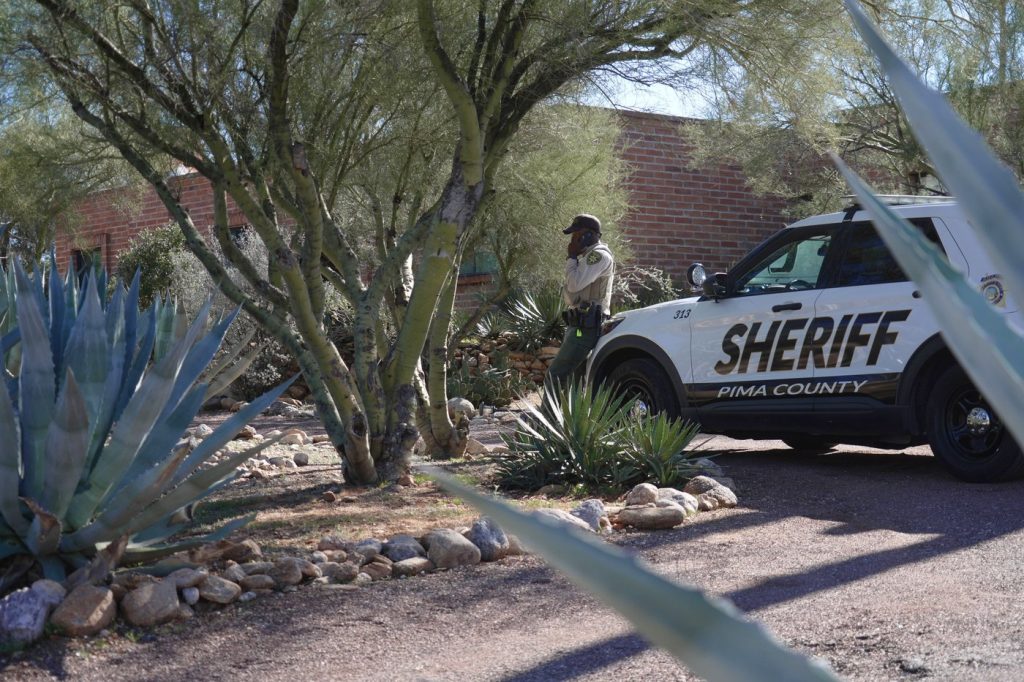
Authorities in Pima County, Arizona, are actively investigating the disappearance of Nancy Guthrie, the mother of NBC's Today co-anchor Savannah Guthrie. As part of their investigative efforts, they may utilize DNA genealogy databases, a strategy that has proven effective in solving high-profile cases such as the Golden State Killer in California and the recent stabbings of four University of Idaho students.
DNA genealogy databases allow investigators to identify potential relatives of unidentified subjects through familial connections. If law enforcement can retrieve and analyze DNA samples from the crime scene associated with Guthrie's case, they could potentially link it to a distant relative in genealogical databases, leading to new leads and suspects. Ruth Ballard, a geneticist with expertise in DNA analysis, remarked on the effectiveness of this technique, stating, "If it's a good quality sample and they're able to get a profile, they could find a hit on that fairly quickly."
As of now, DNA evidence collected in the investigation has not yielded any matches in CODIS, the national criminal justice database containing DNA profiles from convicted felons and, in some states, arrestees. The Pima County sheriff's department reported that they are seeking additional investigative genetic genealogy options to explore other databases beyond CODIS for possible connections.
Guthrie has been missing since February 1, 2023. In the course of the investigation, law enforcement discovered gloves approximately two miles away from her home—which the FBI believes may belong to a masked suspect captured on a porch camera. The authorities continue to analyze biological evidence collected from Guthrie’s Tucson-area residence, with several DNA profiles undergoing laboratory analysis.
Genealogical platforms such as Ancestry, 23andMe, and MyHeritage can comply with court orders requesting user data, while GEDmatch operates on an opt-in basis where users can choose to allow police access to their information. The success of GEDmatch in identifying suspects in cold cases has been highlighted, particularly regarding the apprehension of Joseph DeAngelo Jr., the Golden State Killer, who was linked to numerous crimes through familial DNA matches.
In a parallel case, DNA from a knife sheath was crucial in identifying Bryan Kohberger as the suspect in the killings of four University of Idaho students in 2022. Investigators were able to utilize genetic genealogy techniques to construct a family tree and subsequently obtain trash from Kohberger's parents' home in Pennsylvania, establishing a connection that led to his capture. Kohberger ultimately pleaded guilty and received a life sentence without the possibility of parole.
Experts like Ballard note that the effectiveness of DNA genealogy can depend significantly on the quality and source of the sampled DNA. "It does require a much better sample than CODIS searching does," she explained. Additionally, challenges exist regarding the ethnic diversity of the uploaded data in various databases. "The databases are not equal in terms of ethnic distribution," Ballard commented, adding that it is generally easier to find matches for Caucasian individuals due to their higher representation in genealogical research.








