

MEXICO CITY (AP) In a significant development in Mexico's ongoing battle against drug cartels, the Mexican army successfully killed Nemesio Oseguera Cervantes, a.k.a. “El Mencho,” the leader of the Jalisco New Generation Cartel (CJNG) on Sunday. This operation marked a major achievement for the Mexican government amidst rampant cartel violence that erupted in response to his death.
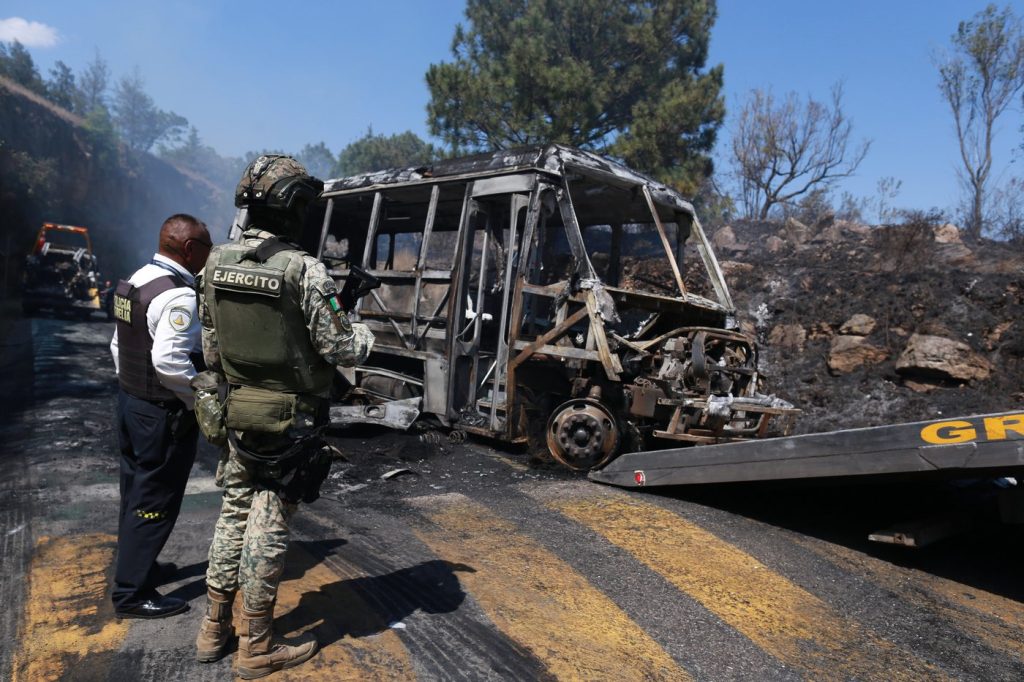
El Mencho was fatally shot during a government attempt to capture him in the southwestern state of Jalisco. This action is considered the most substantial strike against the cartel landscape since the recapture of Joaquín “El Chapo” Guzmán, the former Sinaloa cartel boss, a decade ago. Following the confrontation between cartel members and Mexican troops, violence surged across 20 Mexican states, with gunmen setting cars on fire and blocking roads, particularly in Guadalajara, the capital of Jalisco and Mexico’s second-largest city.
The aftermath of El Mencho's death saw citizens barricading themselves at home as school was canceled in multiple regions. Mexican security forces heightened their alert status nationwide, and even Guatemala took precautionary measures to boost security at its border with Mexico.
The successful operation against Oseguera Cervantes could bolster the Mexican government’s diplomatic standing with the United States, which has pressured Mexico to intensify its efforts in the ongoing war against the drug cartels. The Trump administration had threatened tariffs and potential military action if Mexico did not deliver tangible results in combating organized crime.
Nemesio Oseguera Cervantes, 59, hailed from Michoacán and had ties to organized crime that stretched back over three decades. His involvement in drug trafficking began as early as 1994, leading to a three-year jail sentence in the U.S. Upon his return to Mexico, he established himself rapidly in the drug trafficking world. In 2009, he formed the Jalisco New Generation Cartel, which grew exponentially in size, trafficking a variety of drugs including cocaine, methamphetamines, and fentanyl, and notably utilized innovative violent tactics like drones and improvised explosive devices.
The cartel was infamous for brutal assaults on Mexican law enforcement, one of which included downing a military helicopter in 2015. In the latest operation, Oseguera Cervantes was killed during a confrontation with federal forces, who also reported the deaths of four cartel members, while three soldiers sustained injuries. Notably, significant military equipment, including rocket launchers, was confiscated at the scene.
El Mencho’s death leaves a significant power vacuum within the cartel. The Jalisco cartel has entrenched itself in at least 21 of Mexico’s 32 states and has a nationwide presence in the U.S. market as well. Experts express concern about the potential for increased violence as the cartel may experiments with violent tactics in response to leadership changes. Security analysts suggest that if members of El Mencho’s family assume control, the pattern of violence could persist.
Should new leadership emerge, there remains hope for a shift in operational strategies. However, the most pressing concern is that the cartel could resort to indiscriminate violence reminiscent of Colombia’s violence in the 1990s, involving bomb attacks and high-profile assassinations. The loss of a central leader provides Mexico and the U.S. an opportunity to launch a coordinated, intelligence-driven offensive against the cartel.
In closing, while the killing of Oseguera Cervantes is seen as a significant victory, the broader implications for Mexico's security landscape and the future operations of the Jalisco New Generation Cartel remain to be determined.








