

ISLAMABAD, Pakistan (AP) – The United States and Iran are reportedly close to finalizing a memorandum of understanding aimed at concluding the ongoing war, as revealed by two regional officials and a diplomat on Saturday. The announcement comes as U.S. officials weigh a new round of military actions against Iran.
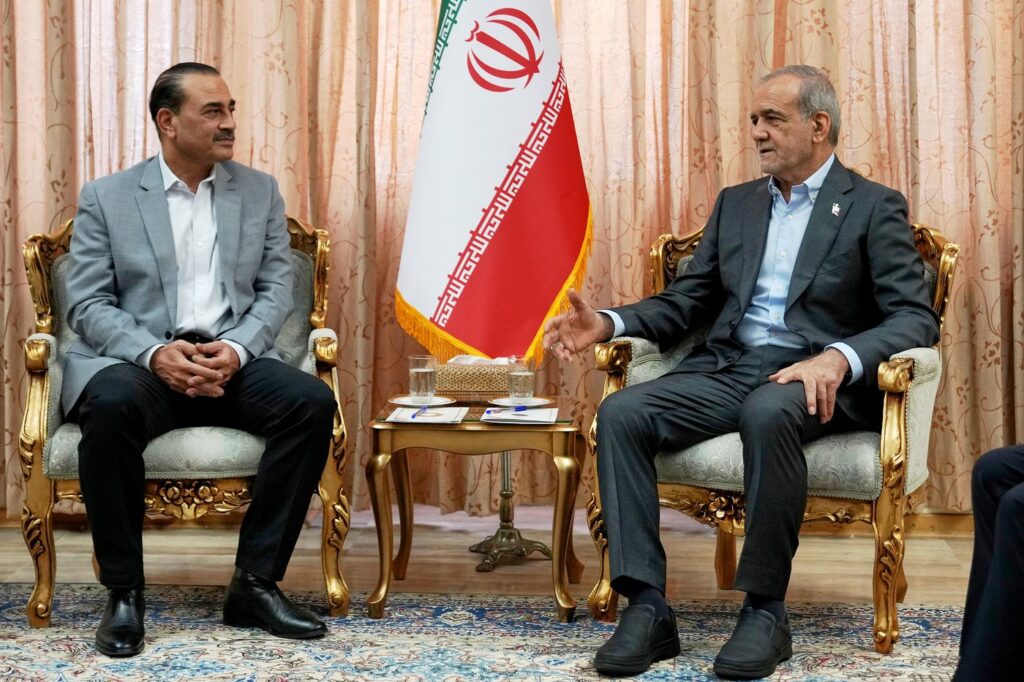
Iran has indicated a movement towards resolving differences in negotiations with the U.S. following additional discussions facilitated by Pakistan's army chief in Tehran. U.S. Secretary of State Marco Rubio, speaking to journalists in India, mentioned that there has been "some progress made" and hinted at possible news later in the day.
The officials, who requested anonymity due to the sensitivity of the discussions, expressed optimism that a decision on the draft prepared by Pakistan could be made within 48 hours as both parties continue their review of the document. They also credited Vice President JD Vance, along with envoys Steve Witkoff and Jared Kushner, for their roles in bridging the remaining gaps in the talks. Additionally, Qatar has been instrumental in this mediation process by sending a senior official to Tehran.
Despite the positive signals, both Iran and the United States have reiterated their key positions and warned of the potential dangers associated with the resumption of military attacks. Iran's state television quoted Foreign Ministry spokesperson Esmail Baghaei, who referred to the draft as a "framework agreement" that aims to address the main issues necessary to terminate what Iran describes as an "imposed war." Baghaei stated that the specifics of the agreement would be discussed over a reasonable timeframe ranging from 30 to 60 days after the initial agreement.
The Strait of Hormuz has emerged as a critical topic in these negotiations. Baghaei noted a recent trend toward narrowing differences between the two nations, stating, "Over the past week, the trend has been toward narrowing differences. We will have to wait and see what happens over the next three or four days." He clarified that nuclear issues are not part of the current discussions, emphasizing that the priority for Tehran is to conclude the war before addressing its longstanding nuclear program.
Rubio reiterated the U.S. position that Iran must never possess a nuclear weapon and must relinquish its highly enriched uranium. He also emphasized the importance of keeping the Strait of Hormuz accessible for global commerce.
During this period of negotiations, Iran has reportedly been rebuilding its military capabilities following a fragile ceasefire. Iranian Parliament Speaker Mohammad Bagher Qalibaf, who serves as a key negotiator, stated that if U.S. President Donald Trump were to resume military actions, the repercussions would be "more crushing and more bitter" than at the war's outset.
Trump previously indicated that he refrained from attacking Iran due to the "serious negotiations" in progress and at the behest of allies in the Middle East. He has also set previous deadlines for Tehran but has not followed through on military strikes. The conflict escalated following U.S. and Israeli attacks on February 28, which halted diplomatic conversations with Iran. In retaliation, Tehran effectively closed the Strait of Hormuz, a critical pathway for oil and gas, resulting in significant global economic repercussions.
In response, the U.S. implemented a blockade on Iranian ports, and U.S. Central Command reported that more than 100 commercial vessels were turned away, with four disabled since the blockade commenced on April 13. During the visit to Tehran, Pakistan's army chief also met with key Iranian officials, signaling ongoing diplomatic efforts to arrange further direct negotiations.
It remains unclear if Pakistan's army chief, Field Marshal Asim Munir, met with Brig. Gen. Ahmad Vahidi, who leads Iran's paramilitary Revolutionary Guard and has been a significant figure in shaping Iran's negotiating stance. The diplomatic developments, backed by Pakistan and involving Iran and the U.S., reflect a complex interplay of regional and international relations as all parties seek a resolution to the ongoing conflict.








