

MONTREAL – On May 15, 2024, Habalet Andrée Loblegnon discovered she was pregnant for the fourth time. Just two weeks later, she faced the shocking news of being diagnosed with stage three breast cancer. During her third pregnancy, she had noticed a lump under her right armpit, but her doctor dismissed it as inconsequential. It was not until her fourth pregnancy that Loblegnon received the critical cancer diagnosis, thrusting her into an urgent and life-altering decision.
With little hesitation, Loblegnon decided to carry her baby to term, fully aware that it would require undergoing chemotherapy while pregnant. After receiving the news and returning home to her husband and three children, she experienced a profound emotional breakdown. Her situation is quite rare; less than 0.1 percent of pregnant women in Canada receive a cancer diagnosis, highlighting the necessity for a specialized and coordinated medical approach to safeguard the health of both mother and child.
Dr. Claude-Émilie Jacob, an obstetrician-gynecologist at the Montreal hospital center known as CHUM, noted the challenges pregnant women with cancer face in navigating the healthcare system. Five years ago, Jacob established a dedicated clinic for pregnant cancer patients after witnessing their struggles. “We’re helping them in both the best moment of their life and the worst,” remarked Jacob, emphasizing the duality of their experience.
Patients often find themselves shuttling between various specialists, including oncologists, surgeons, and obstetricians, each providing fragmented recommendations. This can lead to feelings of confusion, as these women receive different pieces of a puzzle without understanding how they fit together. The clinic's primary objective is to centralize decision-making, alleviating the burden on patients so they can focus on both their cancer treatment and their pregnancy. Jacob explained, “We want to put the puzzle together so the patient doesn’t have to.”
Operating from the obstetrics floor at CHUM, the clinic assembles a multidisciplinary team when a patient is referred. This team can comprise surgeons, oncologists, pharmacists, neonatologists, and high-risk pregnancy specialists, all collaborating to tailor treatment timelines that align with the progression of cancer and fetal development. Over the past year, the clinic has also expanded its research initiatives, while other hospitals in Quebec are looking to them for guidance on managing their own pregnant cancer patients.
After her diagnosis at a hospital in Longueuil, Quebec, Loblegnon was transferred to CHUM, where she met with Jacob and her team. They began discussing the most effective way to treat her condition while safeguarding her pregnancy. One significant challenge is timing treatment to coincide with the pregnancy. According to oncologic surgeon Dr. Rami Younan, chemotherapy drugs and dosages differ for pregnant patients. Many of these drugs can potentially cause birth defects or pose a risk to the fetus.
Chemotherapy is generally avoided during the first 13 weeks of pregnancy, a critical period when fetal organs are developing. Loblegnon began her chemotherapy in July 2024, after passing the initial 13 weeks. Her weekly chemotherapy sessions left her exhausted, requiring extensive communication between the various medical teams involved. “The coordination was perfect,” Younan stated, highlighting the meticulous planning involved in her treatment.
The delivery method for Loblegnon was also carefully planned; she required a caesarean section, timed to ensure her recovery and the safety of her baby. Chemotherapy can weaken the immune system, elevating the risks associated with surgery, which necessitated precise scheduling of the delivery date. A month after giving birth, Loblegnon underwent a full mastectomy to further address her cancer.
Given the rarity of such cases, doctors often contend with a lack of large-scale research to inform treatment protocols. Dr. Guy Soulières, a hematologist-oncologist and spokesperson for the Canadian Cancer Society, explained that with less than one percent of cases, it is challenging to derive meaningful data. Consequently, the centralized clinic model is vital, as it allows CHUM to build expertise and improve treatment standards through collective analysis and research.
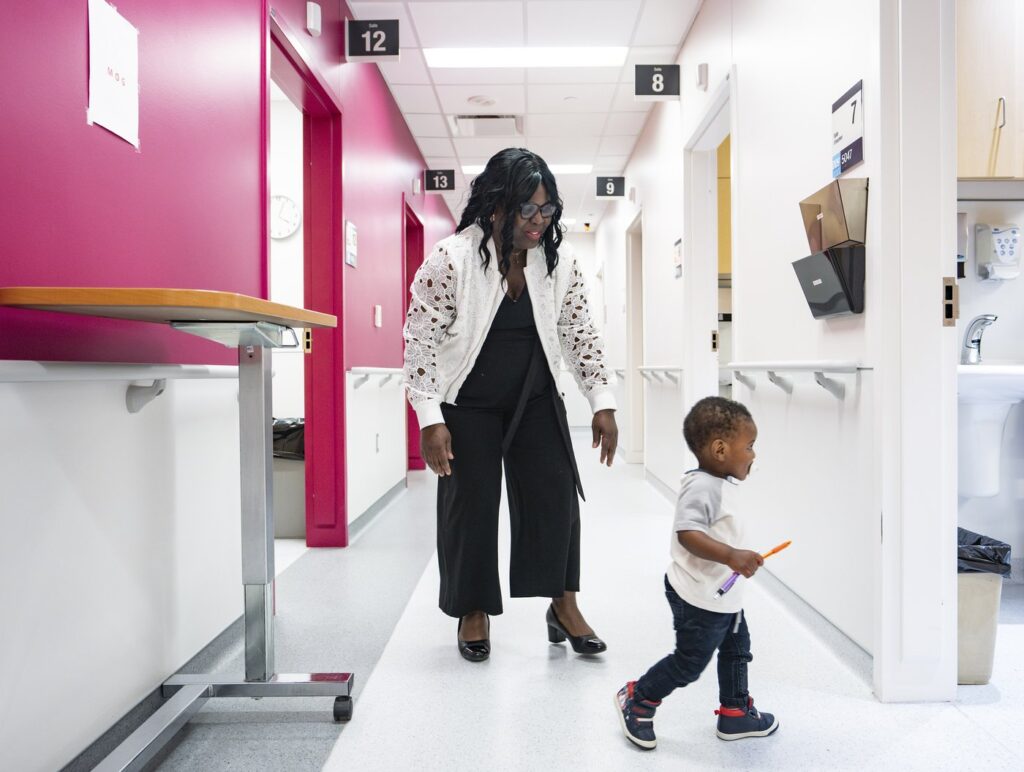
Today, Loblegnon's fourth child, Theo Jr., is one-and-a-half years old and in excellent health. During an interview, he was seen moving about the room, transitioning effortlessly from his mother’s embrace to the laps of the two doctors who played pivotal roles in saving her life. Dr. Jacob summed up the fulfillment of their work when she remarked on the sight of Theo and his mother, underscoring the significance of their medical endeavors.








