

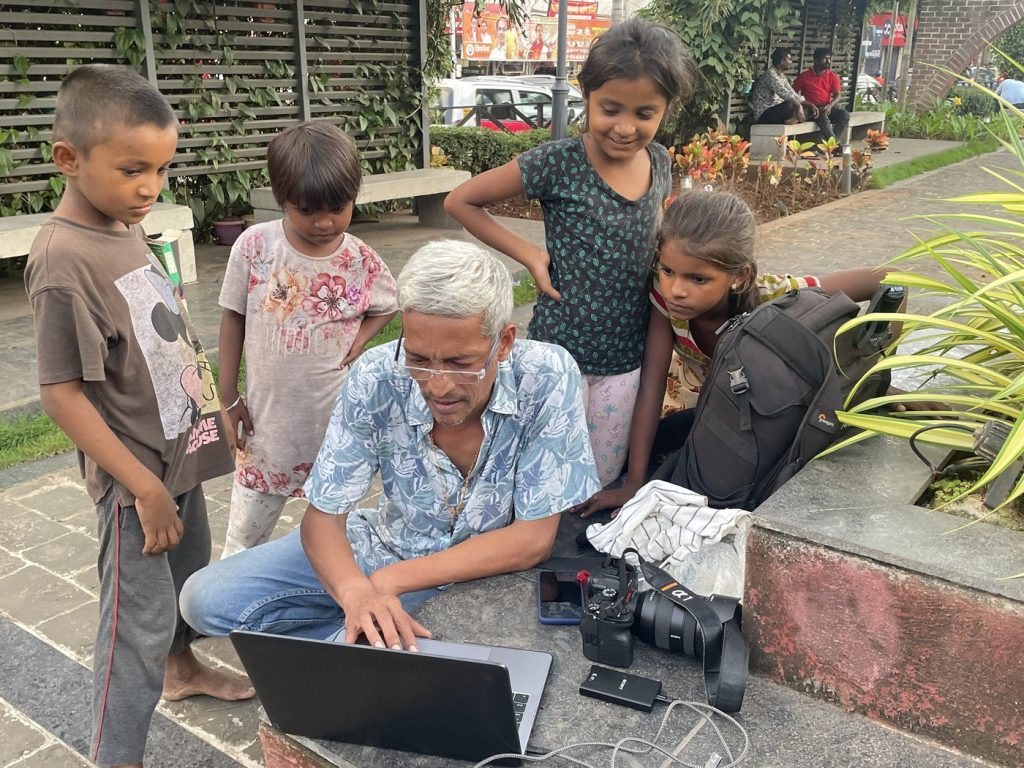
NEW DELHI (AP) - Rajanish Kakade, an esteemed Associated Press photographer known for his evocative images documenting India's politics, culture, and the everyday life of Mumbai, has passed away at the age of 55. His family reported that he died at his home in Mumbai on Monday following an illness.
Kakade joined the Associated Press in 2008, and during his nearly two decades of work in photojournalism, he significantly contributed to shaping the visual narrative of Mumbai, India's financial capital. Prior to his tenure at AP, he honed his skills working with the Sakal Group media conglomerate and the Hindustan Times newspaper, where he further developed his distinctive photographic style.
The Mumbai Press Club released a statement praising Kakade's work and mentorship, highlighting his ability to capture defining moments with integrity and sensitivity. Throughout his career, he guided countless young photographers, instilling in them the values of courage and compassion in constantly pursuing the truth.
Coming from a legacy of photojournalism, Kakade was a third-generation photographer who followed in the footsteps of his grandfather and father, both of whom were also recognized in the field. His family's immersion in photography helped shape Kakade’s perspective and dedication to the craft.
At the AP, Kakade covered an extensive range of assignments across India, reporting on significant political events, elections, sports, and major crises, including the catastrophic 2008 Mumbai militant attacks and the global coronavirus pandemic. His photographs encapsulated both the hustle and bustle of everyday life in Mumbai and the complexities of the city's evolution, showcasing its large-scale contrasts alongside quieter, intimate moments.
Colleagues at the Associated Press described Kakade as a soft-spoken and consummate professional, deeply devoted to his craft. Manish Swarup, the chief photographer for South Asia at AP, remarked that Kakade held "the rare, quiet grace of a true observer." He noted that Kakade not only took photographs; he earned the trust of his subjects, allowing him to capture moments with intimacy and authenticity that only someone of his character could achieve.
Describing his longtime friend and colleague, Swarup expressed that the loss of Kakade extends beyond the realm of photography, stating, "We haven’t just lost a great photojournalist; we have lost a beautiful soul, whose kindness was as luminous as his work." This sentiment reflects the deep impact Kakade had on those around him, both personally and professionally.
Yirmiyan Arthur, who oversees photo and storytelling initiatives for the AP in the Asia Pacific region, spoke on Kakade's ability to portray Mumbai's daily life with honesty and depth. Arthur emphasized Kakade's talent for chronicling the city's paradoxes, from wealth and poverty to the joys and heartbreaks associated with the annual monsoons and the dynamic life within its bustling local trains. "He was a son of Mumbai and made sure he told its story the right way," Arthur stated.
Kakade is survived by his family, who are left to remember not only a remarkable photographer but also an individual who deeply understood and represented the essence of Mumbai through his lens.
The Associated Press extends its condolences to Kakade’s family and colleagues during this difficult time, honoring the legacy of a man whose photographs will continue to tell the story of India's vibrant cultural landscape.








