

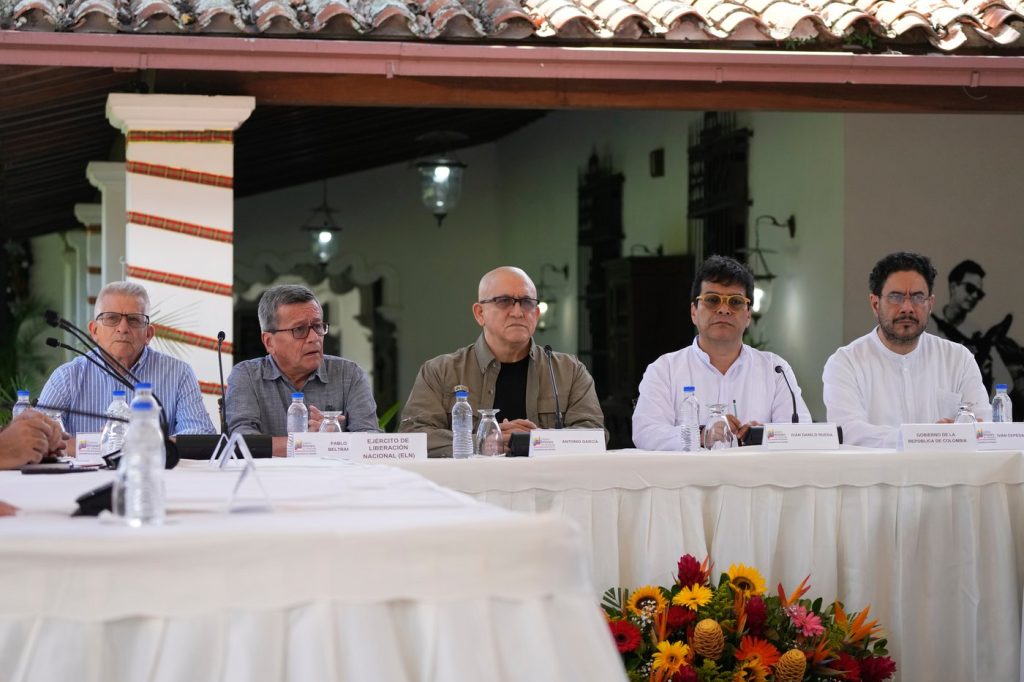
BOGOTA, Colombia (AP) The National Liberation Army (ELN), Colombia’s largest remaining rebel group, announced a unilateral ceasefire on Monday in light of the upcoming high-stakes congressional elections scheduled for March 8. This announcement comes amid a backdrop of violence targeting candidates, particularly in rural areas where the influence of armed groups has notably increased.
In a statement released on its website, the ELN indicated that it will suspend attacks against military and electoral authorities, aiming to ensure that citizens can vote "in liberty." However, the group did not specify the duration of the ceasefire. Historically, the ELN has faced accusations of targeting politicians whose views oppose their own and controlling local government positions to siphon off public funds.
In response to these accusations, the ELN articulated that it does not seek electoral victories or financially back any political campaigns, contrasting its actions with those of drug traffickers. According to the ELN, it is essential for the populace to have the freedom to vote for their preferred candidates or abstain if they feel it is the right choice.
The Colombian government previously halted peace talks with the ELN last year, following a series of attacks orchestrated by the group in northeastern Colombia. These events led to over 50,000 individuals being displaced from their homes. With more than 300 congressional seats up for grabs, the elections will also see primaries to select candidates for a left-wing coalition and a center-right coalition ahead of the presidential elections in May.
The upcoming congressional elections pose a significant challenge for President Gustavo Petro as he strives to solidify a congressional majority for his leftist movement, the Historical Pact. This majority could be pivotal in advancing potential constitutional reforms. However, the electoral landscape has already been marred by incidents of violence against candidates, with the presence of rebel groups reportedly expanding during Petro's administration.
This month, Indigenous Senator Aida Quilcue was reportedly kidnapped while traveling in the southwest Cauca region but was released unharmed after military intervention. Additionally, ELN fighters killed two bodyguards for Senator Jairo Castellanos, claiming their fire was aimed at the caravan after it did not stop at one of the group's roadblocks, not intending to target the senator directly.
These violent incidents are part of a troubling pattern; last year, conservative presidential candidate Miguel Uribe was shot during a campaign rally in Bogota, ultimately succumbing to his injuries two months later. This marked a significant escalation in violence against political candidates in Colombia and has prompted some individuals in the current electoral race to reduce their public campaign activities due to safety concerns.
The Movement for Electoral Observation, a respected electoral watchdog in Colombia, recently reported that in 11% of the country’s municipalities, elections face an "extreme risk" of being compromised due to violence. Their risk assessments stem from multiple factors, including the presence of armed groups, recent displacement cases, and assaults on human rights advocates.








