

The situation in Lebanon has escalated dramatically following a series of missile strikes launched by Hezbollah into Israel, which were in retaliation for the assassination of Iranian Supreme Leader Ali Khamenei. This conflict has led Israel to respond with significant airstrikes on various locations within Lebanon, causing widespread devastation, particularly in the southern suburbs of Beirut.
Affected residents are fleeing their homes in droves, seeking safety in nearby areas. Many families are reported to be moving toward the southern port city of Sidon, under the threat of continued military action. The crisis has prompted a rush among displaced individuals and families, amplifying the humanitarian emergency in the region as people attempt to escape the chaos resulting from repeated airstrikes.
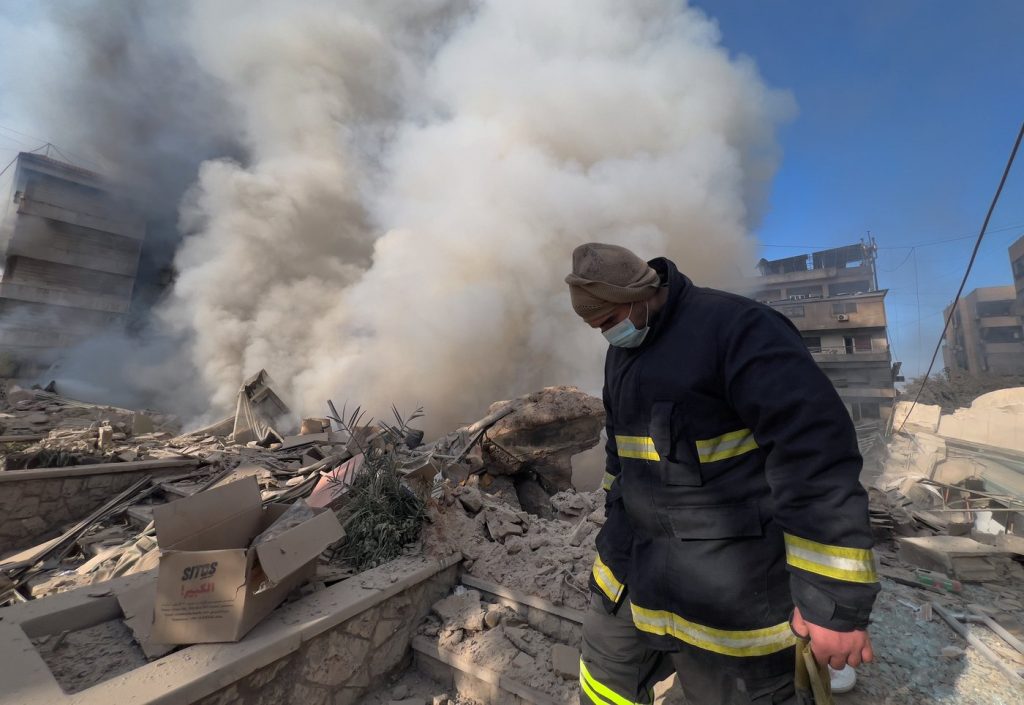
The Associated Press photo gallery details the grim reality on the ground, showcasing powerful imagery that captures the devastating aftermath of the airstrikes. For instance, rescue workers are depicted checking sites where multiple buildings were recently struck by Israeli artillery in Dahiyeh, a southern suburb of Beirut, highlighting the human toll of this conflict.
Smoke billows from various locations across Dahiyeh, emphasizing the scale of the destruction. One particular image captures the immediate aftermath of an Israeli airstrike, showing a demolished building engulfed in smoke. This destruction has left many residents in shock and mourning, particularly with images of rescue workers carrying deceased individuals from the wreckage. The human loss is further illustrated by scenes of families grieving for loved ones who were caught in the crossfire.
The mass exodus has resulted in crowded conditions as displaced individuals converge on Sidon. Young children, seen seated in vehicles alongside their families, reflect the trauma and disruption that has enveloped their lives. Eyewitness accounts describe the panic and chaos on the roads as families navigate through heavy traffic, attempting to flee the escalating violence in Dahiyeh.
As displaced families arrive in Sidon, they struggle with the logistics of their sudden evacuation. Images reveal people carrying their belongings as they register at makeshift shelters, including schools repurposed to accommodate those fleeing the violence. This relocation reflects both a spirit of resilience amid despair and the overwhelming challenges that come with displacement.
Moreover, the realities on the ground are sobering, as people sit on sidewalks or in crowded vehicles, some waiting for a safe passage or assistance. The visual documentation paints a stark picture of the humanitarian needs arising from this conflict, with displaced individuals relying on any available resources for shelter and safety.
The impact of the airstrikes extends beyond immediate loss and destruction, as displaced families search for stability in an unstable environment. The struggle for survival is palpable, and the social fabric of the community faces severe strain as families confront economic and emotional distress due to the ongoing violence.
Overall, the stark images and reports from the region serve to highlight the deepening crisis in Lebanon stemming from the recent military actions. The streets of Dahiyeh, once bustling with life, now bear the scars of conflict, as residents navigate a harsh new reality amid ongoing hostilities.








