

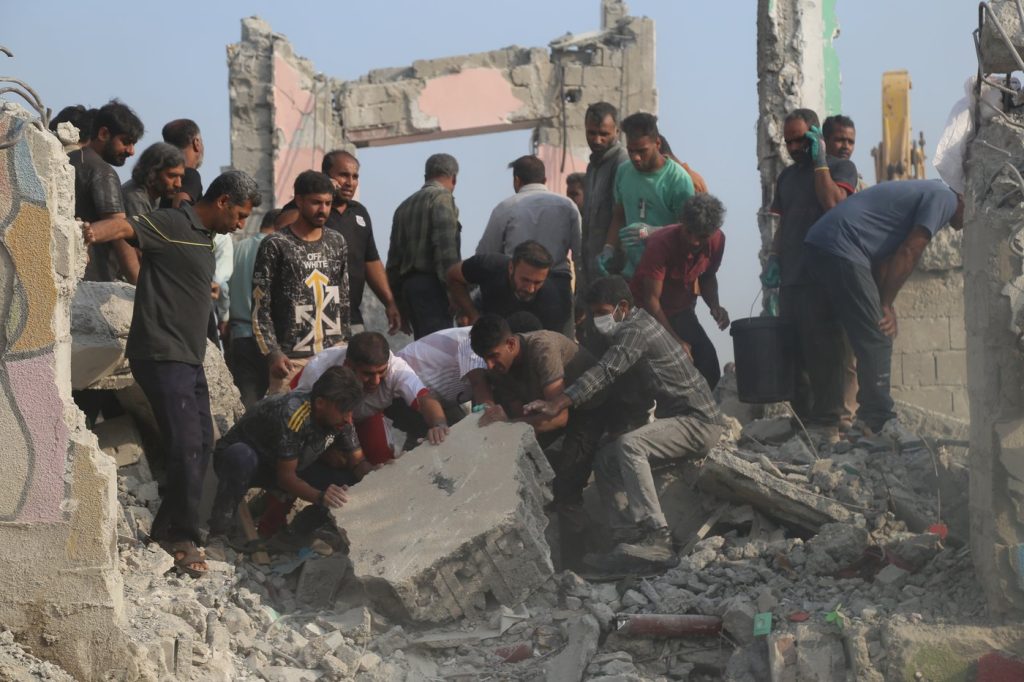
A recent investigation by the group Bellingcat has revealed video evidence that seemingly contradicts claims made by U.S. President Donald Trump regarding an explosion at an Iranian school. This incident occurred on February 28, during the ongoing conflict in the Middle East, resulting in the tragic deaths of over 165 individuals, mostly children. The explosion took place at a school adjacent to a Revolutionary Guard base in Minab, located in Iran’s southern Hormozgan Province.
Bellingcat's findings come amid growing evidence suggesting that the U.S. may bear responsibility for the strike. Experts, including those consulted by the Associated Press, assert that satellite imagery indicates the school was hit during a series of bombs dropped on the military compound. The incident has raised serious concerns about civilian casualties and the use of military force in populated areas.
The key piece of evidence shared by Bellingcat is a three-second video clip taken on the day of the explosion, which was also circulated by Iran's semiofficial Mehr news agency. The video depicts a munition falling onto a building, generating a dark plume of smoke. Trevor Ball, a researcher at Bellingcat, geolocated the video to a site near the school, corroborating findings made by the Associated Press. Ball identified the munition as a Tomahawk cruise missile, a weapon system unique to the U.S. in the context of this conflict, marking it as the first evidence linking a specific munition to the strike.
Despite Bellingcat’s findings, assessing the situation is complicated by the absence of images of bomb fragments from the explosion, and no independent agency has managed to investigate the site amidst the ongoing war. When confronted with questions about U.S. culpability for the deadly strike, President Trump asserted that, in his view, the blast was executed by Iran, although he provided no supporting evidence. He went on to claim that Iranian munitions often lack accuracy. In response to the controversy, Defense Secretary Pete Hegseth indicated that the U.S. was investigating the incident.
Several factors suggest U.S. involvement in the strike. For one, the U.S. military has initiated an assessment of the incident, which is a protocol activated when there is a possibility that U.S. forces may be implicated in civilian harm. A U.S. official speaking anonymously confirmed that preliminary assessments lean towards the strike being U.S. in origin. The school's location is significant, as it is positioned next to a Revolutionary Guard base and near barracks for a naval unit. The U.S. military has been actively targeting naval sites in the area and has acknowledged strikes in Hormozgan Province, including one near the school.
Moreover, Israel has actively denied any involvement in the strike. The Israeli military has concentrated its operations on regions of Iran that are closer to its borders and has not reported any strikes south of Isfahan, which is approximately 800 kilometers (500 miles) away from Minab. Furthermore, U.S. warships, including the USS Abraham Lincoln aircraft carrier, have been operating in the Arabian Sea within striking distance of Minab.
As of now, neither the U.S. military's Central Command nor the Israeli military have responded to requests for comments regarding Bellingcat's analysis. The ongoing investigation and the implications of this incident raise critical questions about accountability, military ethics, and the protection of civilians in conflict zones.








