

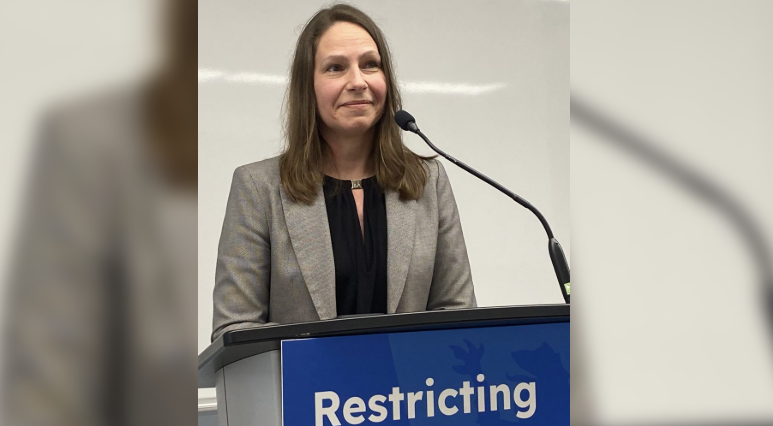
Politicians in Nova Scotia are poised to engage in the floor-crossing phenomenon that has become increasingly common in Canadian politics. Following the leadership change in the federal government, Prime Minister Mark Carney's administration, which began in 2025, has witnessed a significant number of opposition Members of Parliament crossing the floor, with five instances reported. This trend is now finding a reflection in provincial politics, as indicated by the recent developments surrounding Becky Druhan, a current Member of the Legislative Assembly (MLA).
Becky Druhan, the MLA for Lunenburg West, is a former member of the Progressive Conservative party who has transitioned to sitting as an Independent since her resignation from the party caucus during a cabinet shuffle last year. Elected twice, first in 2021 and again in 2024, Druhan served in prominent roles such as the Education Minister and the Minister of Justice and Attorney General. Her departure from the Progressive Conservative caucus was prompted by a significant difference in principles, leading her to her current independent status.
As an Independent MLA, Druhan emphasizes the importance of consulting with her constituents before making any decisions regarding her political future. She acknowledges the complexity of her role, noting the distinction between fighting for issues and the actual construction of solutions. In her view, being an independent member provides her the freedom to hold the government accountable without the constraints that may come from being part of a political party.
In a recent social media post, Druhan articulated her commitment to fostering effective and accountable governance that duly serves the people of Lunenburg West and all of Nova Scotia. She noted, "I've been clear about what drives my work. I am committed to advancing effective, accountable government that serves Lunenburg West and all Nova Scotia with diligence and integrity." Druhan encourages her constituents to reach out and share their thoughts and suggestions, indicating that the direction of her political journey is a collective decision that should involve the community.
This effort to consult constituents reflects a growing trend among politicians who seek to build a more direct relationship with the electorate, particularly in a shifting political landscape. The implications of Druhan’s potential decisions may resonate beyond her immediate constituency, as Nova Scotia continues to navigate the broader political currents shaped by regional and national politics.
In summary, the situation surrounding Becky Druhan encapsulates the evolving nature of political allegiance and representation in Nova Scotia, as she balances her independent stance with the expectations and needs of her constituents amid a dynamic political environment.








