

Potentially millions of Americans have recently found themselves with a much easier path to Canadian citizenship due to a new law that took effect on December 15, 2025. This legislation has prompted a rush among individuals interested in exploring their ancestry and applying for dual citizenship. Immigration lawyers in both the United States and Canada are reporting a significant increase in inquiries as more Americans learn about their Canadian heritage, particularly those with Canadian ancestors.
For individuals like Zack Loud of Farmington, Minnesota, the surprise revelation of being a Canadian citizen through a grandparent has made Canada a more attractive option for work and residence. Loud stated that he and his wife were already considering job opportunities abroad, and the possibility of Canadian citizenship moved Canada up their list of potential destinations.
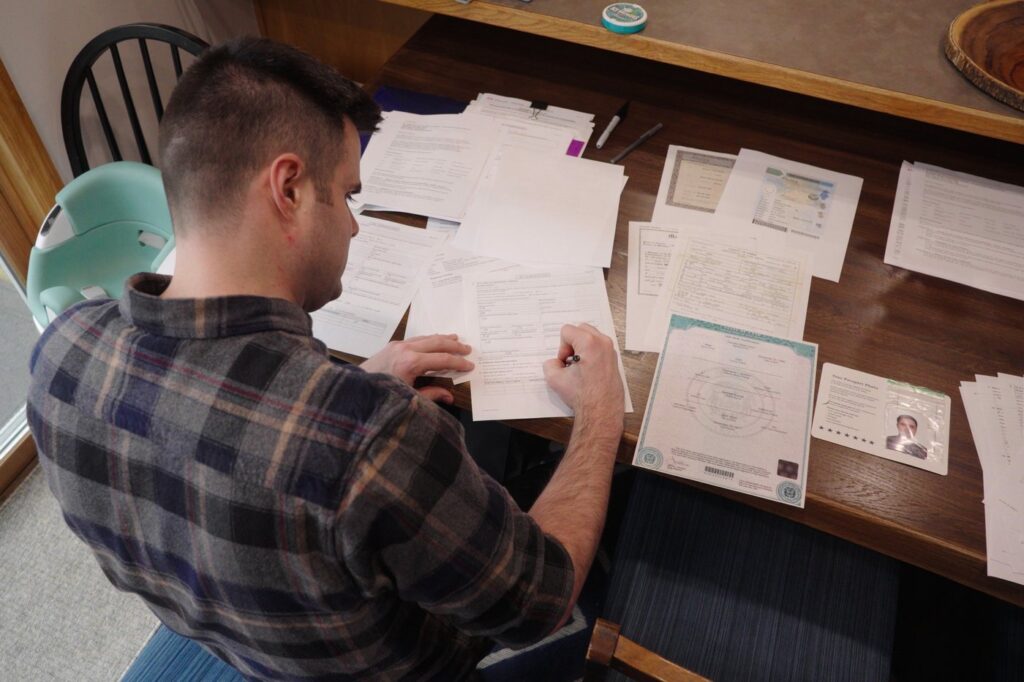
Since the law's implementation, immigration attorneys have been inundated with clients seeking assistance in submitting proof of citizenship applications. Nicholas Berning, an immigration attorney from Boundary Bay Law in Bellingham, Washington, mentioned that his practice is largely focused on these cases, even shifting away from other work. Similarly, Amandeep Hayer, an immigration attorney in Vancouver, reported a drastic increase in consultations, with more than 20 inquiries per day related to citizenship applications.
The new law, known as Canadian bill C-3, has redefined the way Canadian citizenship can be passed down. Previously, citizenship by descent could only be granted to individuals if their parent was a Canadian citizen. However, the new law allows those born before December 15, 2025, to apply for citizenship if they can prove direct descent from a Canadian ancestor, such as a grandparent or great-grandparent. For those born after this date, proof that a Canadian parent met a residency requirement of 1,095 days is necessary to qualify.
While Americans are exploring various motivations for their applications, some cite political concerns as a driving force. Factors such as former President Donald Trump’s policies have led individuals like Michelle Cunha of Bedford, Massachusetts, to consider dual citizenship after years of political activism. Cunha expressed her feelings of disillusionment with the U.S., prompting her to seek opportunities in Canada.
Others, such as Troy Hicks from Pahrump, Nevada, were influenced by international experiences that highlighted perceptions of the U.S. abroad. Hicks recounted an encounter in Australia that underscored his desire for a Canadian passport, viewing it as a better alternative. Maureen Sullivan from Naples, Florida, reflected on the immigration challenges her family faced in Minnesota and saw Canadian citizenship as a safety net for the future.
The financial implications of applying for Canadian citizenship also vary. While the proof of citizenship application fee is relatively affordable at 75 Canadian dollars (approximately $55), many applicants opt to hire attorneys or genealogists, significantly increasing the overall cost. Cunha noted that her total expenses, including legal fees, will amount to about $6,500, whereas others, like Mary Mangan of Somerville, Massachusetts, successfully filed their applications independently by utilizing online resources.
As the demand for citizenship applications rises, processing times for certificates currently sit at around ten months, with over 56,000 applications pending. During the initial period from December 15 to January 31, the Canadian government confirmed citizenship by descent for 1,480 individuals, not all of whom were from the U.S. In the previous year, approximately 24,500 Americans gained dual citizenship with Canada.
Despite many Canadians expressing a welcoming attitude towards new citizens, there are some concerns regarding individuals who may seek citizenship without strong ties to Canada. Fen Hampson, a professor of international affairs at Carleton University in Ottawa, noted that while many Canadians are open to newcomers, there is apprehension about individuals who attempt to obtain citizenship as a convenience, potentially delaying assistance for refugees and asylum-seekers who are in urgent need.








