

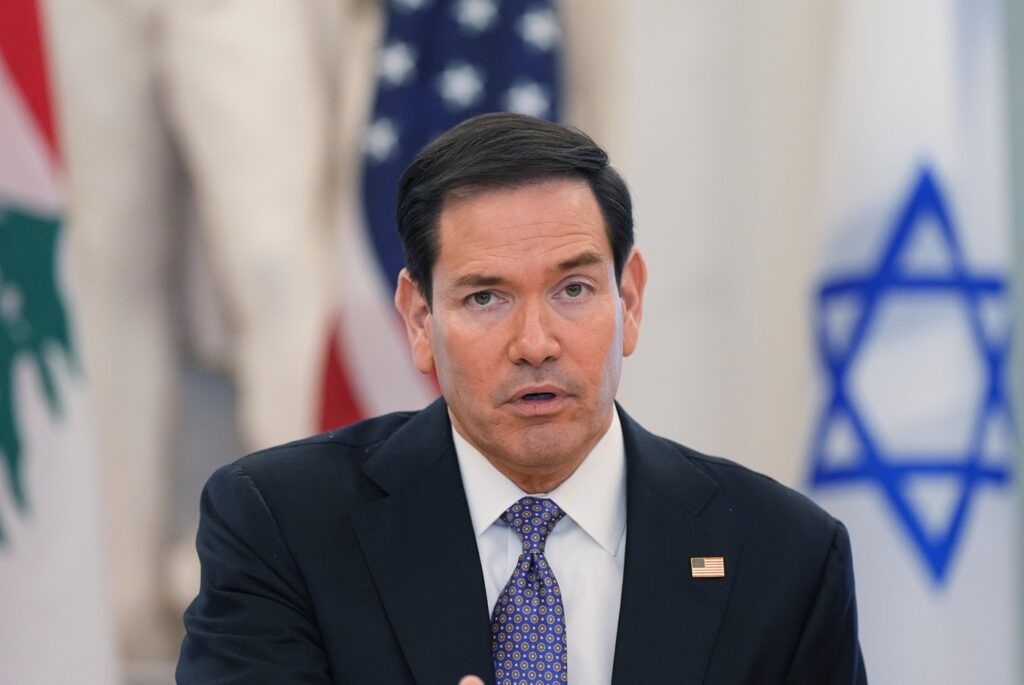
BEIRUT (AP) – Lebanon and Israel are poised to enter a second round of direct talks in Washington on Thursday. The discussions focus on the potential extension of a truce between Israel and the Hezbollah militant group, alongside plans for future negotiations aimed at addressing the long-standing tensions between the two nations.
The meeting involves Lebanese Ambassador to the U.S. Nada Hamadeh Moawad and Israeli Ambassador Yechiel Leiter. This session comes shortly after their first direct talks—the first in three decades—took place just days prior. Lebanon's President Joseph Aoun indicated on Wednesday that efforts are underway to extend the 10-day ceasefire that began on March 2, highlighting the urgency of dialogue in the wake of recent military aggression.
During the talks, Ambassador Hamadeh will propose extending the ceasefire and advocate for an end to ongoing Israeli home demolitions in territories occupied following the recent conflict, as stated by President Aoun’s office. Preparations for more extensive negotiations between Lebanon and Israel are in progress with a focus on several critical issues. These include a complete cessation of Israeli military actions, the withdrawal of Israeli troops from Lebanon, the release of Lebanese prisoners held in Israel, the deployment of Lebanese soldiers along the border, and initiating the reconstruction of war-damaged areas.
Israeli Foreign Minister Gideon Saar has called on Lebanon to collaborate in disarming Hezbollah as negotiations commence in Washington. He emphasized that the primary hindrance to peace and normalization between the two countries is Hezbollah, which he described as an obstacle standing in the way of Lebanon's sovereignty and potential freedom from Iranian influence.
The recent conflict ignited when Hezbollah launched rockets into northern Israel, coinciding with attacks on Iran by Israel and the U.S. In retaliation, Israel conducted extensive bombardments across Lebanon, initiating a ground invasion that saw the capture of numerous towns along the border. Currently, Israel retains control over a buffer zone extending up to 10 kilometers (6 miles) into southern Lebanon, citing national security concerns over potential threats from Hezbollah.
Despite Hezbollah's firm rejection of the talks, the discussions mark a significant step for two nations that have no formal diplomatic relations and have technically been in a state of war since Israel's establishment in 1948. The Lebanese government hopes that these negotiations will lead to a lasting resolution of hostilities. Meanwhile, Iran, interested in halting conflicts in Lebanon and across the region, has made the cessation of wars a precondition for its discussions with the U.S., while Lebanon is adamant about representing its interests independently.
Wafiq Safa, a senior member of Hezbollah's political council, has made it clear that the organization will not abide by any agreements resulting from the direct talks, to which it is categorically opposed. Since the ceasefire took effect, both parties have reportedly violated its terms, illustrating the fragility of the situation.
The recent Israel-Hezbollah conflict has claimed around 2,300 lives in Lebanon, with significant casualties among women and children, and has displaced over 1 million people. These talks are particularly notable as they are the first since 1993. Historically, Lebanon and Israel have communicated indirectly, often through mediators such as the U.S. or the United Nations peacekeeping force in southern Lebanon.
In context, Lebanon's top political leaders have expressed criticism toward Hezbollah, particularly regarding its decision to attack Israel in solidarity with Iran. This criticism likely propelled the initiative for direct talks in a bid to mitigate escalating violence and prevent further Israeli incursions.








