

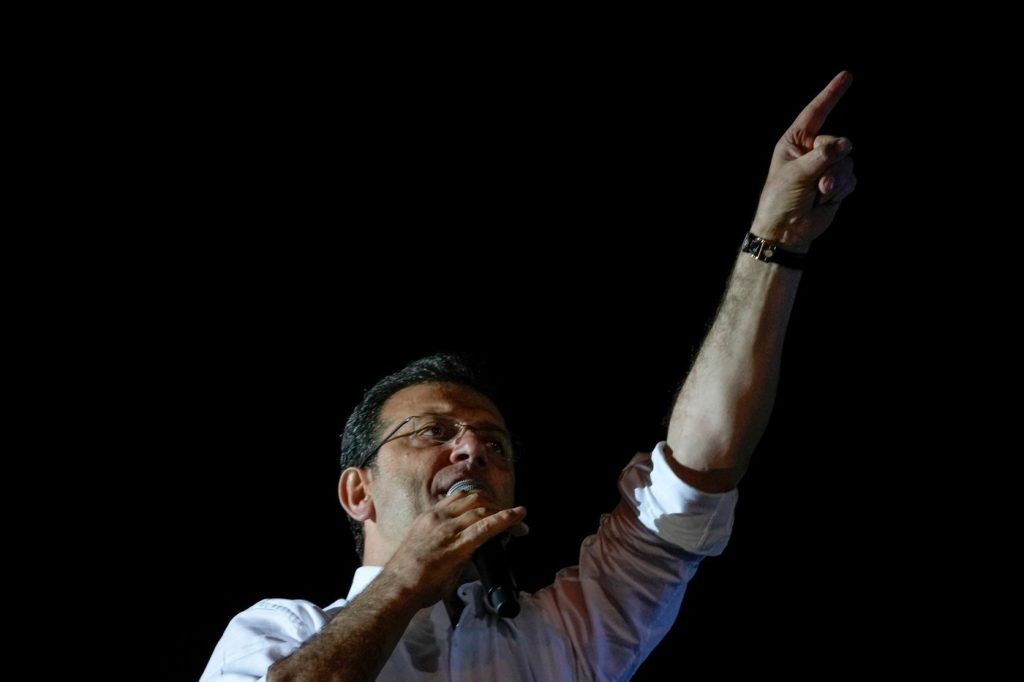
ISTANBUL (AP) — Istanbul Mayor Ekrem Imamoglu is currently on trial alongside more than 400 defendants accused of extensive corruption in a case that critics argue is politically motivated against Turkey's opposition. Imamoglu, who has been detained for nearly a year, is a prominent contender against President Recep Tayyip Erdogan's extended 23-year rule and was recently appointed as the main opposition party's candidate for the upcoming election in 2028, just days after his arrest.
The trial includes 402 defendants, many of whom are associated with the Istanbul Metropolitan Municipality, which Imamoglu has led since 2019. The group predominantly comprises elected officials from the Republican People’s Party (CHP), along with several journalists. Imamoglu’s detention on March 19 of the previous year ignited weeks of protests, marking the largest demonstrations in Turkey in over a decade.
During the trial, Imamoglu faces an unprecedented 142 charges, with accusations of establishing the "Imamoglu criminal organization for profit" dating back to 2015, when he served as mayor of Istanbul's Beylikduzu district. The extensive 3,900-page indictment contends that the purpose of this purported organization was not only to enrich its members through a series of bid-rigging and bribery schemes but also to help facilitate Imamoglu’s ascent within the CHP, ultimately paving the way for his candidacy for the presidency.
If found guilty, Imamoglu could receive a cumulative prison sentence exceeding 2,000 years. In a recent op-ed published prior to the trial, he characterized the proceedings as "one of the toughest tests of democracy" in Turkey's history and an attempt to "overturn the will of the people."
This case is just one among many legal challenges facing Imamoglu, who could potentially face imprisonment and political disqualification due to other allegations including accusations of terrorism, espionage, falsifying a university diploma, and insulting public officials. There is an ongoing pattern, critics argue, as elected members of the CHP, including mayors from other significant cities, face separate but similarly serious allegations of terrorism and corruption. The CHP's leadership is also under scrutiny due to purported irregularities associated with its 2023 congress.
The trial's enormity and the expected lengthy process have led authorities to initiate the construction of a new courtroom within the Silivri prison complex, located west of Istanbul, where Imamoglu and a substantial number of other defendants are being held. Until the new facility is operational, trial attendees will need to fit into an existing chamber at the prison.
Supporters of Imamoglu and various human rights organizations have highlighted what they perceive as the politically charged nature of the prosecutions targeting CHP members. They cite multiple factors, particularly the role of Istanbul’s chief prosecutor, Akin Gurlek, who was appointed in late 2024 and is known for initiating investigations aimed at CHP officials. He recently returned to the government as justice minister following a brief period in the judicial sector.
Critics have also noted the prosecution’s usage of "secret witnesses," whose identities are concealed from defense attorneys, alongside instances of defendants testifying against their co-accused, which they argue undermines the fundamental right to a fair trial. In response, the Turkish government maintains that its judicial system operates independently and impartially.
Benjamin Ward, who serves as the Europe and Central Asia deputy director at Human Rights Watch, criticized the actions against the CHP over the past year, alleging that the government is resorting to "weaponizing the criminal justice system." He emphasized that, taken collectively, these cases appear to be an orchestrated effort to eliminate Imamoglu from political life and discredit his party, thus compromising the integrity of Turkey's democratic processes.








