

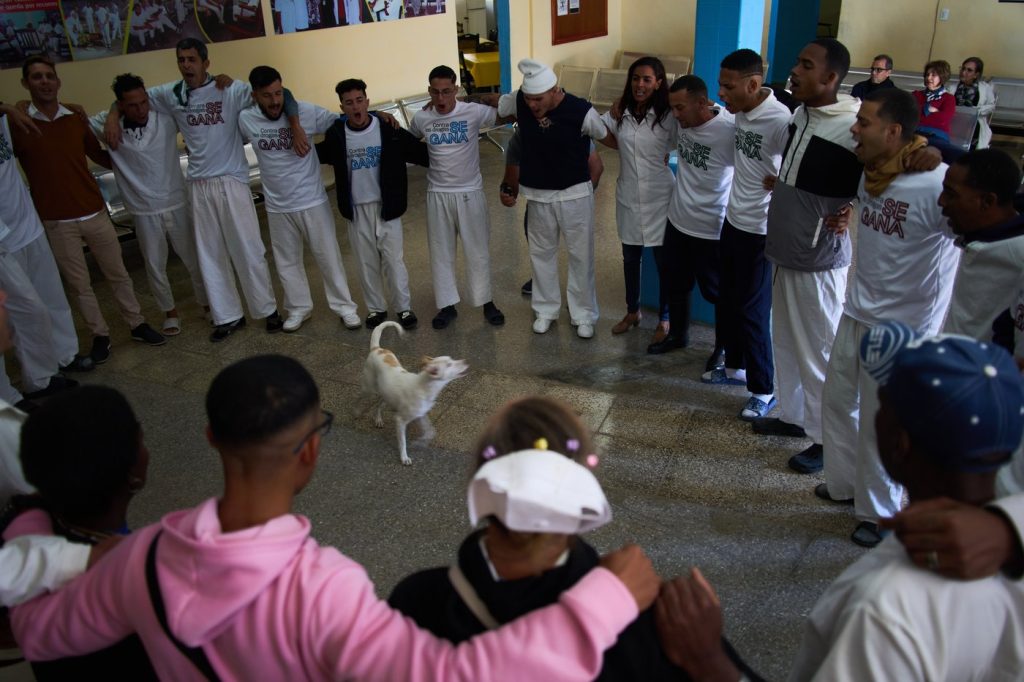
HAVANA - In a psychiatric hospital in Havana, several dozen individuals gathered in a circle, holding hands and chanting together. They vowed to rid their bodies of the toxins that have ensnared them as part of a 90-day detoxification process leading to rehabilitation. This gathering symbolizes the first step toward recovery for many struggling with drug addiction in Cuba.
Drug use has surged in Cuba over the past decade, fueled by a deepening economic crisis, a shortage of basic goods, and the accessibility of low-cost synthetic drugs. In urban areas like Havana, it has become increasingly common to observe young individuals openly using drugs in public parks, often appearing disoriented or unconscious.
The primary substance of concern is known as "químico," a dangerous blend of synthetic cannabinoids mixed with hazardous additives. Also referred to as "papelitos" or "little papers," this drug is absorbed into absorbent paper sheets, which are then sliced into small doses for smoking. Priced at roughly 250 Cuban pesos per hit, it is cheaper than basic food items, making it widely available.
David Morales, 25, who is navigating recovery at the Alcance Victoria Cuba evangelical Baptist church, noted the prevalence and affordability of "químico." In July, Cuba's Ministry of Health acknowledged the rise in drug consumption by establishing a National Drug Observatory. This new initiative aims to research, monitor, and address the impacts of illegal drugs on the island.
Although the Cuban government does not maintain statistics on drug users, data from emergency rooms serve as indicators of increasing drug-related issues. In 2024, 467 individuals sought assistance in Havana's emergency rooms, a figure that nearly doubled to 886 by 2025. Despite Cuba's strict zero-tolerance policy on drugs, drug trafficking penalties including life imprisonment, the country remains susceptible to substance abuse.
Authorities report sporadic seizures of cocaine and other drugs, typically found abandoned by traffickers along the coastline or smuggled into the country among imported goods. Notably, new psychoactive substances primarily originating from the United States pose a growing challenge, with police laboratories identifying 46 new synthetic formulations in the past year. Between 2024 and 2025, 72 attempts to smuggle drugs into Cuba were thwarted.
Since healthcare in Cuba is state-run and free, local family clinics often act as the first responders to emerging drug use cases. Patients with more severe conditions are referred for comprehensive treatment in hospitals. Following a recent visit to a 40-bed men's ward at the Havana Psychiatric Hospital, it became evident that many younger patients undergo a 90-day detox program before entering rehabilitation.
Patients are encouraged to participate actively in their treatment, performing tasks like cleaning their living spaces while wearing white T-shirts featuring the slogan "We win against drugs." Daniel Fulleda, a 23-year-old patient who entered treatment in January, shared his aspirations for the future, including plans for marriage and starting a business.
The response to the rising drug crisis has seen the involvement of various community actors. Pastor Abel Pérez from the Alcance Victoria Cuba church highlighted the alarming prevalence of drug use in neighborhoods and expressed a commitment to provide therapy, having helped around 50 young people and their families last year.
Many individuals, including families who are struggling to cope with addiction, seek support and guidance. Vilma Arias, a 64-year-old mother, voiced her concerns about her children, emphasizing the need for prayer and community support to address the issue of drug addiction that has rapidly escalated in Cuba.








