

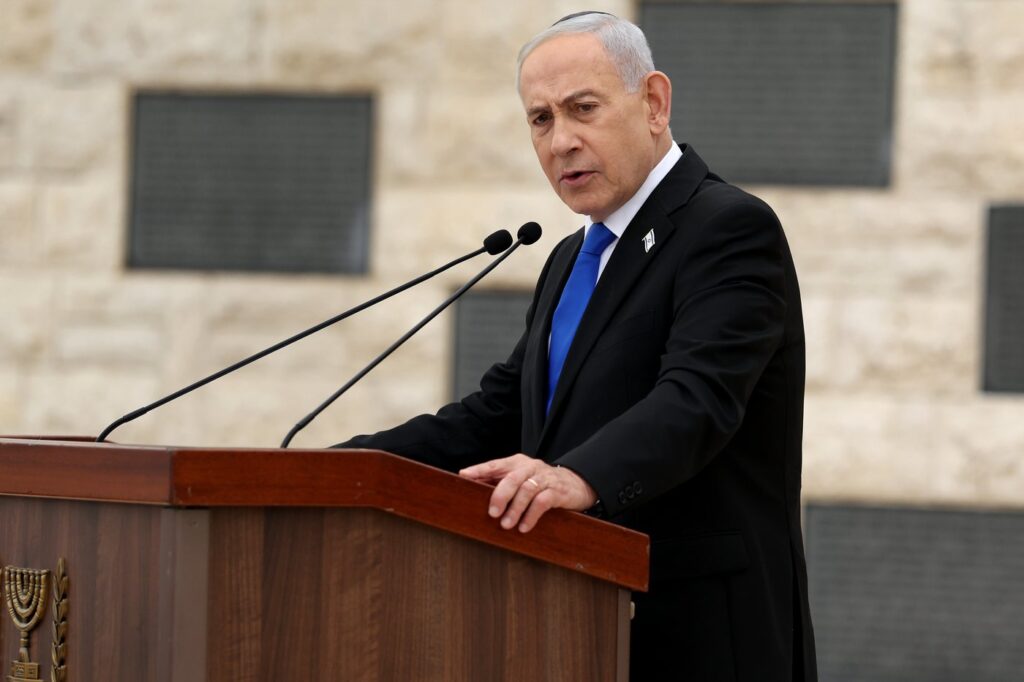
The current geopolitical landscape in the Middle East reveals significant challenges for Iran and Israel, particularly regarding their ongoing conflicts. Iran's government remains in power, while militant groups Hezbollah and Hamas continue to present threats. U.S. President Donald Trump’s interests appear to diverge from those of Israel, complicating the situation for Israeli Prime Minister Benjamin Netanyahu, who faces elections later this year amidst growing dissatisfaction among Israelis regarding his wartime leadership.
Netanyahu’s strategy for the U.S.-Israeli campaign against Iran, initiated in late February, aimed to weaken Iran’s military capabilities and destabilize its regime. Although Iran's military has sustained considerable damage, it remains a significant threat in the region, particularly in the Strait of Hormuz, where it poses risks to neighboring countries and shipping lanes. Despite Netanyahu's declarations of success, key objectives have largely gone unfulfilled, leading to a ceasefire earlier this month that has further complicated matters for Israel.
Similarly, the latest conflict between Israel and Hezbollah in Lebanon has not yielded a decisive outcome. Netanyahu indicated that the truce was agreed upon at Trump's request, yet he emphasized that the confrontation with Hezbollah is far from over, as Israeli troops still occupy significant areas in southern Lebanon.
The prolonged conflict has left many Israelis feeling frustrated and uncertain about their government's handling of wartime operations. A recent poll indicated declining trust in Netanyahu's leadership, particularly after Hamas’s attack on Israel in October 2023, which triggered a fierce retaliatory campaign. Despite some military successes against Hamas and Hezbollah, the ambiguous results have led citizens to question the effectiveness of Netanyahu's strategies and his ability to secure a favorable peace.
Polls conducted by the Israel Democracy Institute illustrate a shift in public sentiment, with a once strong majority trusting Netanyahu’s leadership during the conflict now expressing dissatisfaction regarding government performance in managing the wars. The sentiment is particularly noted in communities close to the Lebanese border, where residents are vocal about their disappointment with continuous missile attacks from Hezbollah.
The ceasefire developments have sparked doubts among Israelis about the strength of the U.S.-Israel alliance, especially regarding Trump's commitment to ensuring Israel's security. Although Trump publicly expresses solidarity with Israel, private conversations reportedly reveal a more complex relationship, where daily communications occur but may not translate into decisive action beneficial to Israel's strategic interests.
A recent expression of frustration came from those living near the border with Lebanon, where residents are advocating for political change to ensure their safety and security. From Kiryat Shmona, citizens are demanding leadership that addresses their needs and effectively combats external threats, indicating an urgent desire for a shift in governance as Netanyahu prepares for elections.
With elections looming, opposition figures like Naftali Bennett, Yair Lapid, and Gadi Eisenkot are joining forces, highlighting the potential for significant shifts in Israel's political landscape. Analysts warn that Netanyahu will face intense scrutiny if he fails to convince voters that the recent military engagements have led to concrete security improvements. As ceasefires remain unstable, public discontent could impact Netanyahu’s future in office and the broader trajectory of Israel’s policy towards its adversaries in the region.








