

In Slavutych, Ukraine, a poignant midnight commemoration took place on Sunday, marking the 40th anniversary of the Chernobyl disaster. Residents gathered in the central square, laying candles on a large radiation hazard symbol on the ground, honoring those who lost their lives in the catastrophic event and the thousands who risked their health to contain its aftermath.
This annual vigil has continued despite wartime curfews and official warnings against large gatherings in light of Russia's ongoing war on Ukraine. The tragic incident at the Chernobyl Nuclear Power Plant on April 26, 1986, highlighted significant safety lapses and a lack of transparency within the Soviet Union. It took two days for Soviet authorities to report the explosion, which led to widespread radiation exposure across Europe, raising alarms from Swedish experts who publicly reacted to the unfolding crisis.
Approximately 600,000 individuals, known as Chernobyl's "liquidators," were dispatched to combat the fire at the facility and mitigate the severe contamination. In the immediate aftermath, thirty workers perished from the explosion or acute radiation sickness. The disaster not only caused suffering for those directly affected but also led to the evacuation of countless towns and villages throughout Ukraine and Belarus, exposing millions to harmful radiation levels.
The city of Slavutych was established in response to the disaster, roughly 50 kilometers (32 miles) from the former site of the nuclear plant. This city was built to house the workers from the Chernobyl facility and their families, with the first residents moving in around 1988 after extensive relocations of evacuees were carried out throughout the Kyiv region. Over the years, Slavutych has survived adversities, including a brief occupation by Russian forces during the early days of the current war and harsh winter conditions, with residents having to cook over open fires due to prolonged blackouts.
The gathering in the square reflected the resilience and unity of the community, with individuals of all ages attending, including families carrying spring tulips and daffodils. Attendees aligned themselves in a spacious plaza framed by Soviet-era apartment blocks housing a memorial dedicated to those lost in both the Chernobyl disaster and the ongoing conflict.
One of the attendees, Liudmyla Liubyva, 71, recalled her husband, a former Chernobyl plant worker who suffered health issues linked to radiation exposure, ultimately leading to his disability. Liubyva emphasized the significance of honoring those who sacrificed their well-being and highlighted that the current conflict reignites concerns about the lingering dangers of nuclear contamination.
Reflecting on a recent drone strike in 2025 that damaged the New Safe Confinement structure, Liubyva expressed the prevailing fear that history could repeat itself. She underscored the community's vulnerability and the need for collective protection of their homeland, stating, "We all — young and old alike — must protect our land, because it is so vulnerable."
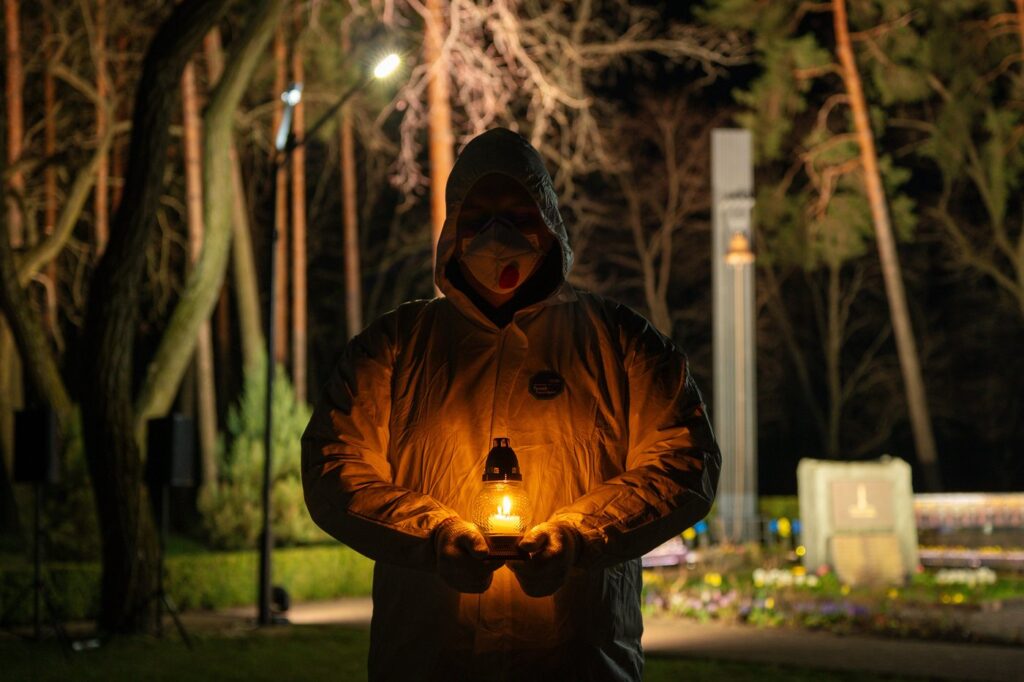
Soft music accompanied the solemn event, with poetry recited over loudspeakers, encapsulating the enduring pain of Chernobyl over the years. Among those in attendance, individuals dressed in white protective suits and face masks, reminiscent of the liquidators, stood quietly holding candles as a tribute to the sacrifices made during the disaster.
Larysa Panova, aged 67, shared her memories from the day of the accident, which forced her to leave her hometown of Chernobyl (Chornobyl) and start anew in Slavutych. Despite the city becoming her home, she still cherishes the beautiful nature and forests of her past. Prior to the war, Panova frequently visited Chernobyl to see relatives, but the conflict has made access to the exclusion zone increasingly restricted.
In her poignant reflection, Panova stated, "I never stop thinking of Chernobyl as my homeland.” She recounted the treasured experiences of her youth, emphasizing the deep emotional ties that continue to bind her to the land of her origins.








