

This roundup from The Canadian Press provides the latest updates on significant news stories across Canada.
Carney Travelling to Yellowknife and Norway
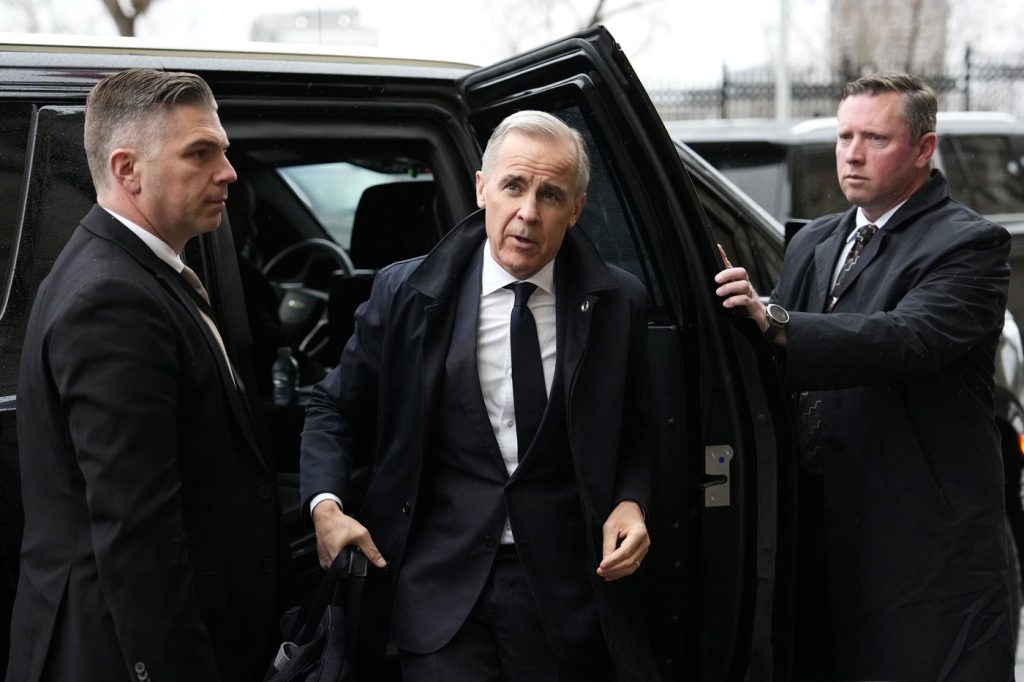
Prime Minister Mark Carney is set to travel overseas, with plans to observe NATO Cold Response exercises in Norway as Canada seeks to strengthen its relationships with Nordic countries. His journey will begin with a stop in Yellowknife on Thursday.
Norwegian Ambassador to Canada, Hanne Ulrichsen, emphasized the importance of collaboration in these uncertain global times. She noted Norway's invitation to Carney and the upcoming convening of heads of government from Iceland, Denmark, Sweden, and Finland in Oslo, aimed at enhancing trade and energy cooperation.
On Friday, Carney will proceed to Bardufoss, Norway, to witness the military exercises alongside Norwegian Prime Minister Jonas Gahr Store and German Chancellor Friedrich Merz.
Business Development Bank Boosts Defence Offering
The Business Development Bank of Canada (BDC) is significantly increasing its financial support for entrepreneurs in the defence sector, anticipating a surge in defence spending. Initially announcing up to $4 billion in financing opportunities for small and medium-sized businesses in defence and national security last year, the BDC reports a strong uptake with $91.7 million already allocated to 16 businesses.
In light of positive demand, BDC has now raised the available funds to $6 billion. CEO Isabelle Hudon described the agency's previous stance as being “shy” towards the defence sector but asserted that the time has come for a “big and bold” approach.
Cap on Non-Sufficient Funds Fees Kicks In
As of Thursday, new regulations are now in effect that cap the fees banks can charge for non-sufficient funds (NSF). The limit is set at $10 for personal deposit accounts, a significant reduction from previous fees that could reach as high as $50. The changes also include a prohibition on charging multiple NSF fees within a two-business-day period for the same account and ban fees when an account balance falls short of $10.
This policy adjustment follows concerns from advocates that NSF fees have disproportionately affected low-income Canadians and those with poor credit histories.
Alberta Chambers Say Separation Talk Not Helpful
The Alberta Chambers of Commerce are voicing opposition to discussions around the province's potential separation from Confederation, asserting that such talk is detrimental to business. A recent survey indicated that more than half of its members believe the separation issue is adversely impacting the provincial economy and complicating business planning.
Chief Executive Shauna Feth commented on Premier Danielle Smith's government’s approach, urging a shift away from blaming former Prime Minister Justin Trudeau. Though Smith publicly endorses the idea of Alberta remaining in Canada, her government has made procedural changes that might facilitate a separation referendum, prompting one group to gather signatures towards that goal.
Edmonton Man Details Recovery After Bar Attack
Chase Delorme-Rowan, now 19, recounted his recovery following a brutal attack on his 18th birthday that left him with severe injuries, including a cracked skull and exposed brain. A year post-incident, Chase is focused on rehabilitation, having had to relearn basic skills such as walking and talking.
Shifting from his previous life as an avid party-goer and adventurer, he has embraced new interests like clothing shopping, working out, and poetry writing. Despite his progress, Chase expressed apprehension about socializing, reflecting on the unpredictability of encounters in public spaces.
Winter Storm Sweeps into Ontario and Quebec
A winter storm has recently impacted Central Canada and the Atlantic region, causing heavy rain, freezing rain, and substantial snowfall. Early reports indicated flooding across parts of Toronto, and power outages affected tens of thousands in Quebec, leading to the cancellation of numerous flights and classes in some Montreal-area educational institutions.
Environment Canada warned that conditions might deteriorate further as ice accumulation on trees and power lines poses additional risks. Meteorologist Giselle Dhookie forecasted that the most critical weather challenges would emerge overnight as the storm progresses.








