

DUBAI, United Arab Emirates (AP) – President Donald Trump announced that U.S. forces have destroyed military sites on Iran's Kharg Island, a key location for the Iranian oil network, and warned that its oil infrastructure could be the next target if Iran continues to interfere with the passage of vessels through the Strait of Hormuz. He characterized the U.S. strikes on Friday as "obliterated" and noted that Kharg Island handles the bulk of Iran's oil exports. The Iranian Parliament Speaker, Mohammad Bagher Qalibaf, issued a stern warning that these strikes would trigger significant retaliation from Iran.
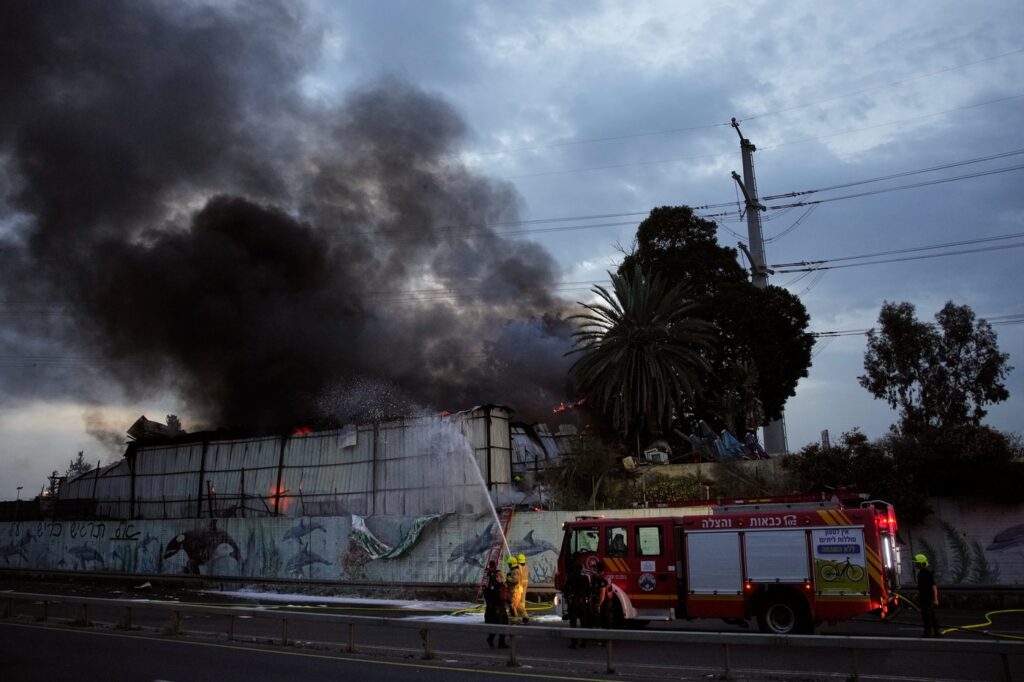
In a significant military development, the U.S. is deploying an additional 2,500 Marines and an amphibious assault ship to the Middle East as tensions escalate amidst the conflict with Iran, which has now persisted for nearly two weeks. The continuous missile and drone strikes by Iran on Israel and neighboring Gulf states have effectively led to the closure of the Strait of Hormuz, a critical waterway for global oil trade. At the same time, U.S. and Israeli warplanes have conducted extensive operations against military and strategic targets throughout Iran.
The humanitarian crisis in Lebanon has worsened dramatically, with reports indicating nearly 800 fatalities and 850,000 people displaced due to intensifying Israeli military actions against Iran-backed Hezbollah militants. The U.S. official, speaking on condition of anonymity, indicated that elements of the 31st Marine Expeditionary Unit and USS Tripoli, which are currently based in Japan, have been ordered to the region. The Marine Expeditionary Units are trained for various missions, including embassy security and humanitarian relief, though this deployment does not necessarily imply an imminent ground operation.
The strikes on Kharg Island were aimed specifically at military installations, with Trump confirming that the oil infrastructure had not been targeted at this stage. However, he warned that any further Iranian interference in maritime activities would compel a reconsideration of this restraint. Iranian military leaders have threatened to retaliate by targeting U.S.-linked energy facilities in the region if Iran’s oil infrastructure is struck. The spokesman for the Khatam al-Anbiya Central Headquarters specifically stated that they would aim at any oil and energy infrastructure connected with American interests.
In Baghdad, a missile struck a helipad at the U.S. Embassy compound, marking another incident in a series of attacks on U.S. diplomatic facilities by Iran-aligned militias. The embassy has heightened its security measures, reaffirming its Level 4 alert status due to ongoing threats from Iranian forces. Meanwhile, back in Iran, a large explosion occurred during a state-organized rally in Tehran that was attended by thousands, although no casualties were reported. The explosion coincided with festivities promoting support for Palestinians against Israel.
Furthermore, U.S. Defense Secretary Pete Hegseth reported that over 15,000 "enemy targets" have been struck in Iran since the conflict began, averaging more than 1,000 strikes each day. In addition, the U.S. Navy is currently operating a fleet that includes 12 vessels, with the aircraft carrier USS Abraham Lincoln leading the group. The expected arrival of the USS Tripoli would bolster U.S. naval presence in the region, further heightening the stakes in this ongoing crisis.








