

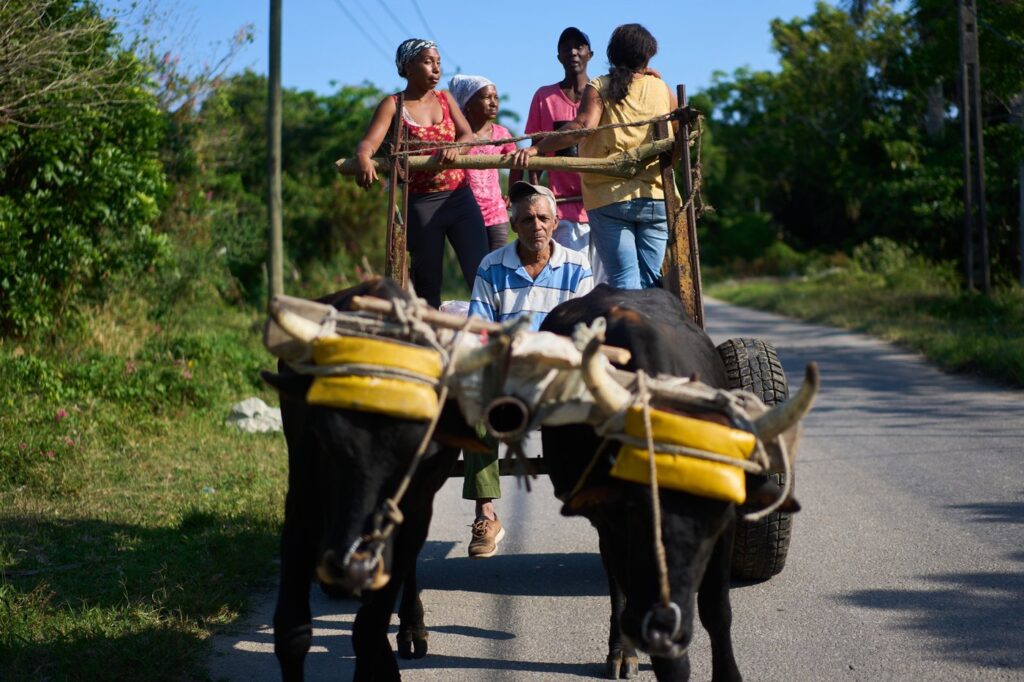
LAS MINAS, Cuba (AP) — Eduardo Obiols Sobredo, a 58-year-old farmer, is facing immense challenges in feeding the Cuban population due to the ongoing U.S. energy blockade. This blockade has resulted in severe water and power outages and significant fuel shortages across the island. “I feel like crying,” he lamented, expressing sadness over crops that have been wasted despite the hard work that went into growing them.
Farming equipment in Cuba has become silent as a result of the fuel shortages, leaving farmers like Obiols Sobredo to rely on animal and manual labor. However, this reliance is not feasible for everyone due to high costs and limited resources. Consequently, poverty is intensifying and hunger is rising throughout Cuba, a nation of nearly 10 million people. The quality and quantity of fruits and vegetables have deteriorated, leading to skyrocketing prices that many cannot afford.
The crisis has been exacerbated by overlapping global issues, such as the Iran war impacting energy supplies, while Cuba specifically attributes its hardships to the actions of the Trump administration. After the U.S. attacked Venezuela, a key oil supplier, Cuba faced a three-month period without fuel shipments. Threats by the Trump administration to impose tariffs on countries that supply oil to Cuba further complicated the situation.
The ongoing sanctions have intensified long-standing restrictions, making it difficult for Cuba to import essential goods. The Trump administration insists that Cuba’s government must release political prisoners and enact economic reforms to avert becoming a national security threat, a claim Cuba categorically rejects, insisting it poses no threat to the U.S.
In response to the severe crisis, Cuban officials are visiting farmers, urging them to boost production to enhance self-sufficiency. However, the reality in Las Minas—a town with 65 farmers and only 18 oxen—illustrates the dire situation vividly. Obiols Sobredo, who grows tomatoes, sorghum, and cassava while also raising goats for school milk, often rents oxen and relies on manual labor for smaller tasks. The lack of fuel means delivery trucks frequently fail to arrive, and he must use the limited gasoline available to transport perishable goods.
The consequences of continuing power outages have made it challenging for Obiols to grind goat food and adequately water his crops. Efforts to implement a solar irrigation system on his farm remain stalled due to the absence of gasoline. With rainfall also scarce—none for nearly two months—the situation worsens each day.
Local markets reflect the impact of the blockade, with suppliers switching to horse-drawn carts, resulting in bruised produce after long journeys. Customers at state markets, like 68-year-old Juan Lázaro, often critique the quality of fruits and vegetables. “They’re lacking fertilizer, you can tell they’re lacking water,” he notes as he points to subpar tomatoes. Lázaro, a retired industrial mechanic now working at a convenience store to make ends meet, shared that he is forced to pick between buying bread or potatoes.
Other shoppers, like 64-year-old Griselle Guillot, find themselves carefully weighing their purchases. Produce vendors are keenly aware of the situation and recognize that customers understand the decline in quality. As the state market closes, unsold tomatoes are discarded as unfit for sale. The market dynamics starkly illustrate the struggle for survival within the Cuban population.
On a farm in Las Minas, 82-year-old Argelio González Juvier uses a hoe to tend to cassava plants, having been pushed to take up farming again to supplement his income. He criticizes the U.S. blockade, calling it a crime and asserting that “Cuba doesn’t deserve what they’re doing to us.” Working alongside him is 36-year-old Jordanis Ríos, who lost his job as a truck driver due to fuel shortages. Now, he works for $4 a day clearing farmland, hoping for an eventual return to better job prospects.
Ríos remains skeptical about recent dialogues between U.S. and Cuban diplomats, focusing solely on daily survival. His sentiments encapsulate the feelings of many in Cuba, who await a resolution to their challenges while striving to maintain their livelihoods amid daunting hardships.








