

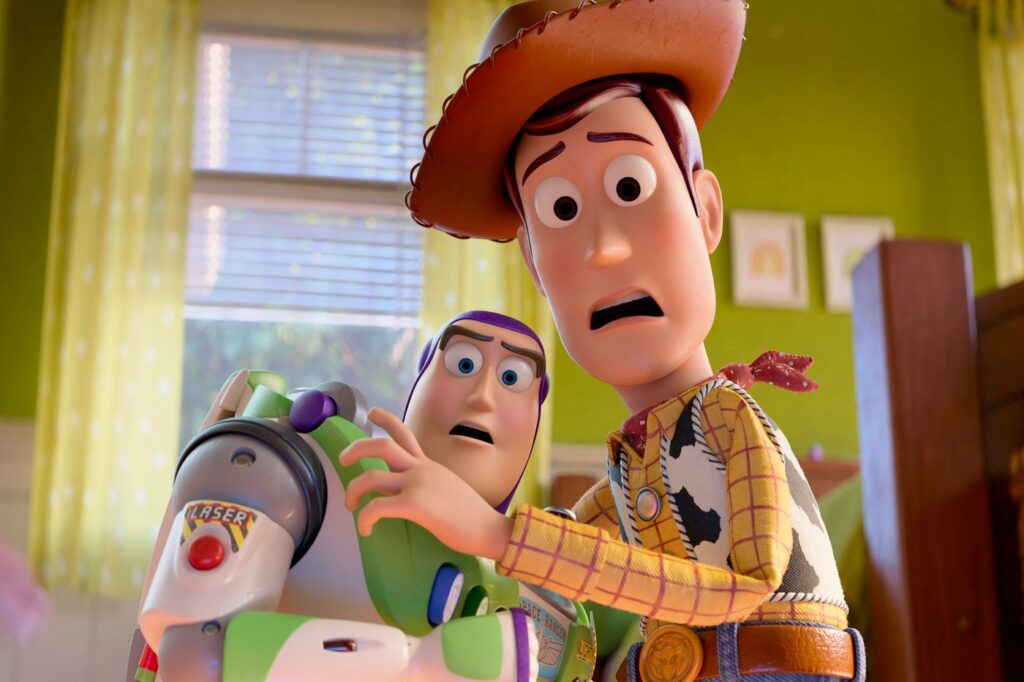
Andrew Stanton has dedicated more than half of his life to the Toy Story franchise. He served as the lead writer for the first three films, was instrumental in the script of the fourth installment, and now steps into the role of co-writer and co-director for Toy Story 5.
In a recent interview, Stanton expressed his surprise at the continuing journey of these beloved characters, saying, “It wasn’t the plan, but it wasn’t not the plan.” Over the past 34 years, while focusing on projects like A Bug's Life, Finding Nemo, and WALL-E, the original Toy Story remains pivotal. For Stanton and his colleagues, the success that followed has always felt like a bonus.
The upcoming film, scheduled for release on June 12, is anticipated to be one of the summer’s major blockbusters, following the impressive track record of the previous entries, which grossed over a billion dollars each. Stanton acknowledges the business considerations behind the franchise but emphasizes the commitment to prioritize quality storytelling. “It’s show business, yes, but they always try to put the ‘show’ first,” he noted.
Reflecting on the series' history, Stanton recalled the 11-year hiatus between Toy Story 2 and Toy Story 3, followed by a nine-year wait for the fourth film. After cracking the story for the third film around 2008, he began to envision the future of the franchise. “What if it was a trilogy with one kid, closed that up, handed it off to another kid and started another one?” Stanton explained, highlighting the natural cycle of toys being passed down through generations.
As the storyline progressed into the "Bonnie era," Stanton felt optimistic about continuing the narrative. Although some cast members suggested that the fourth film would be the last, he believed that Bonnie’s journey with the toys was far from complete. He began drafting without knowing whether his direction would align with the studio's vision, but he remained hopeful about finding common ground.
Stanton collaborated with Kenna Harris, who joined as co-writer and co-director for the fifth film. He appreciated the fresh perspective Harris brought, being of a different generation yet valuing the timeless aspects of childhood. “It’s really trying to find the things that are timeless, you know? Because childhood is gonna keep happening,” Stanton stated.
In the fifth installment, a new distraction for Bonnie emerges: The Lilypad, a device that captivates her attention away from her toys. Stanton was cautious throughout the process to ensure that this concept wasn’t already trademarked. He reflected on the ongoing conversation about screentime and how it impacts play, acknowledging the complexity of these themes. “It’s a legitimate concern that has no complete, finite answer... it’s in the gray,” he remarked, emphasizing the ongoing struggle to navigate modern distractions.
The theme of imagination and play is more pronounced in Toy Story 5 than in previous films. Stanton conveyed a sense of urgency to visit these themes, building on light touches from earlier films, especially Toy Story 3.
With years of experience, Stanton has shifted his focus from box office numbers to the wider impact of storytelling. He’s found joy in creating films for future generations, as his own grandchild now engages with the Pixar stories he helped bring to life. Recently, Stanton spent time at Skywalker Ranch finalizing the mix for Toy Story 5. For the first time, he could step back and appreciate the film as a cohesive product rather than a complex puzzle. “That’s when it kind of breaks my brain... you just believe, and that’s the real drug,” he shared.








