

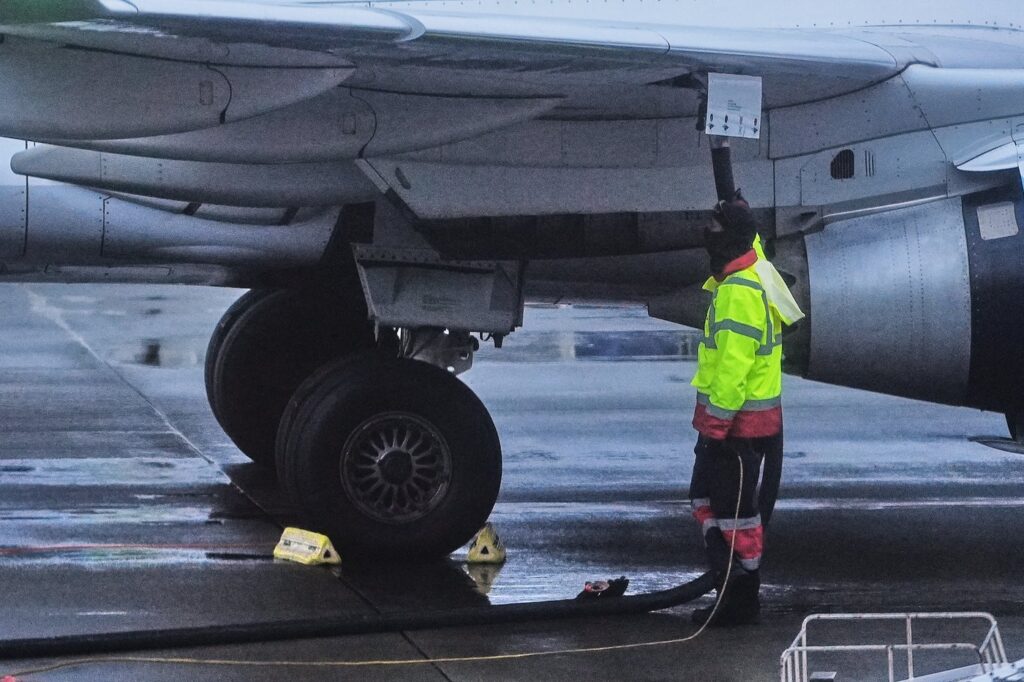
Jet fuel prices are experiencing a significant rise due to the ongoing war in the Middle East, which is disrupting global oil supplies. This increase places financial pressure on airlines as the summer travel season approaches, raising concerns about future airfare hikes.
Experts suggest that it is a matter of when, rather than if, airfares will rise, with long-haul international flights likely to be most affected due to their higher fuel consumption. Some airlines outside the United States have already announced fare increases or fuel surcharges to mitigate these rising costs. United Airlines CEO Scott Kirby has indicated that airfare hikes in the U.S. will “probably start quick” as fuel prices escalate within the industry.
The root cause of the rising jet fuel prices is the war itself. The conflict is constraining oil exports and leading influential producers such as Kuwait, Saudi Arabia, and Iraq to reduce output in response to increasing shipment challenges. Iran has targeted commercial ships in the Persian Gulf and oil infrastructure in Gulf Arab nations, further complicating the logistics and safety of transporting oil. This situation has severely disrupted traffic through the Strait of Hormuz, a critical passageway responsible for transporting about 20% of the world's oil supply.
As a result of these developments, jet fuel prices have soared, matching the volatility seen in crude oil prices. According to the Argus U.S. Jet Fuel Index, the average price in the U.S. reached $3.99 per gallon, a marked increase from $2.50 per gallon recorded just two weeks prior at the onset of the conflict. In contrast, U.S. airlines had paid an average of $2.36 per gallon in January, the latest data available from the U.S. Department of Transportation’s Bureau of Transportation Statistics.
Some airlines have measures in place to shield themselves from sudden spikes in fuel prices through fuel hedging, which allows them to lock in prices well in advance. However, not all airlines engage in this practice, and even those that do may only be partially covered. Kirby noted at a recent Harvard event that “no one hedges anymore,” and those that attempt to do so face challenges in managing the "crack spread," which is the difference between crude oil prices and refined product costs.
Another complication for airlines is the necessity of rerouting flights due to air space closures, which can lead to longer flight paths, increased fuel consumption, and higher operating expenses.
Passengers may feel the effect of these disruptions in various ways. Airlines can impose or increase fuel surcharges, an approach commonly taken by international carriers. U.S. airlines, however, typically do not charge separate fuel surcharges, choosing instead to incorporate these rising costs into the overall ticket price. Consequently, travelers may notice an increase in base fares to account for elevated fuel costs, as noted by Tyler Hosford, security director at global risk management firm International SOS.
Moreover, airlines might modify their pricing for premium add-ons like seat upgrades and checked luggage, creating additional costs that could inflate the total travel expense even if base fare adjustments are not immediately evident. If elevated fuel prices persist, airline schedules may also be affected, as indicated by Christopher Anderson, a professor at Cornell University’s business school.
The potential for increasing airfare remains uncertain. Analysts suggest that the effect of rising jet fuel prices will vary based on several factors, including the airline, route, and overall travel demand. Fuel typically constitutes 20% to 25% of an airline's operating costs, making fuel a significant expense following labor costs amongst airlines. Thus, a substantial surge in fuel prices can deeply impact the financial health of these operators.
Currently, most fare increases and fuel surcharges have originated from airlines in the Asia-Pacific region, but experts expect that if high jet fuel prices continue, more airlines, especially those without hedging strategies, will likely raise their fares. Cathay Pacific, for instance, has announced a fuel surcharge increase, citing that the price of jet fuel has nearly doubled since March due to the Middle East conflict.
Other airlines responding to the rising costs include Air France-KLM, announcing potential increases of approximately 50 euros ($57) for long-haul roundtrip economy fares, and Air India, which has implemented fuel surcharges of up to $50 for certain international routes. Additionally, Hong Kong Airlines and South African FlySafair have also announced fuel surcharge adjustments.
To mitigate the financial impact of increasing ticket prices, travelers are encouraged to book flights earlier rather than waiting until the last minute. Booking sooner can help secure better prices, particularly if flexible booking options are utilized. Hosford advises travelers to maintain flexible travel dates, monitor fares at surrounding airports, and set alerts for price drops. Utilizing frequent flyer miles or credit card points for flight bookings can also provide a viable option to circumvent rising costs.








