

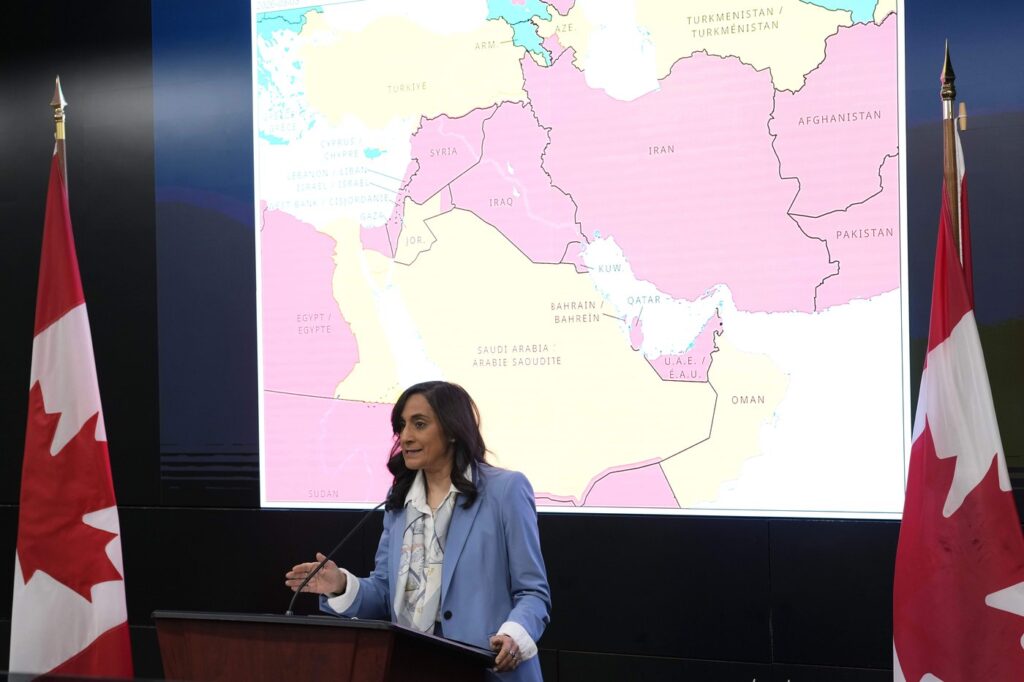
OTTAWA - Following the U.S. declaration of war against Iran on February 28, 2026, Canadian Foreign Affairs Minister Anita Anand has prioritized the evacuation of Canadians from the Middle East. As of March 13, nearly 8,500 Canadians and permanent residents have returned home, while over a thousand have sought refuge in safe third countries.
Why does Canada help people evacuate?
Canada's government argues that it has no legal obligation to evacuate citizens from crisis zones. Instead, this service is a voluntary offering that officials frequently highlight in social media. Global Affairs Canada operates an emergency response center that assists Canadians with various issues, including lost passports and imprisonment. During crises, this center receives additional staff for coordination, sometimes involving the chartering of planes or military assistance for evacuations.
Canada collaborates with allied nations to harness collective evacuation resources. For example, Canadians departing from Sudan might take a French military flight, while those in Dubai may use an Ottawa-chartered flight to Istanbul. The government also issues travel advisories, currently recommending against travel to Iran, and has advised limited travel to places like Israel and Lebanon.
How does it work?
The evacuation process relies heavily on communication. Sébastien Beaulieu, the director for international emergencies and travel advice at Global Affairs Canada, stated that daily coordination calls occur with the Five Eyes intelligence alliance during emergencies. These discussions focus on the evolving situation and collaborative evacuation efforts.
Initially, Global Affairs Canada prioritizes commercial airlines for evacuations, viewing them as the most economical and efficient option. The government sometimes engages in “block-booking,” reserving seats for citizens who then pay for their own flights. When commercial options are unavailable, the government may charter flights or provide ground transport if safety permits. Although military assistance for evacuations is theoretically possible, current conditions do not warrant it at this time.
Canada also has systems in place to address ongoing crises in regions like Cuba, where U.S. sanctions have intensified the humanitarian situation. In Havana, the embassy has begun utilizing solar power intermittently due to fuel shortages.
Why is demand dropping?
Initially, many Canadians were alarmed by visuals of drone strikes in regions frequented by travelers. However, some individuals have chosen to shelter in place or seek alternative exit strategies. After the U.S. launched its war on Iran, Global Affairs Canada managed over 1,400 calls daily, a number that has since decreased to around 400 inquiries. Many of the calls are from family members of Canadians needing assistance.
In Kuwait, the government has implemented a permit system that restricts foreign nationals from leaving without employer consultation, a situation that Minister Anand has addressed with her Kuwaiti counterpart to facilitate passage for affected Canadians.
Why are some Canadians staying put?
Many Canadians are employed in high-paying jobs in regions like Dubai or have deep familial connections in Lebanon. Others, particularly in Iran, often have personal obligations that hinder their ability to leave. Statistics indicate that only three percent of registered Canadians in Lebanon requested evacuation help, while fourteen percent in the UAE did so.
Previous evacuation efforts, such as in Lebanon during the Israeli invasion in 2024, faced criticism for low participation despite substantial financial commitments. The Canadian government spent $11 million to maintain charter flights for expatriation from Haiti and allocated $40 million for Middle Eastern evacuations amidst escalating tensions in 2024.
How much does this cost?
Evacuations are conducted on a partial cost-recovery basis, charging Canadians for flights and ground transport at comparable commercial rates. For example, if Ottawa charters a flight, the cost is determined based on typical pricing available through travel platforms. Although the total costs for recent operations have yet to be disclosed, earlier responses provide insight—approximately $10 million was spent on evacuations from Haiti in 2024.
Is this sustainable?
Concerns about sustainability arise due to escalating global instability leading to increased evacuation needs. The Canadian government has signaled that citizens may need to pay more and receive less as resources become more constrained. Despite facing budget cuts, Global Affairs Canada aims to revamp emergency preparedness and modernize consular services while ensuring that evacuation operations continue effectively amidst tightening budgets.
Through technological upgrades and improved information-sharing methods among international posts, Global Affairs Canada maintains a commitment to respond effectively to crises, even under financial pressures.








