

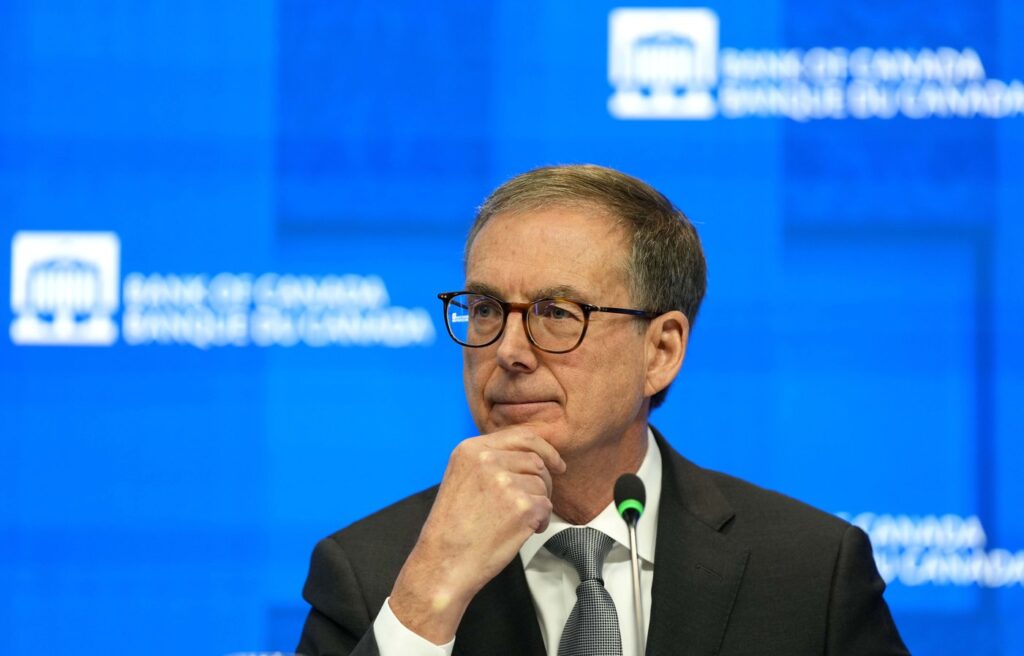
OTTAWA — The Bank of Canada is preparing to navigate a complex economic landscape as it approaches its second interest rate decision of 2026 this week, amidst a surge of last-minute economic data and geopolitical uncertainties related to the conflict in the Middle East.
Economists are highlighting the central bank’s challenging position in setting monetary policy this year. A surprising rise in unemployment, coupled with overall economic weaknesses, juxtaposes the fresh inflation risks emerging from a global oil price shock. The current Bank of Canada's policy rate stands at 2.25 per cent, following a decision to hold steady in January. However, the economic conditions have shifted significantly since then.
The latest employment data released on Friday indicated that the unemployment rate increased to 6.7 per cent after the economy lost 84,000 jobs in February. In addition, Statistics Canada reported a contraction of half a percentage point on an annualized basis for the fourth quarter of 2025, which fell short of the Bank of Canada’s expectations for stagnation in growth.
As monetary policymakers gear up for the upcoming decision, they will also be confronted with new inflation data from Statistics Canada, anticipated on Monday. Doug Porter, Chief Economist at BMO, projected that February's inflation rate could drop as low as 1.8 per cent, a significant decrease from January’s figures. This decline is primarily attributed to the expiration of last year’s federal government's “tax holiday,” which will affect the annual inflation calculations.
Even in the absence of the latest price data, financial markets are estimating a 92 per cent probability of the Bank of Canada maintaining its interest rate on Wednesday. Following the recent weak job statistics, the likelihood of a rate cut has marginally increased. Forecasters have broadly anticipated that the central bank would remain inactive for the rest of 2026 as core inflation stabilizes while the economy adjusts to new U.S. tariffs.
As Desjardins Deputy Chief Economist Randall Bartlett stated, the economic landscape appears weak, yet not so dire that it necessitates a movement in interest rates in either direction. However, the looming volatility tied to the ongoing conflict in the Middle East, particularly following actions by the U.S. and Israel against Iran, adds another layer of uncertainty.
Iran’s recent assaults on commercial vessels in the Persian Gulf and its blockade of the Strait of Hormuz have driven global oil prices significantly higher. This spike is reflected at Canadian gas stations, likely prompting a rise in inflation figures in the months ahead. The upcoming April inflation reading is expected to show a notable increase due to comparisons with last year’s period when the federal Liberals lifted the carbon price.
Porter remarked that rising energy costs would likely affect packaging and transportation expenses for food, as the Gulf region is crucial for shipments of vital fertilizer inputs. In January, Statistics Canada reported an annual food inflation rate of 7.3 per cent, exacerbated by the previous year's tax holiday and supply chain issues with key grocery items like coffee and beef.
Despite higher energy costs presenting challenges, Porter and Bartlett indicated that oil-producing provinces like Alberta, Saskatchewan, and Newfoundland and Labrador could benefit from increased GDP due to heightened energy prices. Conversely, provinces less tied to oil production may face a bleaker economic outlook. Bartlett suggested that Canada’s national GDP might receive a boost from rising energy prices, while simultaneously increasing inflation could lead the Bank of Canada to refrain from further rate cuts.
Both economists regard the review of the Canada-U.S.-Mexico Agreement as another significant factor influencing monetary policy decisions. Bartlett forecasts a rate hold in this week’s meeting and believes the Bank will maintain that stance throughout the remainder of 2026, arguing that recent market speculation regarding a potential quarter-point rate hike is unfounded.
Porter maintains that while Canada may be somewhat insulated from the greater impacts of rising oil prices compared to other nations, the economic toll will still likely be negative. He noted that a rise in interest rates could become necessary if the supply shock from increased oil prices persists without severely hindering economic growth. Porter highlighted a previous statement from Bank of Canada Deputy Governor Sharon Kozicki, positing that rate hikes typically follow supply shocks that elevate prices without stalling the economy.
As the Bank of Canada approaches its interest rate announcement, analysts are keenly focused on how Governor Tiff Macklem addresses the implications of the Middle East conflict on future monetary policy, as this will significantly influence market expectations and economic forecasts.








