

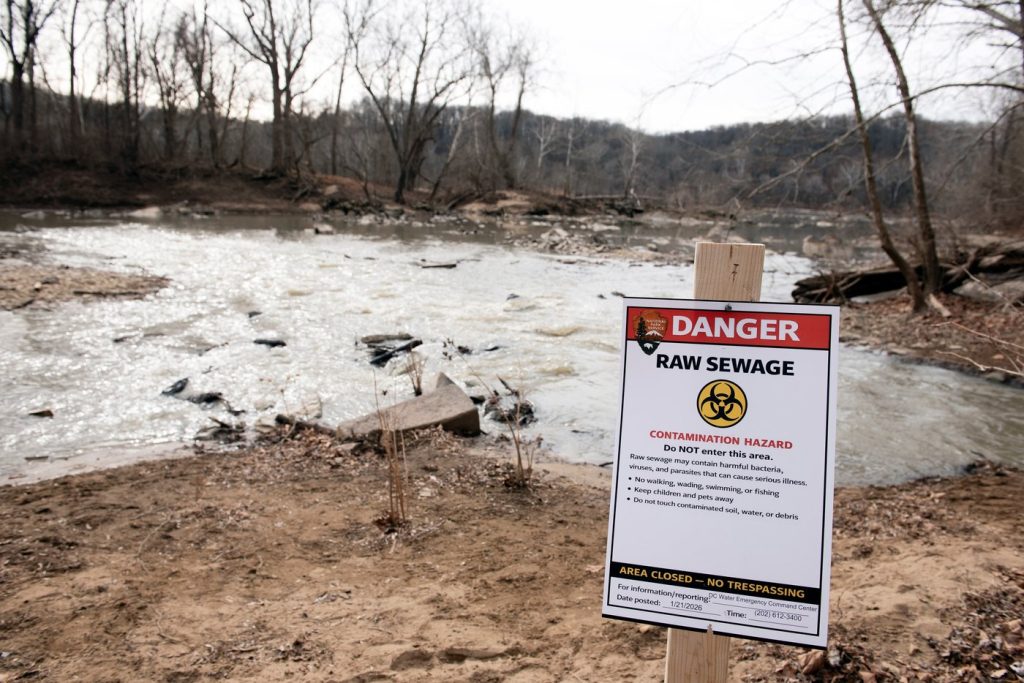
On Saturday, DC Water announced that the Potomac Interceptor sewage pipe, which had ruptured on January 19, was back in operation following emergency repairs. The massive 72-inch diameter pipe had leaked an alarming 250 million gallons of untreated sewage into the Potomac River, a key waterway just north of Washington, D.C., within the first five days of the incident.
After the rupture, DC Water worked in collaboration with the Environmental Protection Agency (EPA) and other relevant agencies to repair the damage and monitor the ecological impact of the sewage spill. Although drinking water in the area was never compromised, concerns arose regarding the safety of recreational activities on the river, as there were fears of harmful bacteria present due to the contamination. Anglers, boaters, and other river users were cautioned against direct contact with the water.
In response to the sewage spill, a class action lawsuit was filed on March 6 in U.S. District Court in Greenbelt, Maryland. The lawsuit, brought by plaintiff Nicholas Lailas, a Virginia resident and recreational boat user, accused DC Water of negligence. Lailas is seeking compensation for individuals whose property interests and enjoyment of the Potomac River have been negatively impacted by the utility's actions. The lawsuit, however, did not specify a monetary damage amount.
The spill originated in Montgomery County, Maryland, near Clara Barton Parkway, adjacent to the Chesapeake and Ohio Canal National Historic Park. The ecological ramifications of the incident have become a significant concern, igniting political disputes between Republican President Donald Trump and Democratic leaders in Maryland. In the wake of the crisis, President Trump had chided local leaders for not requesting assistance, leading to D.C. Mayor Muriel Bowser declaring an emergency on February 18. Soon after, Trump approved federal emergency resources to aid the city in dealing with the situation.
In a statement, DC Water confirmed that full flow had been restored to the sewage system, and the C&O Canal had been completely drained as part of their restoration efforts. They noted that crews had worked tirelessly around the clock to stabilize the site and protect the Potomac River since the initial rupture.
Betsy Nicholas, president of the Potomac Riverkeeper Network, emphasized the potential severity of the situation, given its implications for the region's drinking water system, which serves residents in D.C., Montgomery County, and Arlington County, Virginia. She highlighted the importance of conducting ecological assessments and implementing remedial actions, pointing to natural solutions like freshwater mussels and native aquatic plants as crucial elements in mitigating future risks.
Furthermore, Nicholas called for comprehensive inspections of the remaining sewage system to ensure such an incident does not occur again. In an effort to engage the public and provide updates on the repair and environmental rehabilitation processes, DC Water has scheduled a series of meetings, including sessions set for next week in Bethesda, Maryland, and Alexandria, Virginia.
This incident serves as a stark reminder of the vulnerabilities in urban infrastructure and the critical need for ongoing maintenance and assessment of essential public utilities. As the situation unfolds, stakeholders will continue to monitor the Potomac River, evaluating both its ecological health and the safety of its recreational use.








