

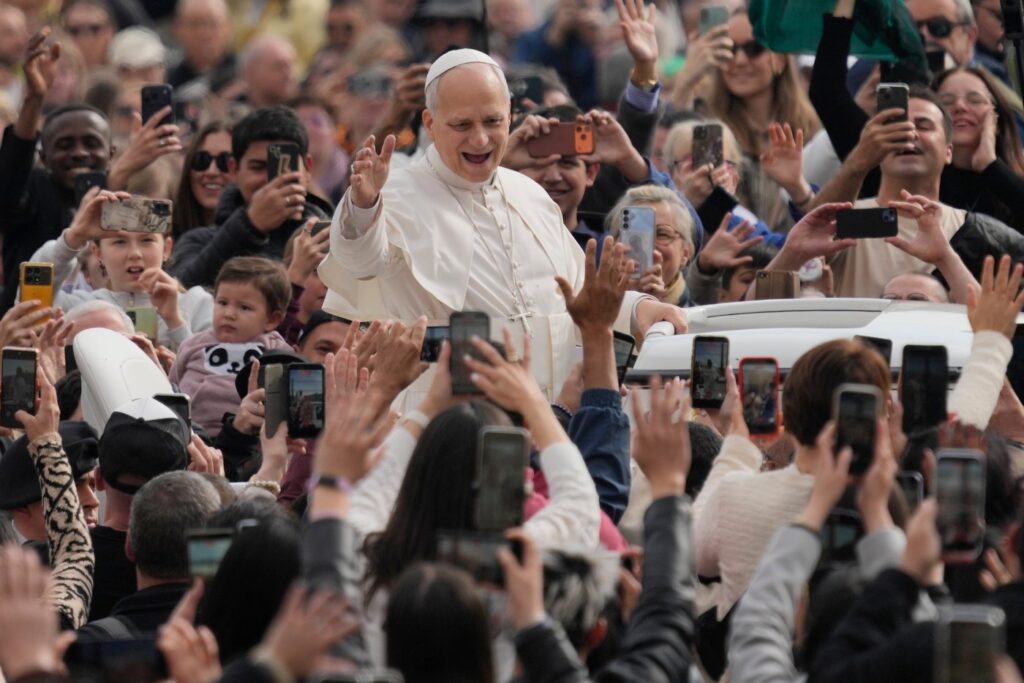
ROME (AP) - Pope Leo XIV officially moved into the newly renovated papal apartment located in the Apostolic Palace on Saturday. This marks a significant transition, as this flat was notably avoided by his predecessor, Pope Francis. The Vatican stated that Leo would be accompanied by his closest aides in this prominent residence, which is situated on the third floor of the Apostolic Palace, overlooking St. Peter's Square.
The decision to relocate comes as Leo's pontificate approaches its one-year anniversary. Following his election in May, he had been residing in a modest flat within the Vatican's Palazzo del Sant'Uffizio, which houses the Holy See's doctrine office alongside several private apartments allocated for Vatican officials. Over the past ten months, extensive renovations were undertaken to update the papal apartment, bringing its electrical, plumbing, and utility systems up to modern standards. The apartment had been neglected during Francis' twelve-year tenure, resulting in the need for significant refurbishment.
As the date of Leo's move approached, visible signs of activity included a crane working on the site, indicating that preparations were underway for the papal transition. Pope Francis had opted against living in the traditional papal apartment, preferring instead to stay in the Vatican's Santa Marta residence—a hotel-like setting designed for visiting clergy and cardinals during conclaves. Francis's choice reflected his modest preferences and disdain for the extravagance often associated with the papacy. However, it also had practical repercussions, as it reduced the accommodation capacity for paying guests in the Santa Marta facility.
Pope Leo XIV, recognized as the first U.S. pope in history, has expressed a preference for the traditional attire and attributes of the papacy. His decision to move into the Apostolic Palace has garnered praise from conservative commentators who interpret it as a gesture of reverence for the papal office. Following his election, Leo formally possessed the residence, walking through the reception areas and the small chapel designated for personal use. By papal protocol, the residence had been sealed with a red ribbon and wax after the passing of Pope Francis on April 21, despite his death occurring in the hotel room.
Leo's transition to the Apostolic Palace represents the dawning of a new chapter in a pontificate that has been characterized by a slow and careful beginning. Earlier this week, he made his second significant appointment within the Vatican bureaucracy, designating Archbishop Luis Marín de San Martín of Spain as the new head of the Vatican's charity office. The Vatican has not disclosed the names of those moving into the apartment alongside Leo; however, he has assembled a team of four close aides to assist him.
Among his entourage are Monsignor Edgard Iván Rimaycuna Inga, his secretary from Peru, and Rev. Edward Daniang Daleng, the vice regent of the papal household from Nigeria. Additionally, Leo has appointed Anton Kappler, a former Swiss Guard lieutenant, to function as a second administrative aide within his office, joining former gendarme Piergiorgio Zanetti.
As Pope Leo XIV continues to consolidate his leadership in the Vatican, the changes in his residence and team reflect a significant transition in governance and style. His move into the papal apartment, coupled with recent appointments, signals a pontificate gaining momentum and seeking to establish its distinct identity distinct from that of his predecessor.








